Genron International Trade is a leading manufacturer of flatbed semi-trailers built for diverse transportation needs. Loading a flatbed correctly is what keeps cargo safe, balanced, and legal on the road. This guide walks through how to load a flatbed semi-trailer step by step — covering safety preparation, weight distribution, loading equipment, and securement.
To load a flatbed semi-trailer safely, park on level ground, keep the trailer attached to the tractor for stability, engage the brakes, and chock the wheels. Plan cargo placement so the center of gravity stays low and weight is balanced left-to-right and front-to-rear — a 60/40 front-to-rear split is a common starting point, but final placement must be verified against the trailer’s load distribution chart, kingpin and axle-group weights, tire and deck ratings, and legal axle limits. Use rated forklifts, cranes, ramps, or hoists for heavy cargo, then secure the load with rated straps, chains, binders, blocking, bracing, and edge protection. Inspect securement before departure, again within the first 50 miles, and at the intervals required in the jurisdiction you operate in.

Understanding Flatbed Semi-Trailers
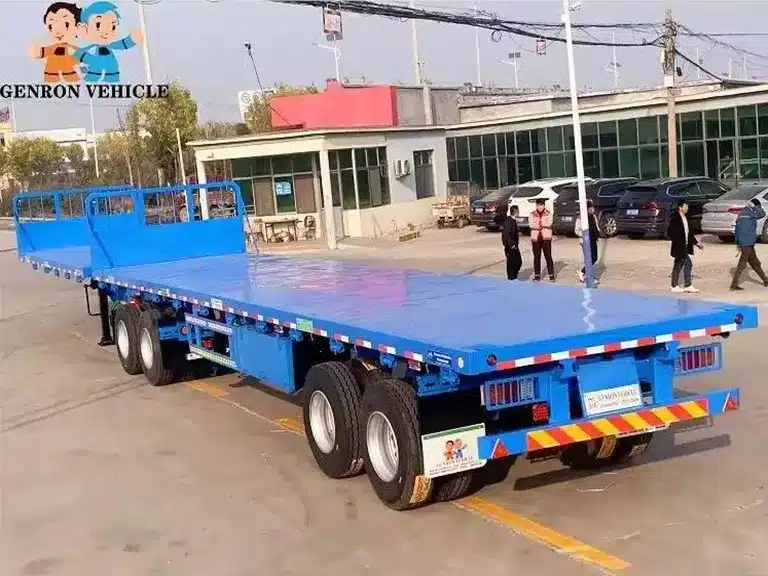
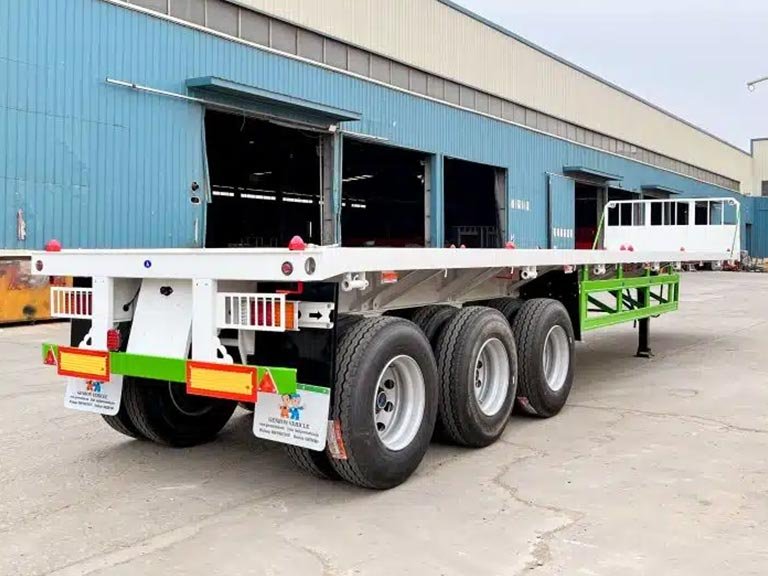
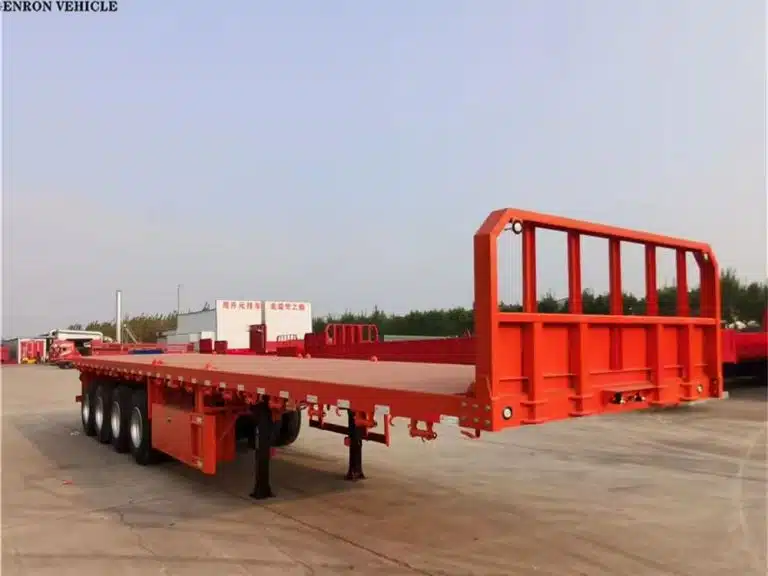
A flatbed semi-trailer has a flat, open deck with no sides or roof — the very feature that makes loading flexible, since cargo can be lifted on from any side or from above with forklifts, cranes, or ramps. That open design suits large, heavy, or irregularly shaped loads such as construction materials and machinery, and it is why flatbeds serve so many common uses for flatbed trailers. It also means the load has no walls to contain it, so correct placement and securement are essential. Genron’s flatbed truck trailer range is built from high-strength materials to handle heavy use and keep transportation safe and efficient.

Safety Precautions Before Loading
Loading safety protects both workers and cargo, and it begins before the first item reaches the deck.
Personal protective equipment (PPE): Loading crews should wear hard hats, safety gloves, steel-toed boots, high-visibility vests, and eye protection, and be trained in their correct use to guard against falling objects and sharp edges.
Vehicle inspection: Before loading, check the trailer’s structure, brakes, tires, lights, and signals, and confirm that ramps and lifts are in safe working order. Resolve any maintenance issue before loading begins.
Preparation for Loading
Thorough preparation makes loading both faster and safer:
- Pre-loading inspection: Check the trailer for damage and wear, confirm all tie-downs are intact, and clear the loading area of obstacles and hazards.
- Evaluate cargo type and weight: Confirm the cargo stays within the trailer’s usable payload — which is limited by whichever system component is rated lowest, including trailer GVWR, axle and tire ratings, deck point-load capacity, tractor capacity, and legal road limits. See our flatbed trailer load capacity guide for the full breakdown.
- Choose the right equipment: Depending on the load, you may need forklifts, cranes, or loading ramps, plus straps, tarps, and corner protectors. Confirm equipment is in good order and operators are authorized.
- Position the trailer: Park on a level surface, fasten the trailer to the tow vehicle, and engage the brakes so nothing moves during loading.

Step-by-Step Loading Process
Step 1: Position the Trailer
Park the flatbed semi-trailer on level ground to prevent movement or tipping. Engage the parking brakes, chock the wheels, and keep the trailer attached to the tractor unit for stability. Choose a well-lit area with enough space for equipment and personnel to work safely.
Step 2: Distribute the Weight Correctly
Even weight distribution keeps the trailer stable and legal. Keep the center of gravity low, balance weight left to right, and avoid concentrating load at either end.
The 60/40 rule — placing about 60% of cargo weight toward the front half and 40% toward the rear — is a useful starting point for planning, not a guarantee of compliance. Final placement should follow the trailer’s load distribution chart so weight is shared correctly between the kingpin and the trailer axle group. Placing every heavy item directly over the trailer axles can overload them while leaving too little kingpin load and reducing tractor traction; loading too heavy at the rear can cause fishtailing. Verify kingpin load, axle-group weights, tire ratings, and legal axle limits before transport.
Step 3: Use Loading Ramps, Lifts, or Drive-On Equipment
For heavy or bulky cargo, use loading ramps or lifts rated for the cargo weight and positioned securely against the trailer. Forklift and crane operators should be trained, evaluated, and authorized according to local workplace safety regulations.
Self-propelled equipment should only be driven onto a flatbed using ramps and deck structures rated for the machine’s weight and point loads. Use a spotter, keep the machine on the trailer centerline, avoid sudden steering or braking on ramps, and lower any boom, blade, or bucket before securement.
Step 4: Place the Cargo on the Trailer
Place cargo according to your load distribution plan, working from the heaviest items toward the lighter ones, and use pallets or skids to spread weight and lift items off the deck where needed. Avoid unplanned overhang; if overhang is unavoidable, confirm legal length limits, warning flags or lights, permit requirements, and escort rules before transport.
Step 5: Adjust the Cargo Position
Once everything is on the deck, fine-tune placement for balance and security. Fill gaps between items with dunnage or padding, straighten any leaning cargo, and adjust positions until the weight is evenly distributed.
Step 6: Verify Load Balance and Securement
Walk around the trailer and inspect the load from every angle, confirming all items are secured and every device is properly tensioned. A quick tug test can help catch obviously loose items, but it does not replace a formal securement inspection — verify tie-down count, working load limits, tie-down angles, edge protection, blocking, and bracing, and confirm the load meets the cargo securement rules of every jurisdiction on the route.

Securing the Load
Once the cargo is positioned, secure it with tie-down devices rated for the load — ratchet straps for general freight, and transport chains with binders for heavy items. Cargo securement must meet the rules of the jurisdiction you operate in; under US federal rules, for example, the combined working load limit of all tie-downs must be at least half the weight of the cargo, with additional commodity-specific requirements. Because loads can settle, re-check tension within the first 50 miles and again at the intervals required by regulation. For strap types, chain grades, tie-down counts, and securement techniques, see our flatbed load securement guide.
For guidance on moving cargo once the trailer is loaded, see our guide to transporting cargo with a flatbed trailer.
Tips for Effective Loading
A few practices make every flatbed load safer and more efficient. Always use the right equipment — forklifts or cranes — for heavy and oversized cargo, and follow weight-limit and handling guidance from established top flatbed semi-trailer manufacturers. Use tarps and covers to protect cargo from weather and road debris, fastened securely so they cannot shift. Inspect the load throughout the journey, and keep clear communication with the driver about the load’s weight and any special handling needs.
Common Mistakes to Avoid
A handful of mistakes account for most flatbed loading accidents. Overloading the trailer causes mechanical failure and raises accident risk — always stay within the rated limits of every component. Uneven weight distribution makes the trailer tip, sway, or fall outside legal axle limits, so balance the load and verify it against the distribution chart. Inadequate securement lets cargo shift or fall, so always use rated devices that meet local rules. Finally, never skip safety checks — following proper procedure is what keeps loading safe and compliant.
Conclusion
Proper loading is the foundation of safe, efficient flatbed transportation. Keeping weight correctly distributed, using rated equipment, and securing cargo to the applicable regulations sharply reduce the risk of accidents and cargo damage. Genron International Trade supplies high-quality flatbed semi-trailers built to meet every transportation need — contact our team for help matching a trailer configuration to your cargo and load requirements.
FAQ
The 60/40 rule means placing about 60% of cargo weight toward the front half of the trailer and 40% toward the rear. It is a rough planning starting point, not a compliance guarantee — final placement must be checked against the trailer’s load distribution chart, kingpin and axle-group weights, and legal axle limits.
Heavy equipment should be placed according to the trailer’s load distribution chart so weight is shared correctly between the kingpin and the trailer axle group, not simply stacked over the trailer axles. Use rated ramps, keep the machine centered, and lower any attachments before securement.
Keep the center of gravity low, balance weight left to right, and use the 60/40 split as a starting point. Always verify kingpin load, axle-group weights, tire ratings, and legal limits before transport.
It is not recommended. A flatbed should stay coupled to the tractor during loading for stability. If loading while detached is unavoidable, the trailer must be on level ground with rated landing gear or support stands, and heavy or shifting loads should be avoided.
Wear PPE, inspect the trailer and loading equipment before use, keep authorized operators on rated equipment, and maintain clear communication among the loading crew.
Yes, using loading ramps or cranes rated for the cargo. Manual loading is only appropriate for light cargo within safe manual-handling limits — heavy, bulky, or elevated loads require rated lifting equipment.