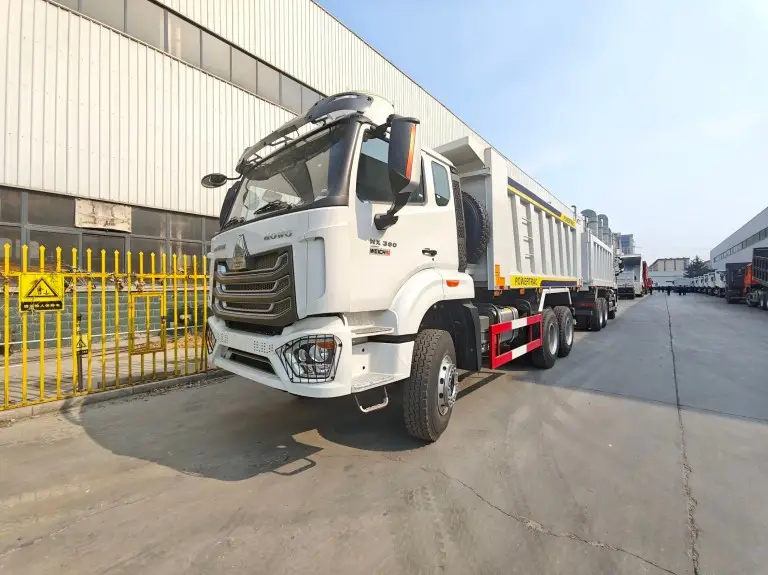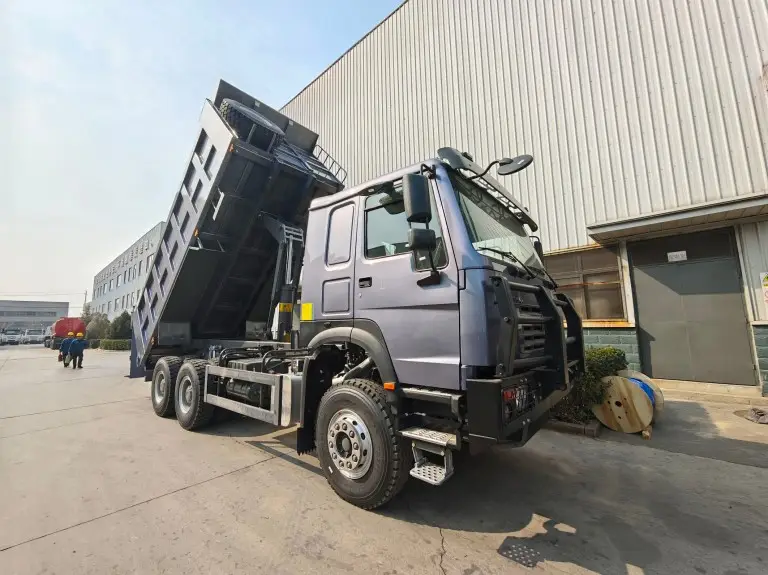
The “right” HOWO dump truck load capacity is the payload you can carry safely. It is the weight you can haul consistently on your actual job site. At Genron, we sell and customize HOWO trucks for many uses. We start with your material, route, and any limits you have. Then we match the chassis and tipper body to that target.
Many buyers ask if we can handle 30 to 50 tons. We first need to know one thing. Will the truck be on public roads, closed sites, or both? That answer changes the safe payload plan.
What “Load Capacity” Means on a HOWO Dump Truck
“load capacity” means payload. It is the cargo weight you can carry. It is not the same as Gross Vehicle Weight (GVW). It is also not the same as body volume. All “tons” here refer to metric tons (1 t = 1,000 kg).
A simple way to calculate it is: Payload = GVW − Curb Weight. Different spec sheets may define curb weight differently. The definition might include fuel level, the driver, a spare tire, or a tool kit. We always confirm the baseline before setting a payload target. If a sheet only shows “tons,” ask for the GVW and curb weight.
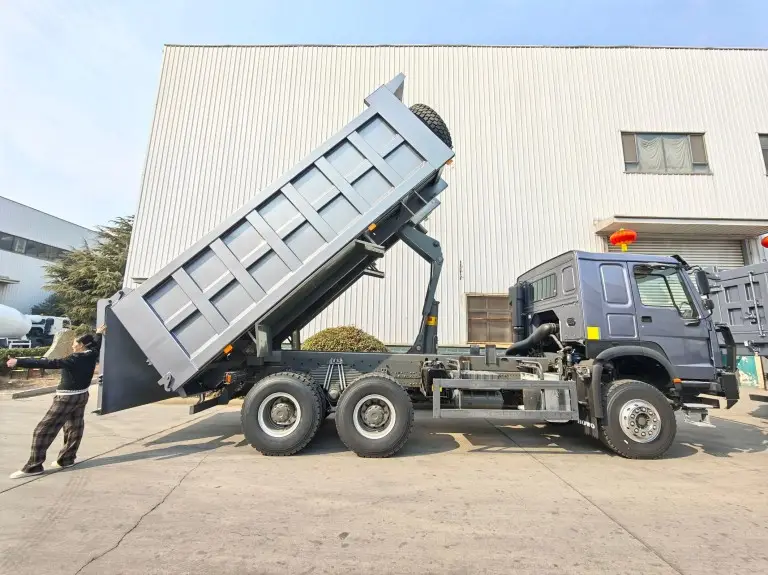
Main HOWO Dump Truck Configurations
Most questions about HOWO dump truck load capacity start with the configuration. The axle layout controls how weight is spread. It also guides the choice of other components.
These payload ranges are practical starting points. They are not universal road-legal guarantees. On public roads, local rules on axle load and GVW can limit payload. This can happen even if the truck is mechanically capable of more. We always confirm your route type before committing to a payload class.
6×4 Dump Truck
A HOWO 6×4 dump truck is a balanced choice for general construction hauling. It works well for mixed materials and tighter job sites. It also suits shorter trips and city access.
This truck can be limited on rough haul roads. Stress on the rear axle rises quickly. Tire heat also climbs under heavy loads.
8×4 (12-Wheel)Dump Truck
A HOWO 8×4 dump truck is built for higher payloads. It offers better axle distribution. Many heavy builds aim for a 40–50 ton payload class on controlled sites. This is common in large construction projects and mining support.
But it is not “50 tons everywhere.” Your true payload depends on the axles, tires, body weight, and roads. Local rules can also cap the payload.
HOWO A7 Dump Truck
The HOWO A7 is a higher-spec platform. It is often set up for heavy-duty payload goals. Some projects aim for a 40–45 ton payload class with the right build. That usually means a matched axle set, specific tires, and a suitable body design.
A7 is not a payload shortcut. A heavy body can reduce your payload. Soft haul roads can also limit the actual loads you can carry.
|
Configuration |
Typical payload target |
Best for |
Watch-outs |
|---|---|---|---|
|
6×4 |
~25–35 t-class |
Mixed construction, shorter cycles |
Rear axle load, tire heat |
|
8×4 (12-wheel) |
~35–50 t-class |
Heavy aggregates, tough cycles |
Body weight, brakes, tires |
|
A7 platform |
Config-dependent |
Heavy-duty builds with matched specs |
Don’t treat name as payload |
Note: Public-road payload limits vary by country or state. Always check your local axle and GVW limits before ordering. You should also check them before loading to the top of any “t-class” range.
What Really Determines the Real-World Payload
Real payload is controlled by the weakest link in the load path. That link is often the axles, tires, or how the body matches the chassis. The frame setup and suspension also matter.
Engine power affects cycle speed, not legal payload. Common choices include 336HP, 371HP, and 420HP. Many builds pair them with 10-forward, 2-reverse gearboxes for site control.
Tipper body design also changes the payload. A larger body moves more volume per trip. But heavier steel adds to the truck’s own weight. Many heavy-duty bodies use options like 8 mm floors and 6 mm sides. Lighter work may use 4–8 mm floors and 3–6 mm sides, based on the material.
Volume vs. Weight
If you buy by cubic meters, you can overload by tons. This happens when people load the body “full” without checking density.
A quick estimate is: Payload (t) ≈ Body Volume (m³) × Material Density (t/m³). Use this as a planning tool. Then, confirm the weight with a scale. When moisture is hard to control, use lower density values. A “full” body can weigh tons more with wet sand, clay, or during rainy seasons.
Typical density guidance (for estimating only):
|
Material (typical) |
Approx. density (t/m³) |
What it means for a 15–20 m³ body |
|---|---|---|
|
Dry sand / soil (varies) |
~1.4–1.8 |
~21–36 t |
|
Wet sand / wet soil (varies) |
~1.8–2.2 |
~27–44 t |
|
Gravel / aggregates |
~1.6–2.0 |
~24–40 t |
|
Wet soil / clay (varies) |
~1.8–2.2 |
~27–44 t |
|
Ore / rock (varies widely) |
~2.2–3.0+ |
~33–60+ t |
Key takeaway: A “15–20 m³” body can be safe for sand. The same body can be unsafe for ore. This is why we always ask about the material first.
How We at Genron Help You Choose the Right Payload Class
The safest way to choose is to start from your job. Then you can lock in the truck as a system. We use a short checklist to avoid mismatched builds.
Selection checklist:
- Material type and moisture range
- Haul cycle distance and grade
- Route rule: public roads, closed sites, or mixed
- Target payload per trip
- Body type: square vs U-shaped, plus wear level
Then we match hardware to the target. U-shaped bodies often suit sand and soil. Square bodies often suit large stones and sharp aggregates. We also balance the steel thickness against the payload. Durability should not destroy your payload capacity.
Best Practices and Common Overload Mistakes We See in the Field
Most payload failures start with loading habits. Loading dense material by volume is the top mistake. Ore and wet clay can overload a truck quickly. This can happen even when the body does not look full.
Another mistake is adding a very heavy body for strength. You may gain wear life. But you lose payload because of the body’s weight. That can hurt your cost per ton.
For rough-haul work near the truck’s limit, treat it as a package. The tires, brakes, suspension, and body mounts must all match. If they don’t, uptime drops and maintenance costs rise.
Conclusion
A HOWO dump truck load capacity decision is correct only when key factors agree. The payload, body volume, and axle or tire limits must all align. At Genron, we treat “tons” as an output, not a slogan. We confirm material density, route type, and any limits first.
Before you finalize any order, make sure you can answer three things. What is your payload target? What body volume do you need? And where will the truck run? If your route includes public roads, confirm axle-load and GVW limits first. Then set a payload target that follows the rules. For mixed routes, we suggest checking real loads on a weighbridge. Do this during the first week of operation and adjust your loading practice if needed.
If you’re looking for a HOWO dump truck for sale, Genron are ready to help you select and customize the perfect model for your job. Contact us today to get started and ensure you choose a truck that truly fits your needs.
FAQ
What is the typical HOWO dump truck load capacity?
Most builds target a payload of roughly 25–40 tons. Heavy-duty 8×4 trucks can aim higher on controlled sites. Road rules, configuration, and body weight can change the final capacity.
Is “40–50 tons” a guaranteed payload on a HOWO 8×4 dump truck?
No. Treat it as a project target, not a universal guarantee. It depends on the axles, tires, body weight, and legal GVW limits.
How do I estimate payload from a 15–20 m³ dump body?
Use the formula: Payload (t) ≈ Volume (m³) × Density (t/m³). Then verify the weight on a scale. Be careful when the material is wet.
Does higher horsepower increase load capacity?
No. Horsepower improves pulling power and cycle speed, not legal payload. Payload is limited by GVW, curb weight, axles, tires, and the body.
Which is better for payload: U-shaped or square dump body?
Neither shape increases payload by itself. The best choice depends on your material and loading method. U-shaped bodies often help with flowable loads. Square bodies often suit stones and abrasive materials.