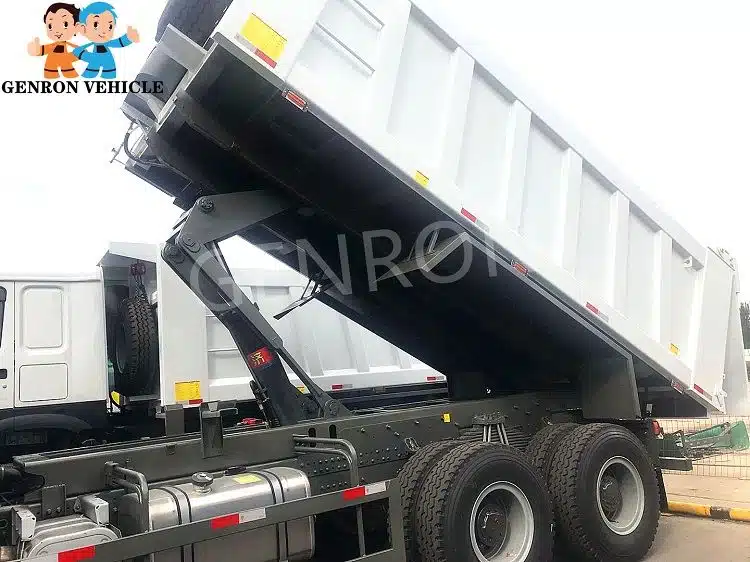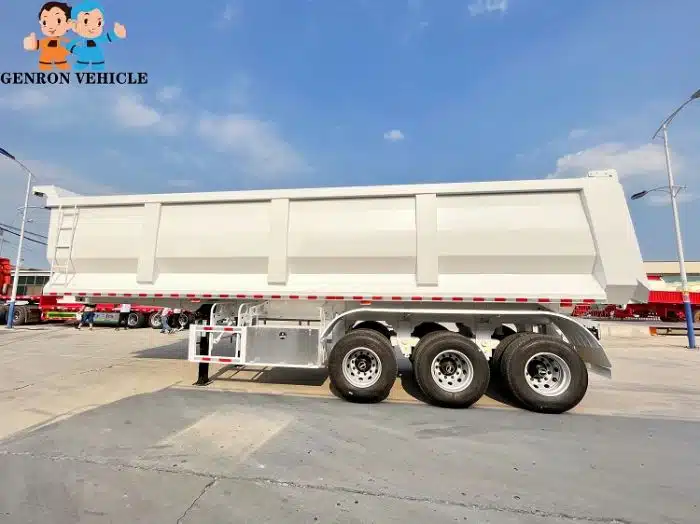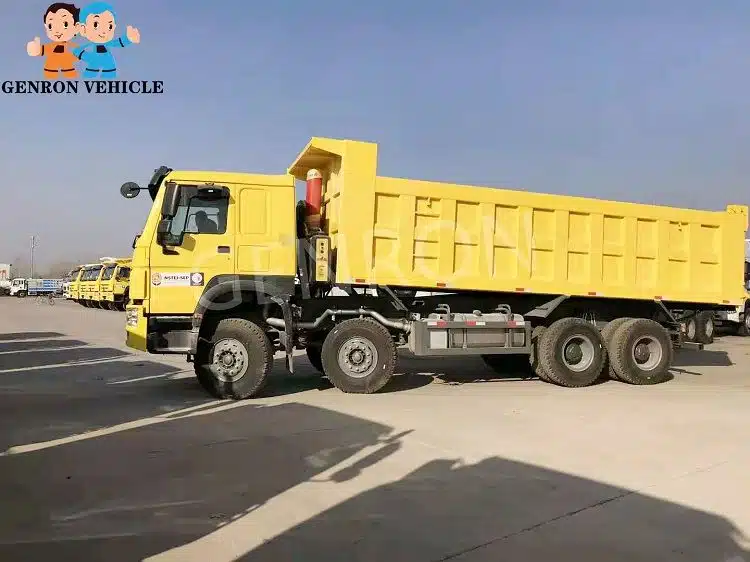
Tri-axle dump trucks can move large quantities of material without breaking down. They can carry from 15–25 tons per trip. However, some trucks from Genron International Trade, designed for specialized heavy-duty projects, can handle payloads up to 25–30 tons, with rare models reaching 60–70 tons under specific regional permits. How do they stay within legal limits and still be highly efficient?
It’s not just about how much they can carry. Their three-axle design spreads the weight evenly. This makes them stable when carrying heavy loads like concrete or construction debris. Knowing how much they can carry is key to safe and productive work.
What Makes Tri Axle Dump Trucks Stand Out?
Tri-axle dump trucks are known for their versatility and power. They are designed to work efficiently in heavy-duty tasks. Genron International Trade engineers these trucks to be both strong and reliable, meeting various job-site needs.
The Anatomy of a Tri Axle Dump Truck
These trucks have three axles: one for steering and two for driving. This setup helps distribute weight evenly, improving stability and capacity. The material of the dump box, like aluminum or steel, also matters. Genron uses lightweight yet strong materials to enhance dump truck carrying capacity.
| Axle Type | Max Capacity | Common Uses |
| Single Axle | Up to 10 tons | Light construction |
| Tandem | 10–18 tons | Medium projects |
| Tri Axle | Up to 25 tons | Heavy-duty operations |
Benefits of Three-Axle Configuration
- Increased stability on rough terrain
- Higher load capacity compared to single-axle models
- Reduced tire wear thanks to even weight distribution
- A tri-axle’s design lowers stress on critical components, extending service life.
Common Applications and Industries
These trucks are key in sectors like highway construction, mining, and large-scale earthmoving. Genron’s models are popular in quarries for hauling aggregate materials. They also shine in road maintenance, balancing legal weight limits with practical hauling needs. With payloads up to 25 tons, they efficiently handle high-volume tasks. Our dump trucks are built to meet these demands. Their advanced suspension systems and fuel-saving engines cut operating costs while maximizing productivity. Whether moving asphalt or debris, these trucks deliver reliable performance.
Capacity of Tri Axle Dump Truck: Understanding the Specifications
Tri-axle dump trucks are built to carry heavy loads safely and efficiently. They can carry between 15–25 tons, perfect for medium to large projects. Companies like Genron International Trade make these trucks strong yet easy to use, meeting all industry needs.
- Gross Vehicle Weight Rating (GVWR): Up to 80,000 pounds (36.3 tons)
- Payload Capacity: 15–25 tons (varies by model)
- Body Volume: 10–18 cubic yards, ideal for construction materials
- Axle Weight Ratings: Legal limits often cap at 34,000 pounds per axle
Companies like Genron test these numbers to ensure they are strong and follow the rules. The maximum load of these trucks changes based on the truck’s design and what it’s carrying. For example, you can carry more gravel than sand because it’s lighter. It’s important to spread the weight evenly across the axles to avoid overloading. The truck’s frame and suspension also play a big role in how much it can carry. Tri-axle trucks are great for city jobs because they can move around easily in tight spots. Always check the local rules and your truck’s manual to stay safe. Loading correctly and keeping your truck in good shape helps you work better without any problems.
Key Factors That Affect Dump Truck Carrying Capacity
To get the most out of a dump truck, you need to know what affects its carrying power. Everything from the truck bed to the engine matters. Let’s look at the four main areas that impact this important number.
- Body Design and Material Construction:Genron International Trade makes bodies that are both strong and light. The choice between steel and aluminum affects the truck’s capacity. Square or tapered designs also play a part in how much it can carry. Strong walls and floors help it last under heavy loads.
- Suspension Systems and Weight Distribution:Good suspension is key for even weight distribution. Their systems, like air ride setups, help with this. They adjust to different loads, making the truck more stable and easier to move.
- Tire Selection and Impact on Load Rating:They pick tires that match the truck’s weight. The right load index and tread pattern are important for off-road performance. Wider tires help spread the weight, increasing the truck’s capacity on rough ground. Keeping tire pressure up can boost capacity by up to 15%, as it supports heavier loads without compromising stability.
- Engine Power and Torque Considerations:The engine must be strong enough for the truck’s load. They choose engines with enough torque for steep hills and heavy loads. More horsepower means the truck can perform well, even when it’s full.
How to Calculate and Maximize Your Tri Axle Dumper Truck Load Capacity
Maximizing the load capacity of your tri axle dumper truck starts with understanding its volume and weight limits. At Genron International Trade, our trucks are designed to handle heavy loads safely and efficiently. Here’s a step-by-step guide to help you unlock your truck’s full potential.
Step 1: Understanding Volume vs. Weight Capacity
To calculate the volume, measure the internal dimensions of your dump bed. Multiply the length (ft) × width (ft) × height (ft), then divide the result by 27 to convert it into cubic yards. For instance, a dump bed measuring 16ft × 7ft × 5ft has a theoretical capacity of about 19.6 cubic yards. However, practical limits often range between 10–18 cubic yards due to load height restrictions and safety considerations.
Next, determine the truck’s weight capacity. Subtract the truck’s curb weight from its Gross Vehicle Weight Rating (GVWR) to find the maximum allowable load.
Step 2: Factoring in Material Density
Material density plays a crucial role in determining how much weight your truck can carry within its volume. Use the following estimates to calculate load weight:
| Material | Pounds per Cubic Yard |
|---|---|
| Concrete | 3,900–4,100 |
| Gravel | 2,800–3,200 |
| Soil | 2,200–2,700 |
| Snow | 1,200–1,500 |
To find the total weight, multiply the cubic yards by the material’s density. For example, wet soil can add up to 1,000 lbs per cubic yard, so it’s essential to account for this extra weight in your calculations to avoid overloading.
By carefully balancing volume, weight, and material density, you can safely and efficiently maximize your tri axle dumper truck’s load capacity.
Loading Techniques to Optimize Hauling Potential
Here are steps to maximize tri axle tipping truck capacity:
- Load from the rear to center first, then front to ensure even weight distribution.
- Use sensors or scales to track real-time weight per axle.
- Compact loose materials to reduce air gaps, increasing effective volume.
Genron’s designs focus on stability. They have dump boxes angled for smooth unloading and less spillage.
Conclusion
To get the most out of a tri-axle dump truck, understanding its design is key. End dumps like those from Genron International Trade leverage three axles to carry heavy loads safely. This configuration balances material weight with legal limits, ensuring efficient performance.
These trucks can carry between 10–18 cubic yards, or up to 25 tons, depending on the model. The design of the axles and how the load is spread out affects how much it can carry. Genron’s trucks are built to last, with a Gross Vehicle Weight Rating (GVWR) of 80,000 pounds, following international standards.
Keeping the tires at the right pressure and not exceeding the GVWR is key. This prevents damage to the truck and keeps it legal. Using smart load planning and modern suspension systems also helps the truck last longer and saves money.
FAQ
Tri-axle dump trucks usually carry between 15–25 tons. This depends on the design and materials used.
The three-axle design spreads the load better. It also makes the truck more stable and can carry more than single-axle or tandem-axle trucks.
Tri-axle dump trucks are best for heavy construction, highway projects, mining, and big earthmoving jobs. They’re great for moving lots of material efficiently.
Look at the Gross Vehicle Weight Rating (GVWR), payload capacity, body volume, and maximum axle weight ratings. These are key to figuring out the truck’s load capacity.