Choosing between a superlink and an interlink trailer depends on four variables: local road regulations, cargo type and weight, route environment, and whether independent rear trailer operation matters to your business. Both configurations use a single tractor to pull two trailers. The difference is in how those trailers are sized, coupled, and classified across operating markets. Getting the configuration wrong creates compliance exposure before the first loaded run.
What a Superlink Trailer Is and How It Works
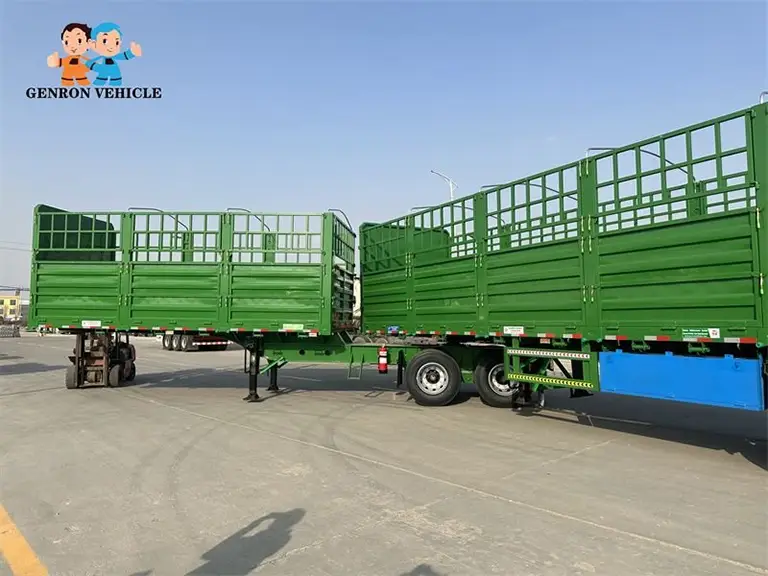
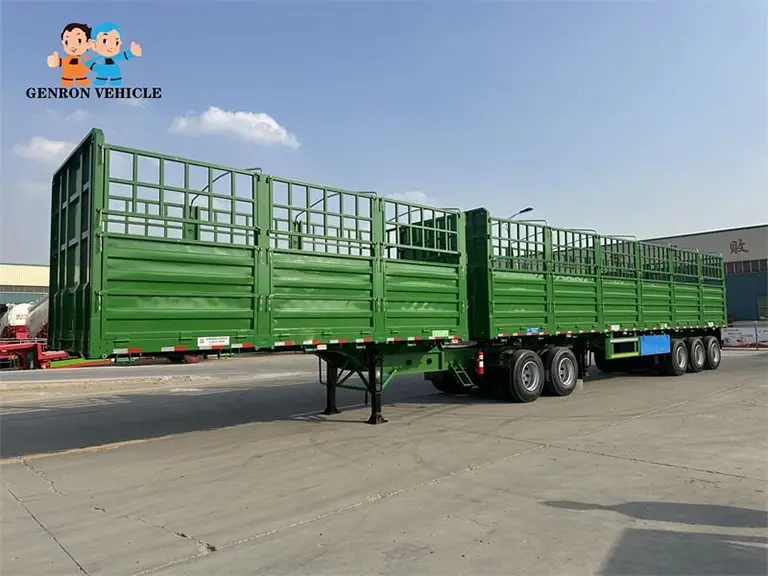
A superlink trailer uses one tractor to pull two trailers of unequal length. The front trailer is shorter — typically 6 to 7.5 metres of load deck. The rear trailer is longer, typically 9 to 12 metres. A dolly connects the two units, creating an A-train double with three articulation points: tractor-to-front trailer, front trailer-to-dolly, and dolly-to-rear trailer.
The dolly allows the rear unit to detach and run independently with a separate tractor. This is a key operational advantage for depot and multi-drop operations.
Superlink trailers are the primary high-capacity configuration across South Africa, Zimbabwe, Zambia, and sub-Saharan Africa. They are also gaining use in Southeast Asia and select South American corridors where high-volume, long-distance freight economics justify the configuration. For a full breakdown of the structure and configuration, see what a superlink truck is.
What an Interlink Trailer Is and How It Differs
An interlink trailer also uses one tractor to pull two trailers — but the connection method and regional terminology differ from the superlink. The distinction is not consistent across all markets.
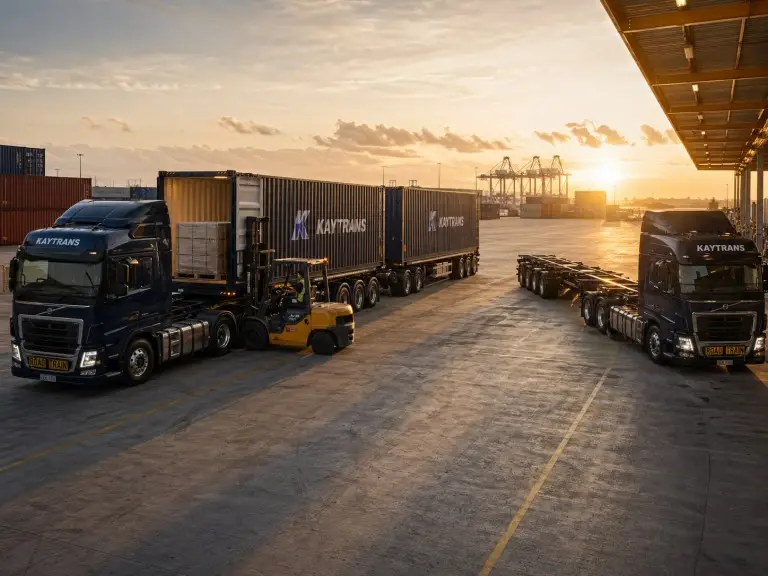
In East and Southern Africa container transport, an interlink typically pairs a 20-foot skeleton or superlink flatbed trailer unit at the front with a 40-foot unit at the rear. They connect via a pintle hook or direct coupling — not a separate dolly. This reduces articulation points to two and removes the independent rear trailer capability that a dolly provides.
In other markets, “interlink” and “superlink” are used interchangeably. The technical distinction is coupling method — dolly versus direct connection — and whether the two trailers are unequal in length. When specifying for a new market, the local regulatory definition takes priority over product naming.
When teams assume that any two-trailer combination matches the configuration permitted under local road regulations, the result is often a specification mismatch. We clarify the regulatory classification for each target market at the specification stage.
Key Structural and Performance Differences
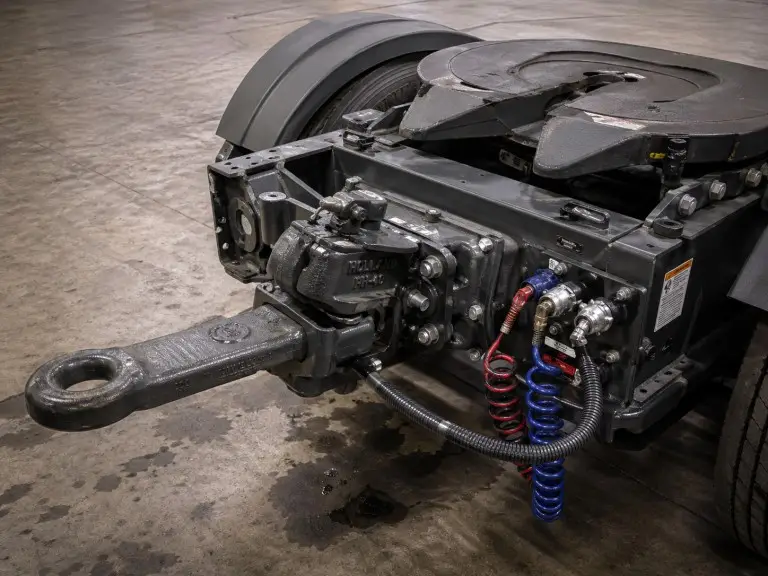
Coupling mechanism is the primary structural variable. A superlink with a dolly has three articulation points and allows independent rear trailer deployment. A direct-coupled interlink has two articulation points and does not. The dolly is an additional component requiring its own inspection schedule.
Trailer length ratio affects axle load distribution. A superlink’s asymmetric pairing concentrates more payload toward the rear. A matched-length interlink produces more even distribution between front and rear units.
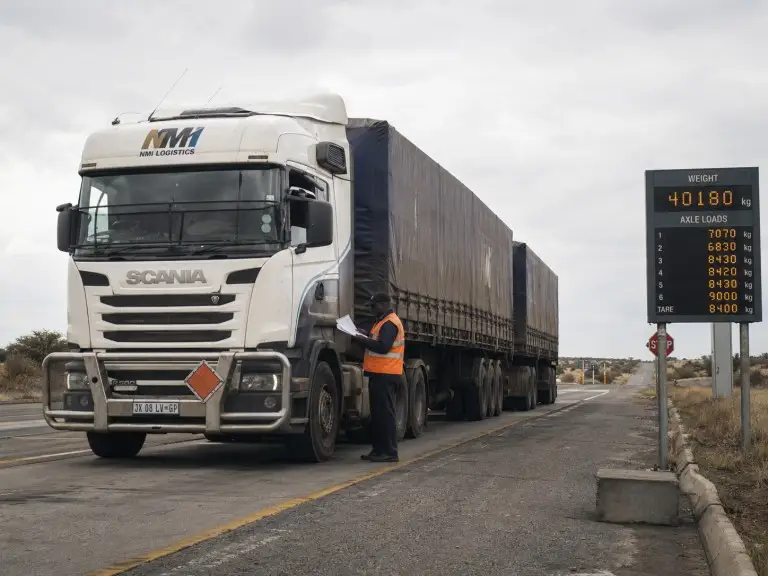
Payload capacity depends on axle configuration and local regulation — not trailer type alone. Superlink combinations in South Africa typically operate at 56 to 80 tonnes gross combination mass on permitted corridors. Interlink configurations typically fall in the 50 to 70 tonne range for equivalent axle counts. These figures are illustrative. Actual permitted payload depends on axle count, axle spacing, gross mass limits, and the bridge formula for each route. Verify against current regulations before specifying.
Turning radius is larger for superlink combinations. The extra articulation point and longer overall length require 15 to 18 metres of turning radius under load. Interlink combinations typically need 12 to 15 metres. In port terminals and tight industrial sites, this difference affects driver cycle times directly.
Regulatory Frameworks and Compliance
Superlink and interlink combinations are subject to regional regulations on combination length, gross mass, axle loads, and permitted coupling types. A combination that is compliant in one jurisdiction may need modification or a special permit in another.
In South Africa, the National Road Traffic Act governs permissible combinations, axle mass limits, and length maxima for multi-trailer vehicles. The superlink A-train is a recognised configuration under this framework. Coupling hardware falls under UNECE Regulation No. 55, which covers strength and interchangeability requirements for drawbar couplings and towing eyes. Operators must confirm that their specific combination — dolly type, coupling spec, axle spacing, and bridge formula compliance — meets the requirements for each corridor.
In the European Union, Directive 96/53/EC governs combination vehicle lengths. Extended limits for modular and EMS configurations apply in participating member states — there is no single unified maximum for all configurations. Operations crossing EU borders require compliance with each member state’s specific rules.
This guidance covers standard road transport configurations. Permit-load combinations, dedicated mining haul roads, and national exemption frameworks require separate regulatory review.
How to Match Configuration to Your Operation
Frame geometry is one input in a broader equipment selection process. Work through these four before specifying.
- Regulatory environment: This is the binding constraint. Confirm which multi-trailer configurations are permitted in each jurisdiction the fleet operates in. Payload and flexibility are secondary if the configuration cannot legally run on the planned corridors.
- Cargo type and loading requirements: Container operations point toward an interlink skeleton configuration. Bulk materials with hydraulic side discharge point toward a side tipper superlink trailer. Mixed cargo needing independent rear trailer deployment points toward a superlink with a dolly.
- Fleet operational flexibility: If dropping and redeploying the rear trailer independently matters — for shunting, overnight storage, or multi-drop work — the superlink dolly enables this. A direct-coupled interlink does not.
- Route environment: Port terminals and urban delivery points with tight turning areas favour the interlink’s shorter turning radius. On long-distance open highway corridors, the difference matters less.
In fleets operating across both urban delivery zones and long-distance bulk corridors, we find that coupling flexibility — the ability to deploy front and rear trailers independently — is the deciding variable more often than payload capacity alone.
Superlink vs Interlink: Side-by-Side Comparison
| Dimension | Superlink | Interlink |
|---|---|---|
| Trailer length ratio | Asymmetric — front shorter, rear longer | Matched to cargo or container length |
| Coupling type | Dolly between trailers | Direct pintle hook or similar |
| Articulation points | Three | Two |
| Independent rear trailer | Yes | No |
| Typical GCM range | 56–80 t (jurisdiction-dependent) | 50–70 t (jurisdiction-dependent) |
| Turning radius | 15–18 m typical | 12–15 m typical |
| Maintenance complexity | Higher — dolly is an extra component | Lower |
| Primary markets | South Africa, sub-Saharan Africa, Southeast Asia | East/Southern Africa, container port operations |
All payload and length figures are illustrative. Baseline dimensional references are available in our superlink truck dimensions guide. Verify against current road transport regulations for each corridor before specifying.
Conclusion
The choice between a superlink and an interlink trailer is set by the regulatory framework on the operating corridor, the cargo and loading requirements, and whether independent trailer operation is a priority. Payload, maneuverability, and superlink trailer price follow from those inputs — they are not the starting point.
At Genron, we build and customise superlink semi-trailer configurations for operators across sub-Saharan Africa, Southeast Asia, and other multi-trailer markets. In projects where fleets run both bulk corridor routes and port or urban container delivery, we find that coupling flexibility defines the right configuration more often than total payload. The combination that works on the highway leg may create problems at the terminal gate. Catching that mismatch during drawing review prevents operational problems after delivery.
To start a specification review, share your primary routes and jurisdictions, cargo type and weight profile, whether independent trailer operation is needed, and any terminal compatibility requirements. Our team will confirm the right configuration before any commitment is made — reach out to Genron to begin.
FAQ
Not always. In some markets the terms are used interchangeably. The technical distinction is coupling method — dolly versus direct connection — and trailer length ratio. In South Africa, these configurations carry specific regulatory definitions that affect legal operating corridors. Use the local regulatory classification when specifying for a new market.
Superlink combinations generally reach higher gross combination mass — typically 56 to 80 tonnes on permitted routes. Interlink configurations typically reach 50 to 70 tonnes for equivalent axle counts. The actual permitted payload depends on axle configuration, axle spacing, bridge formula, and local mass regulations. Verify both figures before use.
Yes. A superlink with a dolly allows the rear trailer to detach and run with a separate tractor. This is a key advantage for depot shunting and multi-drop work. A direct-coupled interlink does not allow this without full decoupling and recoupling.
No. Combination length limits, gross mass limits, axle load limits, and permitted coupling types are all jurisdiction-specific. South Africa uses the National Road Traffic Act framework. The EU uses Directive 96/53/EC with member-state implementation. Other markets in Africa, Southeast Asia, and the Middle East operate under separate rules. Verify compliance for each jurisdiction on the planned route.