Chinese manufacturers often list fence trailers and side wall trailers as separate products. But many suppliers use the terms interchangeably. Buyers in different regions add their own names on top of that. In Genron’s experience working across export markets for over two decades, the wrong configuration gets ordered because no one clarified the structural difference at the inquiry stage.
This article covers open-structure stake and drop-side trailer types only. It does not apply to tautliners or fully enclosed configurations — buyers evaluating what is a curtain side trailer will find those products follow a different structural and regulatory profile.
Simple rule: use a fence trailer when cargo needs airflow or fast overhead loading. Use a side wall trailer when cargo is bagged, palletized, or shifts easily in transit. Buyers already focused on the fence configuration can find the full spec and cargo fit breakdown in the fence semi-trailer guide.
How Structure Determines What Cargo Each Trailer Can Carry
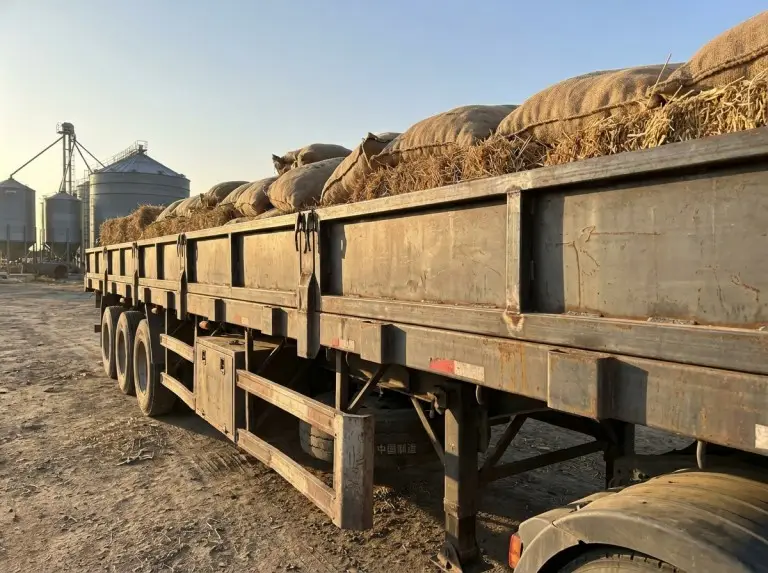
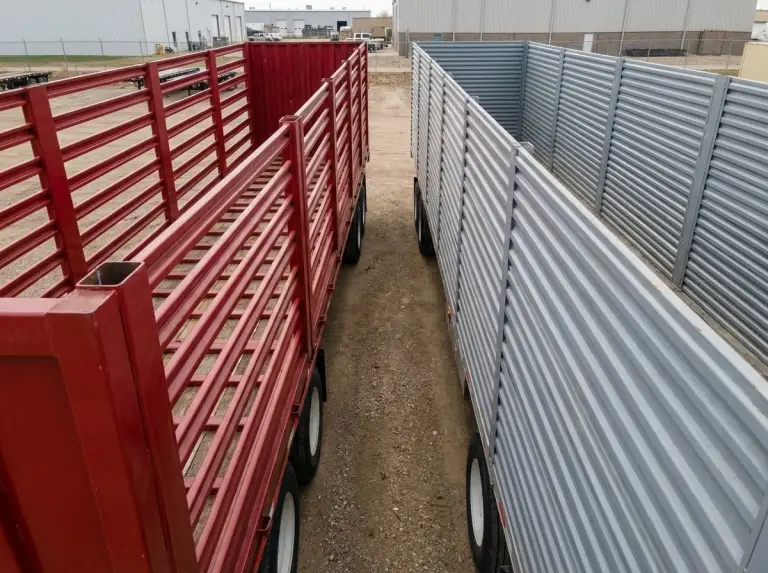
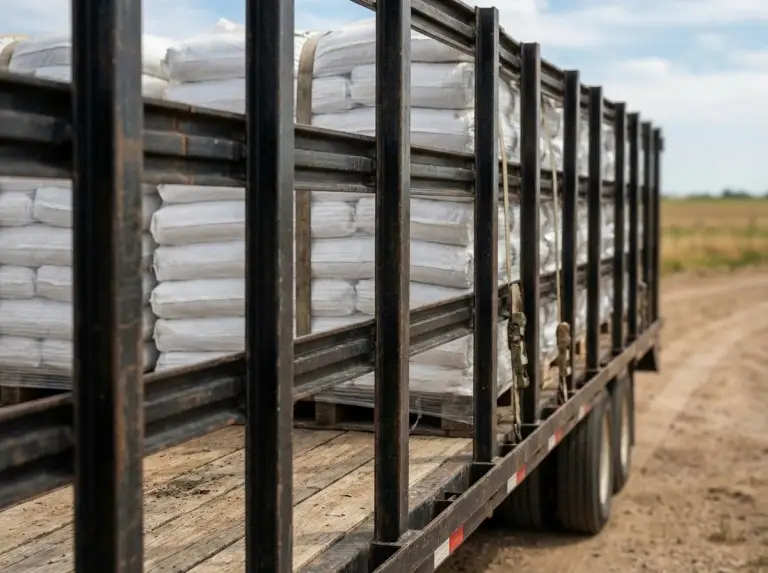
A fence trailer uses vertical steel posts with open gaps between them. A side wall trailer uses solid panels running the full length of both sides of the deck. That structural difference is what drives cargo suitability.
On the fence trailer, the gaps between posts stay open. Air moves freely around the load. Some configurations add horizontal rails or chains between posts for extra containment.
On the side wall trailer, the base configuration has no roof. Some variants offer partial top cover. Drop-side versions allow panels to fold outward for forklift access from the side.
| Cargo Category | Fence Trailer | Side Wall Trailer |
|---|---|---|
| Bulk agricultural goods (maize, cassava, loose grain) | Well suited — open sides allow ventilation | Suitable if panels contain spillage risk |
| Livestock or live animals | Designed for this — open airflow required | Not appropriate — insufficient ventilation |
| Construction materials (timber, rebar, pipes) | Suitable — posts contain long or irregular loads | Suitable for bagged cement or palletized brick |
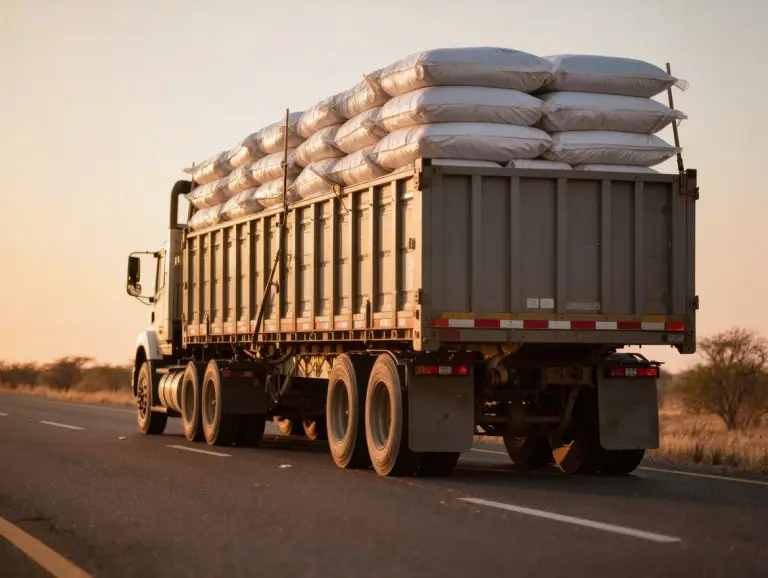
| Bagged goods (rice sacks, fertilizer bags) | Risk of bag shift through post gaps | Better — solid panels provide lateral support |
| Laterally sensitive or fragile loads | Post gaps create shift and damage risk | Preferred — solid panels limit lateral movement |
| Loose mining aggregate | Posts may not contain fine material | Solid panels reduce spillage loss |
Match cargo to structure first. Route conditions and loading method come second.
The side wall trailer benefits for bagged and palletized cargo go beyond lateral containment — solid panels also reduce load shift on long-haul routes where road quality is inconsistent. The table tells you which trailer type to buy. Regional conditions then determine which configuration within that type will hold up on your route.
Which Trailer Performs Better in Your Region
Road quality, climate, and loading infrastructure each shift the performance advantage. The right choice differs by region.
Africa — unpaved routes, rain seasons, bulk agricultural and mining loads: Fence trailers handle high-frequency bulk crop routes well. The open structure loads fast and does not trap moisture. Maize and cassava move cleanly. For fine mining aggregate on wet roads, buyers often find what is a side tipper trailer a more appropriate starting point — solid containment and hydraulic discharge handle dense wet material better than either open-post or panel configurations.
Southeast Asia — short-haul produce runs, high loading frequency: Loose produce and rice tolerate the open fence structure on short hauls. Many port warehouses use forklift side-access. Drop-side wall trailers fit that workflow. Fixed-post fence trailers require top or rear loading only, which slows cycle time at busy facilities.
Middle East — construction material transport, dry climate, long hauls: Rebar, timber, and pipe suit the fence trailer on long dry routes. Bagged cement and palletized block move better in side wall trailers. Solid panels stop bags from shifting and tearing on extended runs.
Latin America — mixed agricultural and mining loads, regulatory variation: Stake trailers carry bulk grain and livestock. Side wall trailers handle bagged fertilizer and packaged export goods. Axle-load limits vary by country. Confirm local rules with the relevant transport authority before ordering.
Cost Difference Between Fence and Side Wall Trailers
Fence trailers cost less upfront than equivalent side wall configurations. The gap comes from material volume. Solid steel panels require more steel and more fabrication time than open post-and-rail structures.
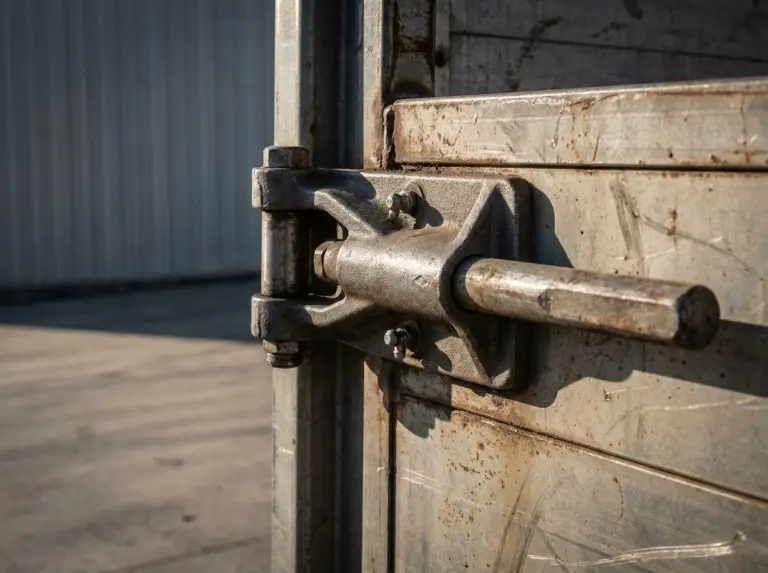
The difference shows up again on maintenance. Side wall trailers with drop-side panels have hinge points, locking rods, and panel joints that wear independently from the main frame. Each joint is an extra inspection point. On high-frequency routes, this adds to scheduled maintenance cost over time.
Fence trailers have fewer moving parts in the side structure. But post sockets and horizontal rail fittings still need inspection for fatigue cracking — especially on unpaved roads where torsional load is higher.
Neither type is cheaper to run in every situation. Final cost depends on route, cargo, and loading frequency. Factor both purchase price and maintenance exposure before comparing quotes.
5 Questions to Answer Before You Contact a Supplier
Five variables determine which trailer fits your operation. Resolve all five before reaching out to any supplier.
- What is your primary cargo type? Loose bulk, livestock, or long construction materials favor a fence trailer. Bagged, palletized, or laterally sensitive cargo favors a side wall trailer.
- What are your loading site conditions? Top-crane or conveyor loading works with either type. Forklift side-access favors a drop-side wall trailer. Check your facility layout before deciding.
- What are the climate and road conditions on your route? Dry long-haul construction routes tolerate either configuration. Wet unpaved roads with fine bulk material usually favor solid side panels to cut load loss — verify this against your specific route.
- What are the load and dimension limits in your target market? Axle-load limits, deck height, and lighting rules vary by country. Confirm applicable standards with your local transport authority before procurement.
- What is your total procurement and maintenance budget? Buyers working through how to choose a sidewall semi-trailer will find that drop-side mechanism complexity and maintenance frequency are the two variables that most commonly shift the total cost calculation away from the purchase price alone.
Answering all five before the first supplier call cuts configuration errors and shortens the procurement cycle.
Conclusion
Most costly configuration errors come from two places: mismatched terminology at the inquiry stage, and structural assumptions that never get verified before delivery.
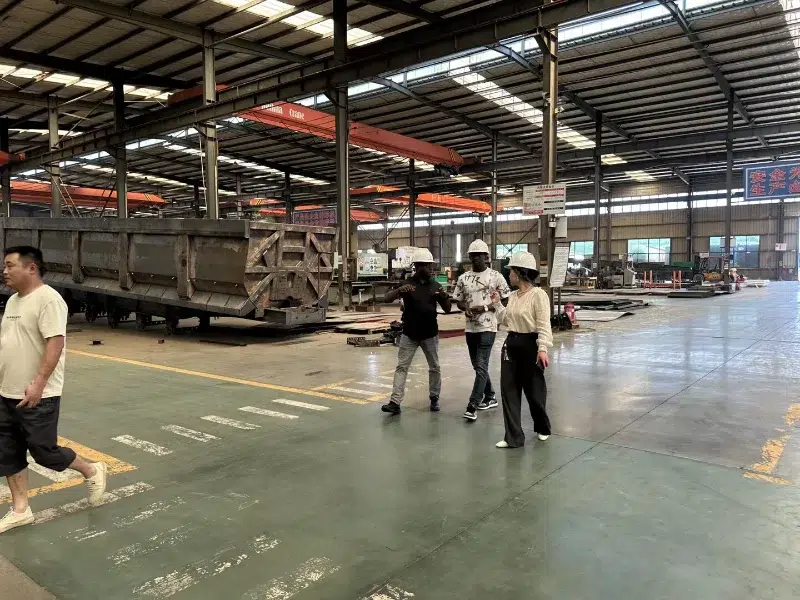
Genron has built and exported both fence trailers and side wall trailers from our Qingdao production base to buyers across more than 30 countries over the past 20 years. That record across African laterite roads, Southeast Asian port routes, and Middle Eastern highways shapes the guidance above. Bring your cargo type, destination market, and loading method — our technical team will give you a specific configuration recommendation before you issue an RFQ.