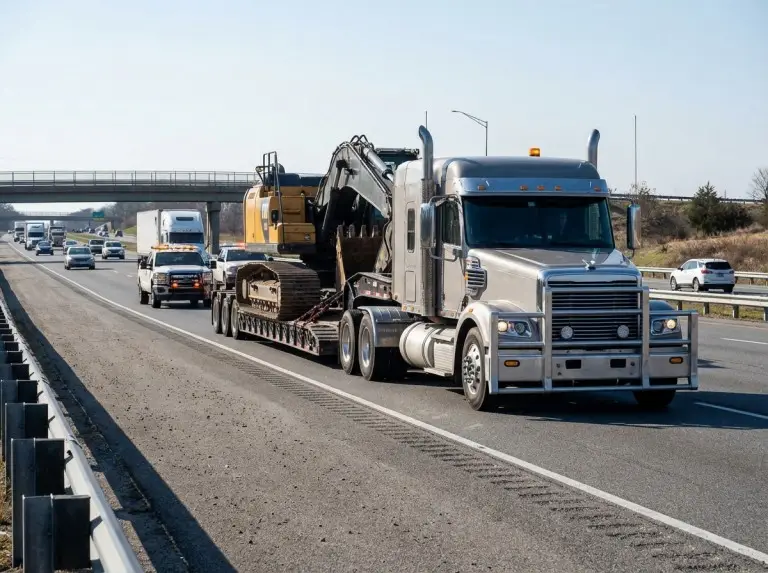
Choosing a heavy haul trailer means matching cargo needs with trailer structure for a specific route. We clarify trailer types for procurement teams and fleet managers. This ensures trailer decisions happen before permits, routing, and loading plans lock in risk.
Heavy haul moves often fail for predictable reasons. We verify shipped height on the deck, loading access at both ends, and axle distribution before quoting a configuration. A “close enough” choice can lead to route rejection, loading delays, or forced re-permitting.
GENRON builds semi-trailers for export markets, so we write from a manufacturer’s perspective. We compare main trailer categories, explain where they fit, and show checks required to prevent downtime and compliance surprises.
Heavy haul boundaries and load classification
Heavy haul classification begins when a shipment exceeds standard legal size or weight limits for a jurisdiction. We treat common limits as planning benchmarks only. Permit class, axle group rules, and route segments can change the real threshold.
Height and width usually drive the first hard constraint. We verify shipped height after blocking, cradles, or supports are added. Deck height and support height determine bridge and overhead clearance. A route that looks feasible on paper can fail once the load sits on the trailer.
Weight planning involves more than total weight. We verify weight distribution, center-of-gravity estimates, and concentrated load zones. Axle count and deck structure depend on load concentration. A heavy point load may require a different deck or more axles, even if overall weight seems manageable.
Operational classification matters too. We confirm loading methods, site ground conditions, and the ability to drive equipment onto the deck. Loading constraints can rule out an otherwise correct trailer type. A trailer that fits the highway might still be unusable at the shipper or consignee.
Core heavy haul trailer categories
Trailer categories map to the shipment’s dominant constraint: height clearance, over-length geometry, loading access, or axle distribution. We compare categories using deck height, loading method, and the common limitations that force a step up.
Trailer category | Best when the main constraint is | Common loading method | Typical limitation to plan around |
|---|---|---|---|
Flatbed | General heavy freight within normal clearance | Side load or crane | Over-height freight after blocking |
Step deck | Extra clearance without a deep well | Rear load, ramps, or crane | Limited fit for very heavy point loads |
Lowboy (lowbed) | Tall and heavy equipment needing low deck | Ramps or crane | Approach angle and usable deck geometry |
Double drop | Maximum height clearance via deep well | Crane or specialized ramps | Short well length and width constraints |
RGN | Frequent drive-on loading for self-propelled equipment | Front drive-on | Higher tare weight and higher complexity |
Extendable | Over-length cargo that cannot be broken down | Crane or rear load | Turning envelope and route complexity |
Multi-axle platform | Ultra-heavy loads needing legal distribution | Depends on deck type | Maneuverability and permitting complexity |
Flatbed trailers
Flatbed trailers are the baseline option when shipped height stays within normal clearance. We use them when open access for side loading and crane loading is the priority.
The most common mistake is assuming cargo height equals shipped height. We verify the full stack-up, including blocking and saddles. A small increase can trigger over-height permitting or remove route options. Tie-down geometry also matters. Some heavy cargo needs specific securement angles and anchor access.
Flatbeds can support heavy equipment if the machine is compact and low. We confirm center of gravity and footprint stability. Tall, narrow loads can become operationally risky even when the move is legal.

Step deck trailers (drop deck)
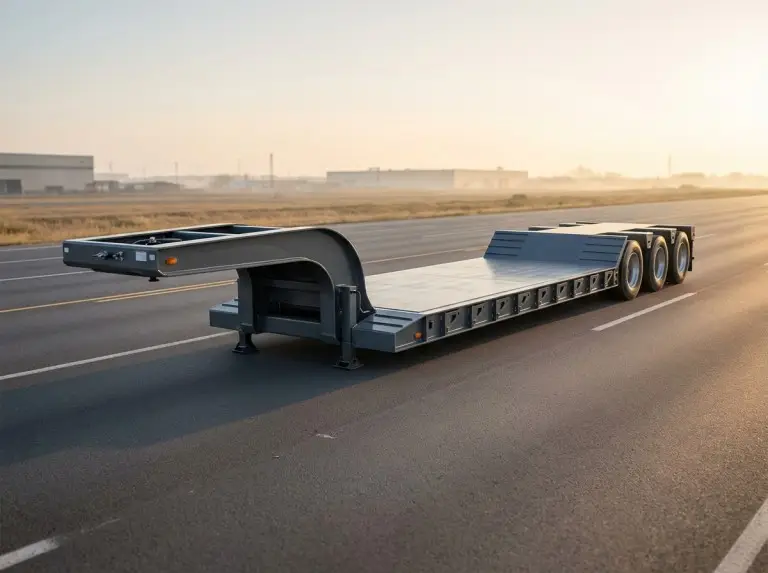
Step deck trailers are the most efficient step up when clearance is tight but a lowboy isn’t required. We recommend them when the goal is extra height margin with an open platform.
A step deck decision depends on lower deck height and usable lower deck length. We verify these values against shipped height and cargo length plus blocking space. Many loads that “fit” by length still need room for cribbing and safe tie-down angles. Ramps can be a deciding factor when the site expects drive-on loading.
Low-profile step decks can add clearance and stability. We consider tire choice, wear, and regional serviceability. Lower decks can shift tire and suspension constraints in certain operating environments.
Further reading:Step Deck vs Flatbed Trailer: Key Differences
Lowboy trailers (lowbed)
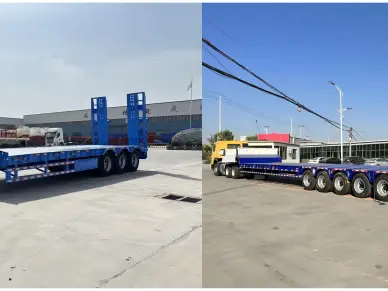
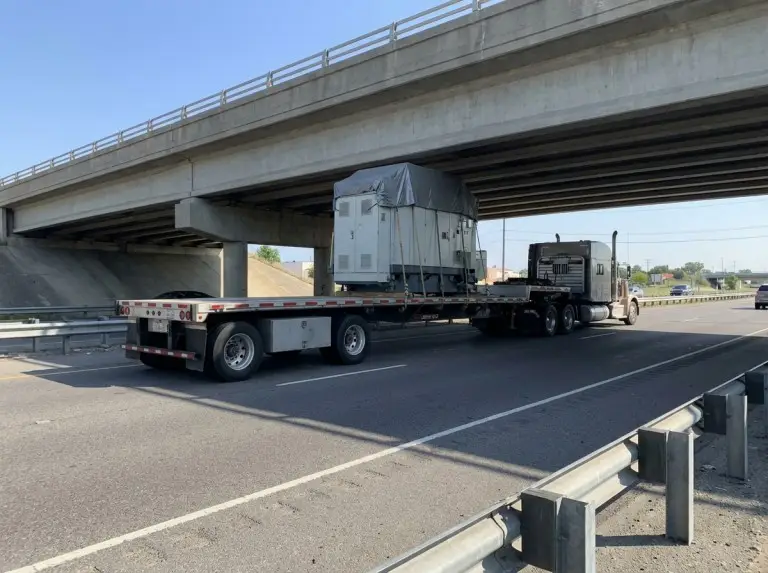
Lowboy trailers, including lowbed trailer for sale configurations, reduce shipped height by keeping the main deck close to the ground. We specify them for dozers, excavators, large industrial machines, and equipment that needs overhead clearance.
Lowboy planning involves more than bridge height. We verify approach angles, ground clearance at ramps, and site transitions like rail crossings. Bottoming out is a common failure mode. Usable deck geometry also matters. Lowboy wells and ramp structures reduce the space available for certain footprints.
Lowboy selection should follow a loading and route check. We confirm whether the shipper provides a crane or requires drive-on loading. That requirement may push the choice toward an RGN configuration.
Double drop trailers
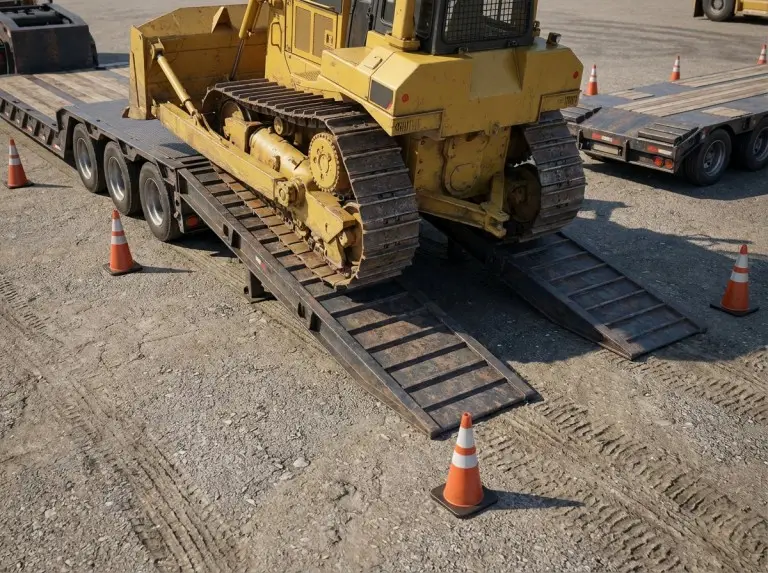
Double drop trailers maximize clearance by using a deeper center well. We use them when height is the dominant constraint and cargo fits inside the well without unsafe overhang.
The critical constraint is well geometry, not just depth. We verify well length, width, and lift or support points. Tall cargo often needs careful handling at loading. A double drop solves clearance issues but creates new constraints on length and support placement.
Double drop choices impact the loading method. We confirm crane availability and site space. Some double drop moves are impractical without controlled lifting equipment.
RGN trailers (removable gooseneck)
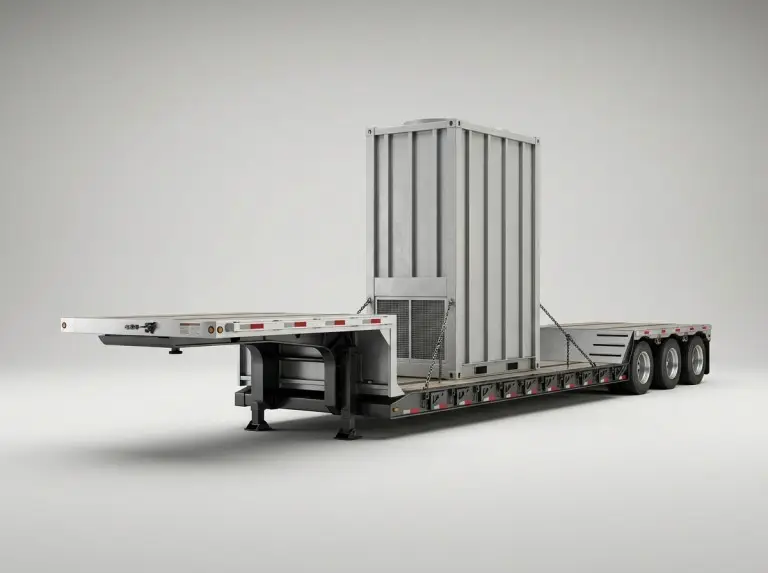
RGN trailers are chosen for loading access as much as for clearance. We specify RGNs when self-propelled equipment must be driven onto the deck safely and repeatedly.
RGN planning depends on approach angle and ground condition at the loading point. We verify surface stability, slope, and ramp alignment. Drive-on loading can fail on soft ground or uneven pads. We also re-check shipped height after reattaching the gooseneck because the loaded stance can differ from estimates.
RGNs add tare weight and mechanical complexity. We treat these factors as cost and payload drivers. This is vital for fleets that run frequent cycles and want predictable maintenance.

Extendable trailers (stretch trailers)
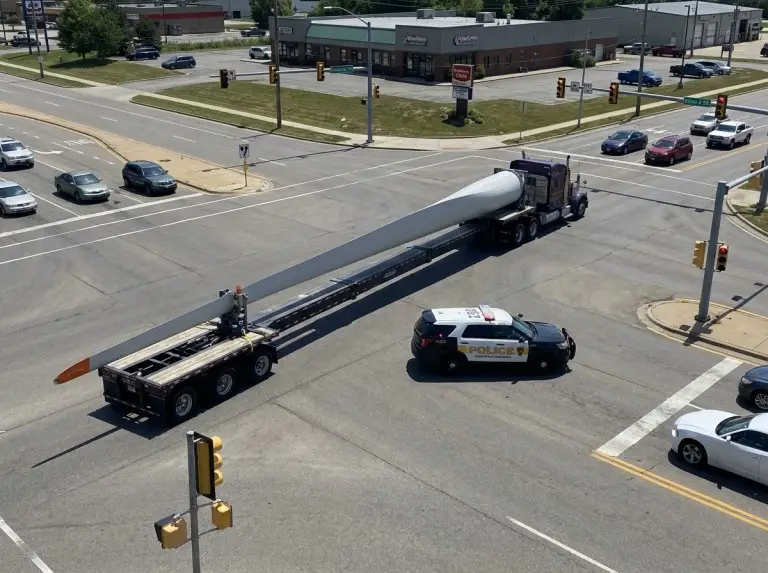
Extendable trailers solve over-length cargo problems that standard decks cannot support. We use them for long rigid shipments like beams, long pipe, and wind components. Reducing unsupported overhang improves stability.
Route geometry is the decision bottleneck for extendables. We verify turning envelope, intersection constraints, and delivery site access. Long wheelbases can force escorts, detours, or schedule restrictions. Support point planning also matters. Long cargo often needs saddles or staged supports along its length.
Extendables have moving structures that require inspection discipline. We confirm the fleet’s operating pattern and maintenance capability. Frequent extension cycles can change wear and service needs.
Multi-axle trailers and axle-added configurations
Multi-axle configurations make heavy moves legal and controllable by spreading weight across more axles. We plan these setups when axle group limits, bridge limits, or concentrated load zones require extra distribution.
Multi-axle planning starts with load distribution intent. We verify where weight bears on the deck and how axle groups share the load. A poor distribution plan can create illegal axle loads even if total weight is acceptable. Maneuverability becomes a major constraint as axle count rises. We verify site turning space and last-mile access.
More axles are not automatically better. We target the minimum configuration that satisfies legality, stability, and site access. Extra axles add cost, tare weight, and permitting complexity.
Further Reading:Types of Trailers in Freigh
Selection checks that prevent rework
A heavy haul trailer decision becomes reliable only after verifying cargo facts and site methods. We prevent rework by collecting inputs that drive deck geometry, axle intent, and loading method.
The inputs we ask for before we finalize a configuration:
- Cargo dimensions and shipped height, including blocking, cradles, or saddles.
- Total weight and a center-of-gravity estimate when available.
- Load footprint and any concentrated load zones or support points.
- Loading and unloading method at both ends, including ground condition and ramp access.
- Route region and known constraints such as overhead clearance or tight turns.
- Delivery constraints such as site entry angle, ramp transitions, and unloading space.
We apply a simple selection flow based on the dominant constraint. Height pressure pushes choices from flatbed to step deck to lowboy or double drop. Length pressure pushes choices toward extendables, making route geometry the limiting factor. Weight pressure pushes axle planning and distribution checks before locking any deck choice.
Loading method is often the hidden constraint. We verify crane access, self-propelled capabilities, and site conditions for drive-on operations. A technically correct deck can still cause downtime if the site cannot execute the loading plan.
Permits, routing, and safety constraints
Permits and routing constraints can change trailer choice, not just paperwork timing. We prevent compliance surprises by aligning trailer structure with permit triggers, route feasibility, and escort planning.
Permit triggers vary by jurisdiction and route segment. We treat size and weight limits as planning benchmarks only. We require verification for the actual region. Height and width deserve early attention because they can invalidate routes even when weight is manageable.
Routing constraints include overhead clearance, bridge limits, work zones, and intersection geometry. We verify the turning envelope for extendable and multi-axle moves. Long wheelbases can fail on the last mile. A route that supports highway travel may still reject the delivery approach.
Escort and travel windows can reshape schedule and cost. We do not assume escort rules or travel restrictions because they are region-dependent. We ask for the route region early so planning includes realistic operational constraints.
Safety planning is a repeatable workflow. We design for securement access, stable support, and inspection practicality. This allows carriers to execute procedures without improvisation. Securement requirements should be verified against the governing authority and carrier compliance process.
Conclusion
Heavy haul trailer types solve different constraints. The correct choice follows a constraint-first decision flow. At GENRON, we summarize selection simply: identify the dominant constraint, confirm the loading method, then validate distribution and route feasibility.
We turn cargo facts into deck geometry, axle intent, and loading interfaces. This helps procurement teams quote and operate with fewer surprises. We avoid universal claims because legality and routing depend on jurisdiction.
FAQ
What qualifies as a heavy haul load?
A heavy haul load exceeds standard legal size or weight limits for the jurisdiction and route. The boundary should be verified because permit class and route segments can change the real trigger.
Are step deck and drop deck the same trailer type?
Step deck and drop deck usually refer to the same two-level deck design. The decision depends on lower deck height, usable deck length, and whether ramps or crane access exist.
What is the practical difference between lowboy, double drop, and RGN?
Lowboy and double drop focus on lowering shipped height. RGN focuses on drive-on loading access. The correct choice depends on whether clearance, well fit, or loading method is the dominant constraint.
When should an extendable trailer be considered?
Use an extendable trailer when cargo length is the main constraint and overhang creates stability or compliance risk. Check route turning geometry and delivery access early. These factors often drive cost and feasibility.
Why do multi-axle heavy haul trailers exist?
Multi-axle setups distribute weight to satisfy axle group constraints and reduce road stress. The tradeoff is maneuverability and permitting complexity, which must be planned for the specific route.
Do heavy haul moves always require permits or escort vehicles?
Not always. Requirements depend on which limits are exceeded and where the move operates. The safest approach is treating rules as jurisdiction-dependent and verifying them for the actual route plan.