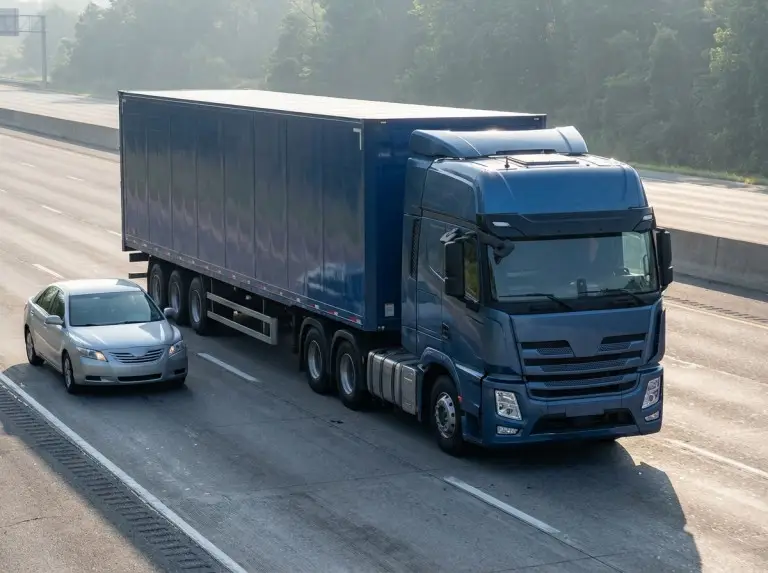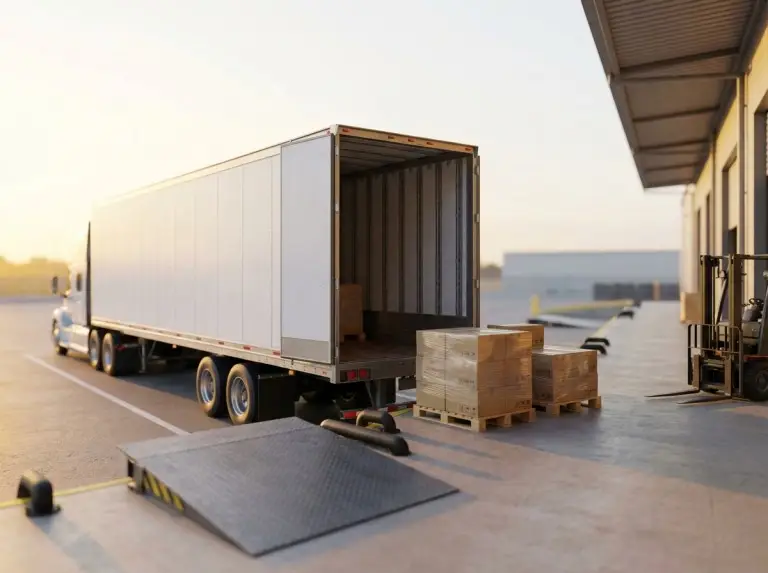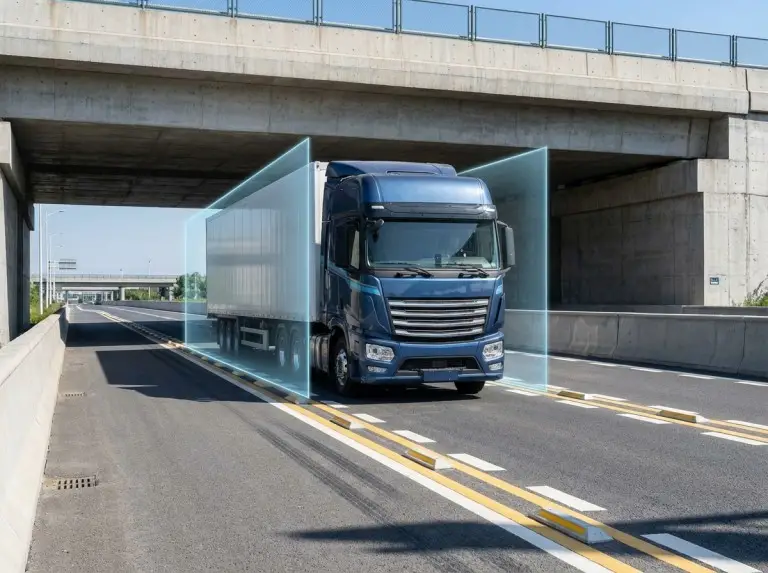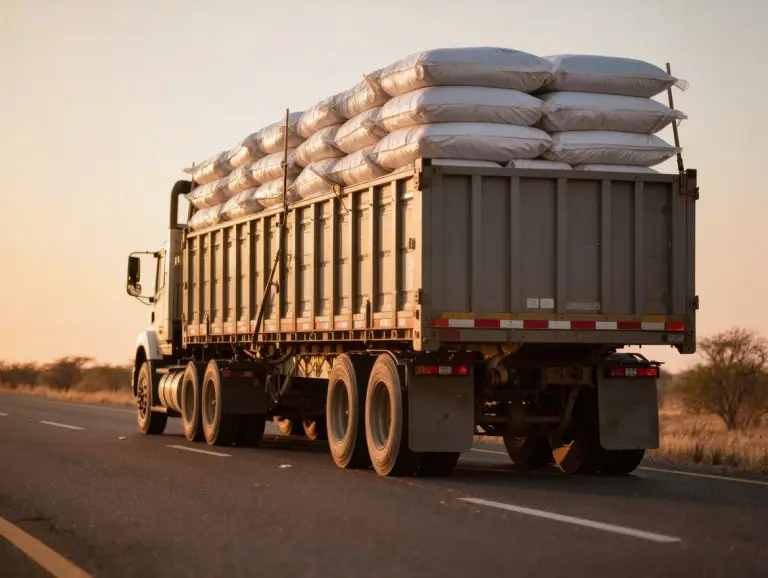
A fence semi-trailer is an open-top platform trailer. Removable steel panels mount on vertical stakes along the chassis rail. The design solves one problem: carrying cargo too tall or irregular for a flatbed trailer, without needing the sealed walls of a dry van.
In Genron’s experience delivering fence semi-trailers to buyers across Africa, Southeast Asia, and the Middle East, category misidentification is the most preventable procurement error. Confirming the product type before reviewing specs saves time on both sides.
Use a fence semi-trailer when cargo is loose, irregular, or too tall for a flatbed but doesn’t need a sealed environment. Use a bulk tipper when load density exceeds roughly 1.4 t/m³ or hydraulic discharge is required.
Three variables define performance: panel height, stake spacing, and floor beam pitch. This guide covers flatbed and lowbed trailer configurations only. It does not apply to refrigerated trailers, pressurized bulk tankers, container chassis, or heavy-haul lowbed configurations.
A fence trailer is not a flatbed — a flatbed carries loads secured by straps with no side walls. It’s not a dry van either, which has a roof and weatherproofing. And unlike a bulk tipper, it unloads through side doors, not a hydraulic bed. Clarifying this before writing an RFQ saves both parties time.
The Common Misconception — Fence Trailers Are Not Universal Bulk Haulers
Fence trailer suitability is often overstated in export markets. That overstatement is the most common source of structural failure and overload violations after delivery.
Many buyers assume any open-top trailer with side panels can carry any loose or bulk cargo. That assumption leads to overloaded frames and early structural fatigue.
Standard fence panel locking systems are not built for dense, loose-fill bulk materials. Wet sand, crushed aggregate, coal, and iron ore are the most common offenders. At densities above roughly 1.4–1.6 t/m³, the result is panel deformation, locking failure, or axle overload. This threshold varies by panel height, frame spec, and destination axle load rules. Ask your manufacturer for certified engineering data for your specific configuration — don’t treat this figure as a fixed limit.
At Genron, this mistake appears most often with buyers moving coal fines or quarry aggregate. The right tool for dense bulk at high volume is a side tipper trailer or end dump trailer, not a fence trailer.
Livestock transport is a valid application — but only with the right modifications. Slatted panels for ventilation, reinforced stake pockets for animal impact, and floor drainage are all required. A standard cargo fence configuration is not enough for commercial livestock haulage without these additions.
Where the misconception leads to cargo loss or a regulatory violation, the cause is usually the same: a static load rating accepted in place of a certified performance spec.
Cargo-and-Route Fit Matrix — Which Operations Justify This Trailer Type
Cargo category and route condition together determine whether a fence semi-trailer is the right call. The table below maps common export-market scenarios to a fit signal.
| Cargo Category | Load Density | Loading Method | Route Condition | Fit Signal |
|---|---|---|---|---|
| Bagged grain or flour | Low (0.6–0.8 t/m³) | Top-load, forklift or manual | Paved highway, moderate grade | ✅ Strong fit |
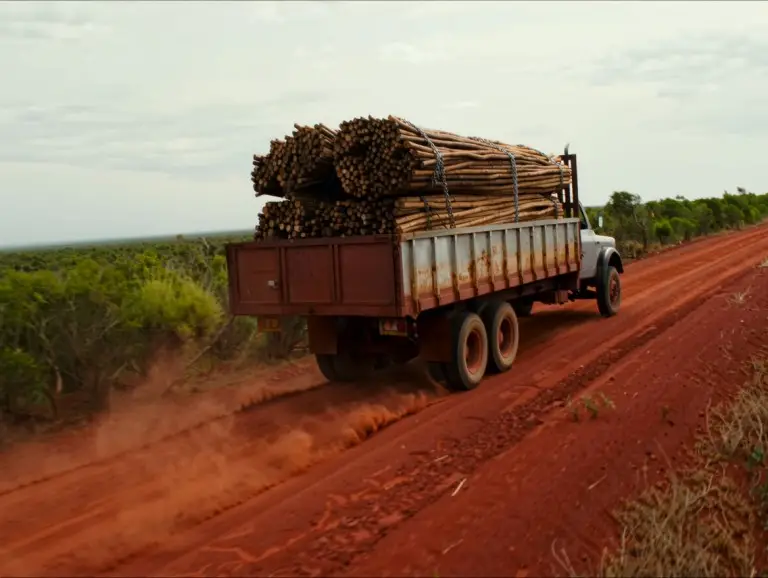
| Bundled timber / poles | Low–medium | Crane or side-load | Paved or compacted laterite | ✅ Strong fit |
| Livestock (cattle, sheep) | Medium (dynamic) | Side-door ramp | Paved highway, low mountain grade | ✅ Fit with ventilation panels |
| Baled agricultural produce | Low–medium | Forklift top-load | African laterite, SEA mountain grades | ✅ Fit with reinforced floor beam |
| Palletized construction materials | Medium | Forklift top-load | Middle Eastern highway standard | ✅ Strong fit |
| Wet coal or coal fines | High (0.9–1.3 t/m³) | Conveyor top-load | Any | ⚠️ Marginal — tipper preferred |
| Crushed aggregate / quarry stone | High (1.4–1.8 t/m³) | Excavator top-load | Any | ❌ Requires tipper in most configurations |
| Iron ore concentrate | Very high (2.0+ t/m³) | Conveyor | Any | ❌ Requires bulk tanker or tipper |
| Oversized crated machinery | Variable | Crane | Paved, low vibration | ⚠️ Flatbed may be more suitable |
Fit signals apply to standard configurations. Modified configurations with certified structural upgrades may change the outcome — verify with the manufacturer and the relevant certification body.
Route-specific notes:
- African laterite and unpaved roads: Set floor beam spacing at 300–350 mm to resist torsional flexing. Suspension spec matters as much as payload rating on these surfaces.
- Southeast Asian mountain grades: Brake system spec and axle load rating must handle sustained downhill loaded conditions. Check that the braking standard matches destination-country rules — Chinese GB standards and local equivalents may not align.
- Middle Eastern highway standards: UAE, Saudi Arabia, and Oman each set gross vehicle weight limits per axle group. Confirm legal axle spacing against destination rules before choosing axle count.
The fit matrix tells you which trailer type to buy. The spec variables below tell you which configuration within that type will perform correctly on your route.
Specifications Procurement Managers Must Evaluate Before Requesting a Quote
Fence semi-trailer specs vary widely between manufacturers. The choices you make on axle count, panel height, steel grade, and floor beam spacing directly affect field performance and legal compliance.
Axle count and payload rating
| Configuration | Indicative Payload Range* | Common Application |
|---|---|---|
| 2-axle | 20–30 tonnes | Short-haul, lighter cargo, market entry |
| 3-axle | 30–45 tonnes | Standard export configuration, highway freight |
| 4-axle | 40–60 tonnes | High-GVW markets, oversize cargo routes |
Indicative only. Actual payload depends on the manufacturer’s frame design and the destination country’s axle load limits. Confirm compliant payload ratings with the manufacturer and the relevant authority before finalizing any spec.
Stake and panel height ranges from 400 mm to 1,800 mm depending on cargo type. Livestock configurations typically need 1,400–1,800 mm. Bagged cargo works well at 600–900 mm. Taller panels add tare weight and raise the center of gravity — both matter on mountain routes.
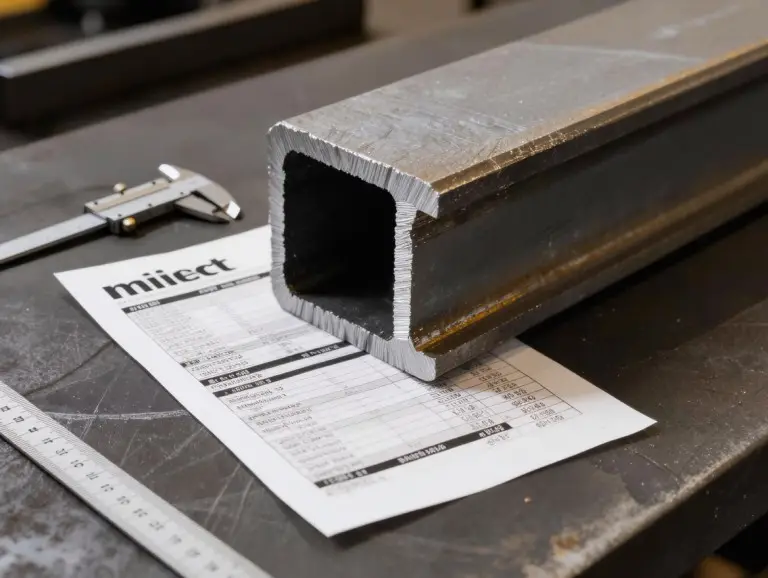
Steel grade: Q355 is the better choice for main beams and cross-members where fatigue loading is expected. Always request a mill test report (MTR) traced to a specific heat number from the rolling mill. A fabricator’s self-declared spec sheet is not the same document.
Side-panel locking: Pin-lock systems hold best under dynamic cargo shift. Ask the manufacturer to show load-bearing capacity at the locking point — not just panel static weight.
Floor beam spacing: On rough roads, 300–350 mm spacing resists the frame flexing that drives fatigue failure. On smooth highways, 400–500 mm is acceptable. This choice must match your route and the manufacturer’s design certification.
When reading a Chinese manufacturer’s spec sheet, check six things before quoting: the rated payload versus maximum GVW distinction, the GB standard the trailer is designed to, axle brand and ABS spec, surface treatment process, whether panel height is fixed or adjustable, and whether load test reports are third-party or self-issued. Any vague entry warrants a direct question before quoting.
Spec decisions here determine what documents you’ll need at the destination port — which is where export compliance comes in.
Export Compliance Verification — Certifications, Standards, and Lead-Time Realities
Destination-country import rules determine which documents must travel with the trailer. Those rules differ across Africa, Southeast Asia, and the Middle East — and they change over time.
Chinese standards: Most export trailers don’t need CCC (China Compulsory Certification). CCC applies to the Chinese domestic market. Confirm that no domestic-only certification is being presented as an international compliance credential.
Destination-country import approval requirements:
| Destination Country/Region | Relevant Import Standard / Scheme |
|---|---|
| Kenya | PVOC (Pre-Export Verification of Conformity) |
| Nigeria | SONCAP (Standards Organisation of Nigeria Conformity Assessment Programme) |
| UAE | ESMA (Emirates Authority for Standardisation and Metrology) type approval |
| Saudi Arabia | SASO product conformity program |
| Ghana | GSTB conformity assessment |
| Southeast Asia (varies) | Confirm with destination customs authority — no single regional standard applies |
These requirements change. Confirm current import rules directly with the relevant authority in the destination country. Don’t rely solely on supplier-provided compliance summaries.
Lead time and delivery planning: Production lead times of 25–45 working days are common across Chinese manufacturers. Actual timelines vary by factory capacity and order complexity — get a written commitment before placing any order. Add roughly 25 days of ocean transit to East African ports. Buyers with a fixed project delivery date should place orders at least 10–12 weeks in advance to allow for customs clearance.
Conclusion
The pattern that separates successful deployments from costly failures is the same across every export market: documentation discipline at the specification stage. Verified steel grades, confirmed axle compliance, and written warranty terms prevent the disputes that vague supplier assurances leave open.
Genron has built and shipped fence semi-trailers to buyers across more than 30 countries from our Qingdao production base over the past 20 years. That record across African laterite roads, Southeast Asian mountain grades, and Middle Eastern highways shapes the guidance in this article. If you’re evaluating a configuration for a specific cargo and route, our technical team can review your requirements and recommend a spec before you issue an RFQ.
Payload figures, axle load ratings, and certification requirements in this article are indicative only. They vary by manufacturer spec and destination-country regulation. Require third-party-verified technical documents from suppliers and confirm current import compliance requirements with the relevant authority before signing any purchase contract.
FAQ
Can fence semi-trailer panels be adjusted after delivery?
Panel height is a build-stage decision, not a field adjustment. Changing it after delivery usually requires frame modification — confirm the configuration before production starts.
What is the difference between a fence trailer and a drop-side trailer?
The terms are often used interchangeably. Drop-side typically refers to hinged panels that fold outward; fence trailer refers to removable stake-and-panel systems. Function is similar — confirm the locking mechanism type with your supplier before ordering.
Can a fence semi-trailer carry a 20ft or 40ft ISO container?
Yes, with twist locks installed at the corner positions. Not all fence trailers include twist locks as standard — specify this requirement when requesting a quote.
What causes fence trailer panels to fail in service?
Dense bulk cargo is the most common cause. Materials above roughly 1.4 t/m³ exert continuous lateral pressure that standard panel locking systems are not rated for. Match cargo density to the manufacturer’s certified panel spec before loading.