Chassis selection comes down to four variables: container size and type, cargo weight, route environment, and regulatory jurisdiction. Change any one of these, and the right chassis changes too. A chassis that works on a fixed port drayage corridor may be wrong for a mixed-length fleet crossing multiple jurisdictions. This guide covers the main chassis types, the decision variables that matter, and where specification errors most often occur.
What a Container Chassis Does in the Intermodal Chain?
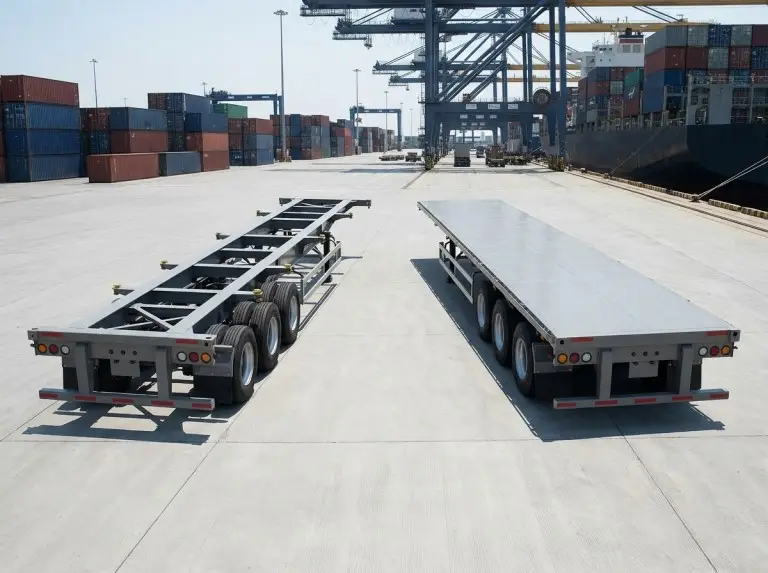
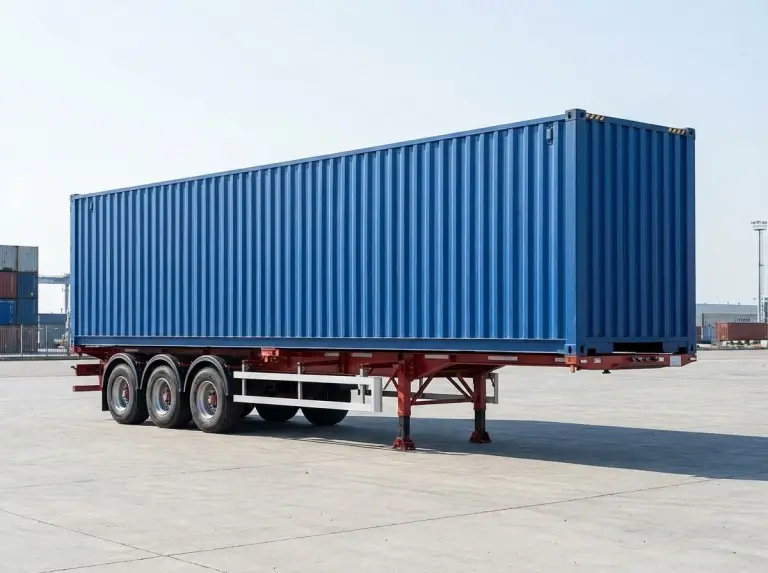
A container chassis — also referred to as a skeletal trailer or intermodal chassis — is a semi-trailer frame built to carry ISO shipping containers between ports, rail yards, warehouses, and delivery points.Unlike general-purpose flatbeds, container chassis use twist-lock mechanisms at each corner casting to secure containers during transit. No additional strapping is needed.
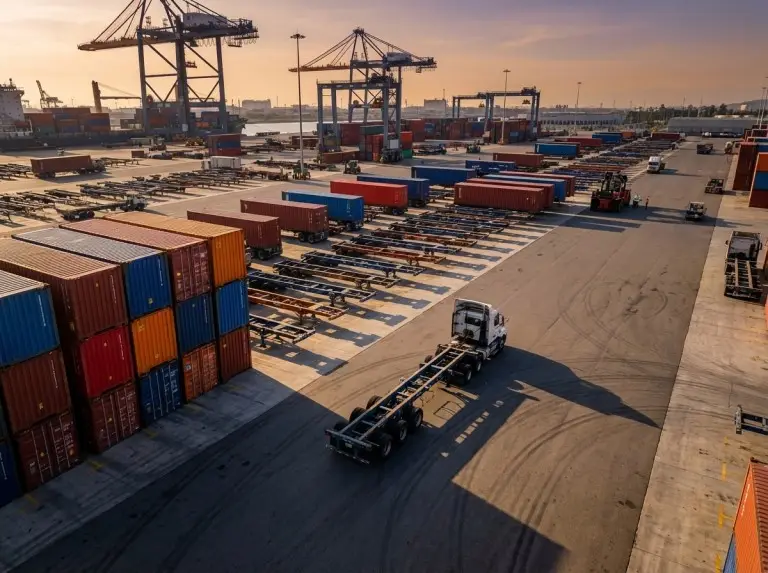
The chassis is the structural link in intermodal transport. When a container moves from vessel to road, the chassis determines whether that handoff is fast, safe, and compliant with terminal equipment standards. Mismatching chassis geometry to container type creates movement risk under load and potential height or weight violations on route. We clarify this in every specification discussion because the consequences show up late — often at a weigh station or terminal gate.
Why Treating Chassis Types as Interchangeable Creates Risk?
This is the most common — and most preventable — error in intermodal fleet planning. A standard tandem-axle chassis under a heavy 40-foot container may exceed axle limits on a bridge-formula-restricted corridor. A standard-deck chassis under a high-cube container may trigger a height violation before the truck reaches the terminal.
In operations where the container mix includes both high-cube and standard units, we find that loaded height verification needs to happen at the route planning stage — not at dispatch. When teams assume a chassis that passed the gross weight check is clear for every route, the result is often a terminal rejection or citation that forces chassis reassignment and delays cargo release.
Main Container Chassis Types and Their Applications
Chassis types are classified across different dimensions — some by structural geometry, some by axle count, some by length adjustability. Understanding which dimension drives a given classification matters before comparing options.
Skeleton (Skeletal) Chassis
A skeletal chassis supports a container only at its four corner castings via twist locks. The frame is open — no closed deck. For a deeper technical breakdown of this design, see our guide on What Is a Skeleton Semi Trailer. This keeps tare weight low relative to load capacity, which matters when operating near gross vehicle weight limits.
Skeletal chassis are the standard for 20-foot and 40-foot ISO container transport in port drayage, rail pickup, and highway delivery. This is also the core format that Genron’s semi-trailer design and customization programs are built around. For operations running predictable container sizes on established routes, a skeletal chassis is usually the most efficient base specification. It is not suited for high-cube containers on routes without confirmed clearance, or for cargo requiring an enclosed deck.
Gooseneck Chassis
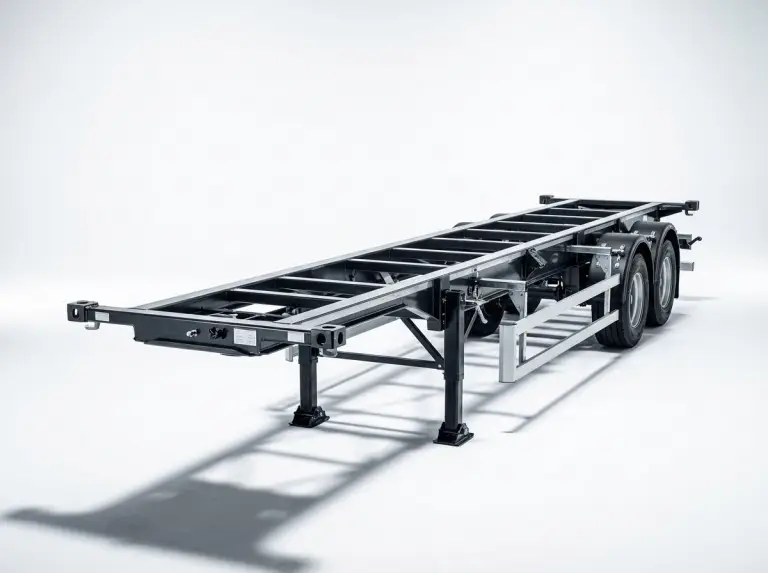
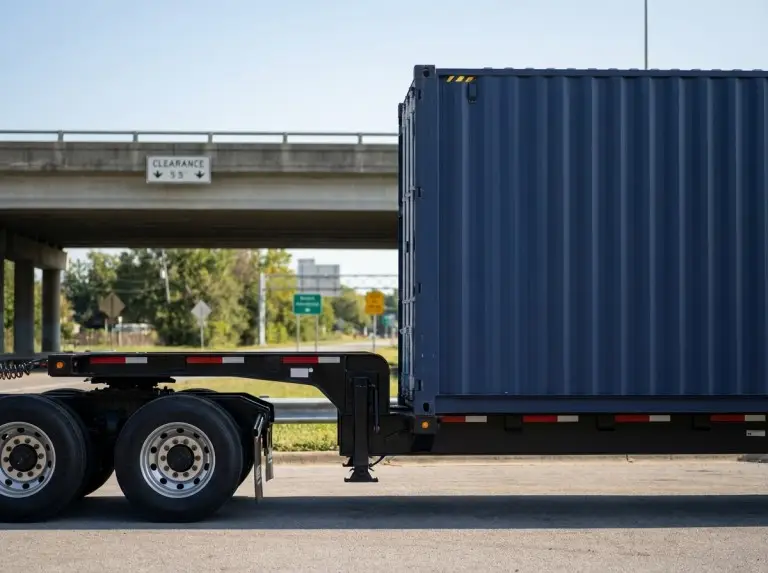
A gooseneck chassis uses a recessed front section to lower deck height. This creates extra vertical clearance for containers taller than standard ISO height — typically 9 feet 6 inches for high-cube units. The lower deck also drops the container’s center of gravity, which improves stability on loaded hauls.
Gooseneck chassis are a common solution for high-cube moves. But the accurate statement is that high-cube operations require deck-height and clearance verification — not that high-cube always requires a gooseneck. Some tandem skeletal configurations support high-cube loads where route clearances allow. Confirm the specific chassis deck height, container height, and lowest clearance point on the route before dispatch.
Tri-Axle Chassis
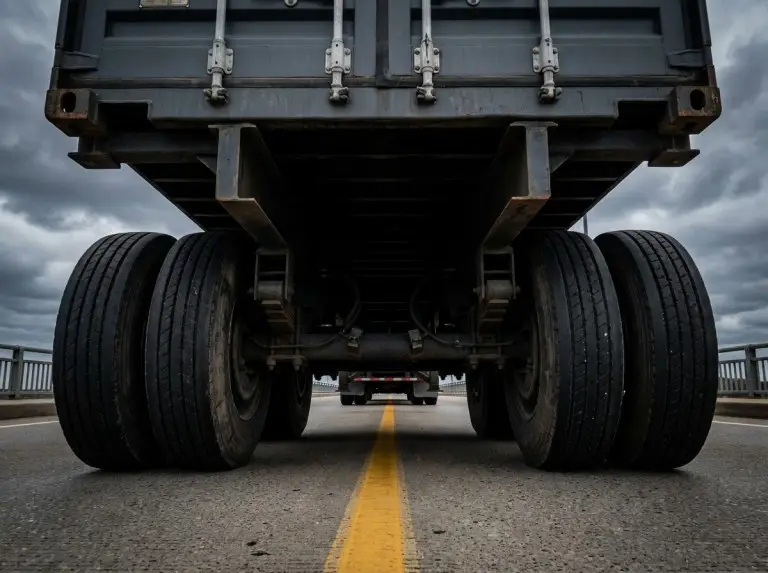
A tri-axle chassis spreads cargo weight across three axles instead of two. This allows heavier loads to stay within regional axle weight limits. In North America, federal guidelines set single-axle, tandem-axle, and gross vehicle weight limits. The bridge formula applies further constraints based on axle count and spacing. A chassis that passes gross weight may still exceed bridge formula limits on specific road classes.
For dense freight — machinery, steel, bulk commodities — approaching tandem-axle thresholds, evaluate a tri-axle and confirm compliance against each jurisdiction on the planned corridor. Tri-axle chassis carry higher tare weight than tandem units. For standard or lightweight freight, the added axle creates regulatory margin that the operation may not need.
Extendable Chassis
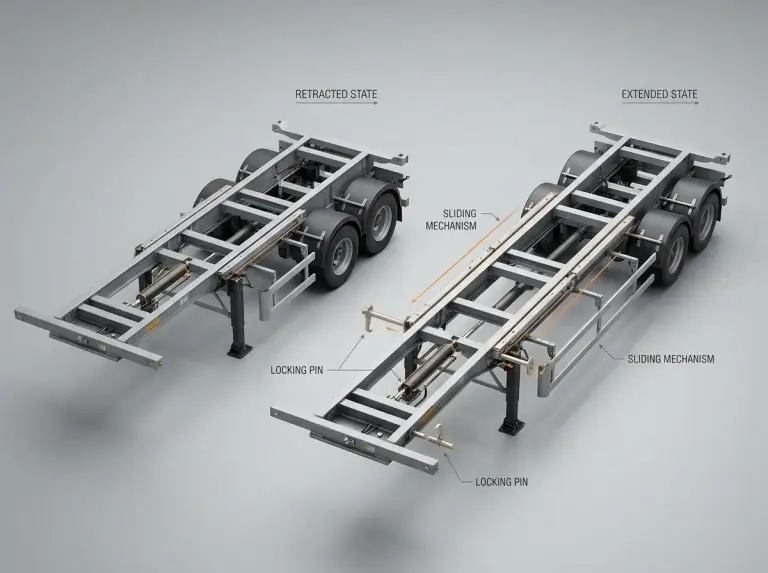
An extendable chassis uses a sliding frame to adjust length. One unit can carry 20-foot, 40-foot, and in some cases 45-foot containers. This reduces the number of distinct chassis types a fleet must maintain.
The sliding mechanism requires more frequent inspection than fixed-length units — locking pins, sliding rails, and connection points all need regular checks. Whether extendable chassis belong in a fleet depends on how often container length varies, whether the maintenance schedule can support the added inspection load, and whether the cost premium over fixed-length units is justified.
Combo Chassis
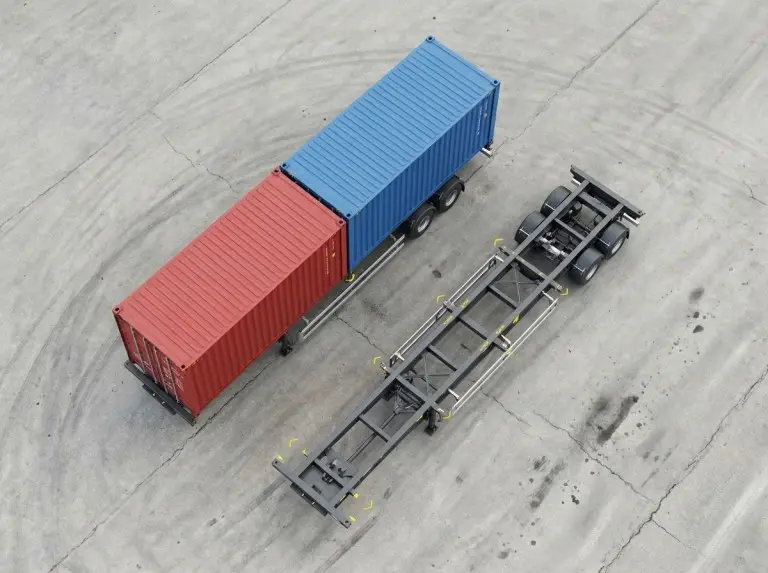
In North American intermodal, a combo chassis is configured to accept multiple container lengths or lock positions — commonly 20-foot or 40-foot ISO containers on the same frame using adjustable pin positions. This is a length-versatility feature within the container chassis category. It is not a dual-purpose container-and-flatbed trailer.
Combo chassis reduce the need for separate 20-foot and 40-foot units in a mixed-assignment fleet. The trade-off is slightly higher tare weight compared to a dedicated fixed-length skeletal unit. Quantify the fleet’s actual container size split before specifying combo units across the full fleet. For a direct comparison of chassis formats, see Skeleton Trailer vs Flatbed Trailer.
The Four Variables That Drive Chassis Specification
Container size and type is the first filter. If the operation runs standard 20-foot and 40-foot ISO containers on fixed routes, a skeletal chassis covers the baseline. If the mix includes high-cube units or variable lengths, the specification must cover the full operational range — including loaded height verification for every route corridor.
- Cargo weight determines axle configuration. Start with the heaviest regular container gross weight. Compare it against tandem-axle limits under the bridge formula for the primary route jurisdictions. If the loaded combination exceeds tandem limits on any regular segment, evaluate a tri-axle and confirm compliance before deployment.
- Route environment covers overhead clearances, road conditions, urban maneuverability, and terminal compatibility. Coastal or high-humidity routes require explicit attention to frame corrosion protection. Terminal intake protocols at specific ports or rail facilities should be confirmed before finalizing fleet specifications.
- Fleet flexibility determines whether one chassis type covers most assignments or whether a primary type plus one supplementary configuration makes more sense. Most operations run better with a clearly defined primary chassis type for the majority of assignments and one supplementary type for specialized loads — rather than three or four distinct types that fragment maintenance schedules and parts inventory.
Regulatory Compliance Varies by Jurisdiction and Route Class
Chassis compliance is not a fixed specification. It depends on jurisdiction, route class, bridge rating, and the specific loaded combination on each segment. A configuration that is fully compliant on interstate routes may need permits or chassis substitution on lower-rated secondary roads or specific bridge crossings.
For weight compliance, the key inputs are: gross container weight, chassis tare weight, axle configuration and spacing, and the applicable axle weight formula for each jurisdiction on the planned route. Regional differences matter most for operations crossing state lines in North America or national borders in Europe.
This guidance applies to standard over-the-road intermodal operations. Abnormal load permits, oversize corridors, hazardous materials classifications, and specialized port protocols require dedicated regulatory review beyond general chassis selection.
Purchasing vs. Leasing
Purchase makes more sense when chassis utilization is consistently high, fleet size is stable, and maintenance capability — in-house or contracted — is in place. Leasing transfers residual value risk and maintenance responsibility to the lessor. It also provides flexibility when fleet size or container mix is changing, and avoids large capital commitments during growth phases. The trade-off is a higher per-unit cost over high-utilization periods. Five variables drive the decision: utilization rate, maintenance capability, depot or pool access in the operating region, seasonality of demand, and capital allocation priorities.
Conclusion
The chassis that fits an operation is determined by container size mix, cargo weight against applicable axle limits, route clearance constraints, and the regulatory frameworks across operating corridors. Each variable has a direct effect on which configuration is compliant and cost-efficient — and the right specification changes when those inputs change.
At Genron, we work through these variables during the drawing review and scope confirmation stage before a skeletal semi-trailer is designed and built. In projects where routes cross multiple jurisdictions or the container mix spans standard and high-cube units, we find that deck height, axle spacing, and twist-lock position each need explicit confirmation before production drawings are finalized. A chassis that passes the gross weight check may still need route-specific clearance verification that was not in the initial brief. Resolving that before production starts is what prevents costly changes after manufacturing begins.
To begin a specification review, document your container size range, peak cargo weights, the jurisdictions your routes cross, and terminal compatibility requirements at your primary facilities. Bring those inputs to our team and we will confirm the specification before any commitment is made.
FAQ
What is a skeletal chassis and how does it differ from other types?
A skeletal chassis supports the container at its four corner castings via twist locks. The frame is open — no closed deck. This keeps tare weight low. Other types — gooseneck, tri-axle, extendable — modify the base skeletal concept to address specific clearance, weight distribution, or length needs.
How do I know if I need a tri-axle chassis?
Start with the heaviest regular container gross weight in the operation. Compare it against the tandem-axle limit under the bridge formula for each primary route jurisdiction. If the loaded combination exceeds tandem limits on any regular segment, evaluate a tri-axle. Confirm compliance with current requirements before deploying.
When does a gooseneck chassis become necessary for high-cube containers?
A gooseneck is necessary when the combined deck height plus container height exceeds the legal clearance on the planned route, and the route cannot be adjusted. Where clearances allow, some skeletal configurations support high-cube loads without gooseneck geometry. Calculate loaded height and verify it against the lowest overhead clearance on the specific corridor before dispatch.
Does chassis specification change when operating across different regions?
Yes. Axle weight limits, vehicle dimensions, and height regulations vary by jurisdiction. Operations crossing state, provincial, or national borders must verify compliance with each jurisdiction’s requirements. Do this during route planning — document the applicable limits on each segment before the fleet is deployed.