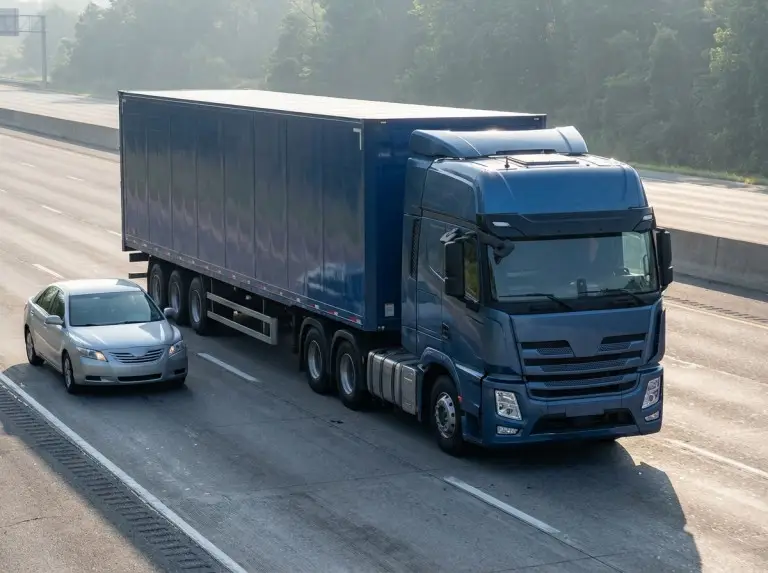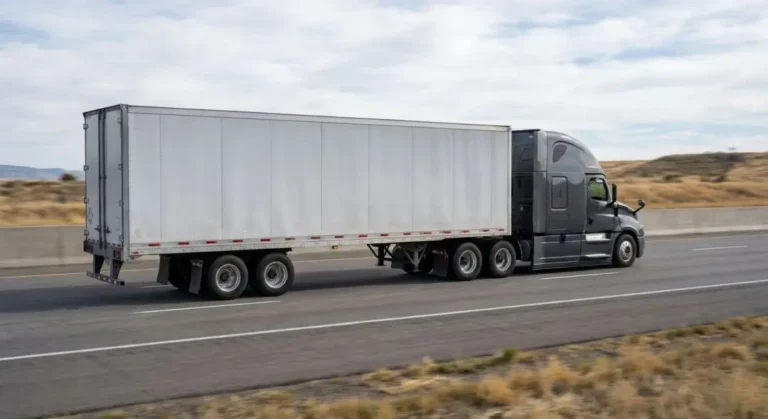
A typical tractor-trailer has a tractor and a single 53-ft trailer. It is about 70–75 ft long overall. Many real-world setups fall in the 70–80 ft range. This depends on tractor type and trailer type. It also depends on setup.
Most standard on-road setups target 8.5 ft width. That is 102 inches. They aim for about 13.5 ft height. A common highway gross weight cap is 80,000 lb. This applies without special permits.
At Genron, we design semi-trailers for export markets. We build custom setups. The first step in design talks is to confirm overall length. Then we check width, height, and weight. We match them to routes and rules.
This guide focuses on total length. It covers the few variables that change it.
What Is a Tractor Trailer ?
A tractor trailer combines a powered tractor and a semitrailer. The tractor is the front unit. The semitrailer is the cargo unit. The tractor provides power and braking. It supports the trailer’s front through the fifth wheel connection.
The word “semi” refers to the trailer’s build. A semitrailer lacks front wheels. It relies on the tractor to carry part of its weight. The tractor also steers the combo.
People often ask about tractor trailer length. They mean the overall length of the combo. They do not mean the trailer alone. This matters. A 53-ft trailer can give different overall lengths. It depends on the tractor and setup.
Tractor Trailer Length Explained?
Overall length comes from three parts. These are tractor length, trailer length, and overlap at the coupling. Most confusion arises from mixing these. It also comes from using different measure points.
Trailer length is easy to find. It is a common spec. In the U.S., 53-ft van-type trailers are standard. 48-ft trailers are common in many uses.
Tractor length varies more. A day cab is shorter than a sleeper. The tractor’s wheelbase changes the number. Bumper design also affects it. Two day cabs can differ by several feet.
Overhang and overlap matter too. The trailer’s front can extend over the tractor frame. Kingpin position changes how they pack. Trailer nose shape affects it. Tractor fairings play a role.
Typical Length Ranges You Can Plan Around
Use these ranges for planning. They are not legal guarantees. States define length differently. Special setups can change things fast.
| Common setup (tractor + trailer) | Typical tractor length | Typical trailer length | Typical overall length (planning range) |
|---|---|---|---|
| Day cab + 53-ft dry van/reefer | ~18–22 ft | 53 ft | ~70–75 ft |
| Sleeper + 53-ft dry van/reefer | ~22–30 ft | 53 ft | ~72–80 ft |
| Day cab + 48-ft flatbed/step-style common range | ~18–22 ft | 48 ft | ~65–72 ft |
| Tractor + single 28-ft pup | ~18–30 ft | 28 ft | ~50–60+ ft |
| Tractor + doubles (two pups) | ~18–30 ft | 2 × 28 ft | Often longer than a single 53-ft combo |
How to Measure the Overall Length?
Measure overall length end-to-end. Use a straight line. Start from the tractor’s foremost point. End at the last trailer’s rearmost point. This gives a consistent number. You can compare it across units, quotes, and checks.
Park the unit straight on level ground. Pick the tractor’s frontmost point. It is often the bumper. Choose the trailer’s rearmost point. It is often the rear bumper or ICC guard. Measure along the centerline.
Avoid mixing methods. Some measure tractor wheelbase. Others measure trailer box length. Some use axle centers. These help engineering. But they differ from overall length.
Watch add-ons. Liftgates shift the end point. Rear underride guards affect it. Rear doors change it. Specialty bumpers matter. Compare builds the same way each time.
For legal compliance, confirm the method. Use what your jurisdiction expects. Many rules focus on overall length for setups. Other rules target trailer length on highways.
Main Types of Tractor-Trailer Setups
Most on-road trailers share width targets. But length choices differ by job. Usable cargo length varies too. Think of type as a shortcut. It shows common lengths and reasons.
Dry Van
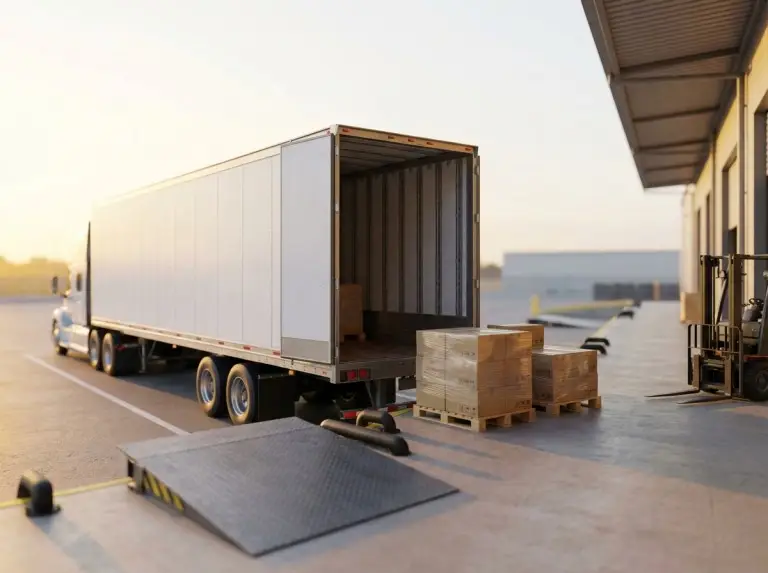
Dry vans handle boxed freight. They carry palletized loads. 53 ft is the most common length in the U.S. It sets the baseline for normal expectations.
Choose dry van length to maximize cube. It aids dock fit. For standard pallet freight, dry vans help standardize fleet sizes.
Reefer
Reefer trailers match dry van lengths. They often use 53 ft. The refrigeration unit changes weight spread. It adds maintenance needs. But it does not make the trailer longer.
Reefer planning differs in clearance and weight. The front unit adds dock constraints. It affects turning radii. But overall length planning stays like dry vans.
Flatbed
Flatbeds carry steel and machinery. They handle building materials. They take awkward shapes. 48 ft is very common. 53 ft is widely used too. It depends on freight and route.
Loads can extend beyond the deck. Cargo length and overall length differ as constraints. For compliance, include overhang. Add securement needs. Do this even if trailer length seems standard.
Tanker
Choose tankers by volume. Axle limits matter. Stability counts too. Many tankers fit 48–53 ft. But exact length varies with design and use.
For tankers, center of gravity matters more. Axle placement interacts with weights. Discuss length with weight spread.
Intermodal Chassis
Intermodal moves follow container standards. A chassis fits 20 ft containers. It handles 40 ft ones. It takes 53 ft too. This depends on lane and gear.
Here, trailer length is not the main spec. Container length sets overall length. Chassis setup affects turning.
Pup Trailers & Doubles
Pup trailers are around 28 ft each. Two pups as doubles aid LTL networks.
Doubles make length rules specific. Verify permitted combos and routes. Do not just check trailer lengths.

Other Key Dimensions That Affect Routes
Know total length first. Then check width, height, and weight. These decide if the unit fits lanes. They check structure clearance. They ensure axle limits.
Width Basics
The common U.S. trailer width is 102 inches. That is 8.5 ft. It fits lane geometry. It allows highway use without permits in most cases.
Practical width includes mirrors. Safety gear on the tractor adds to it. For tight sites, consider the widest point. Do not just use trailer body.
Height Basics
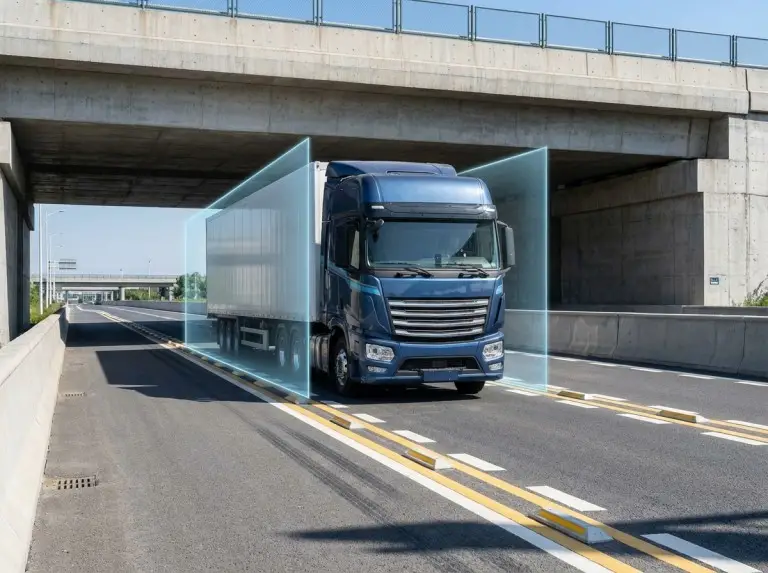
No single federal height limit applies everywhere. States set limits. In practice, 13.5 ft is the common target for vans. Many routes expect that.
Some states allow higher limits. Local areas can be lower. Older structures limit height. Near low bridges, check height per route. Do not guess.
Weight Basics
On U.S. highways, maximum gross weight is 80,000 lb. This applies without permits. It includes tractor, trailer, fuel, driver, and cargo.
Compliance covers more than total. It includes axle weights. Poor load position violates limits. Wrong axle setup does too.
Here is a snapshot of axle limits for highway use:
| Item (common reference) | Typical limit used in planning |
|---|---|
| Steering axle | ~12,000 lb |
| Single axle | ~20,000 lb |
| Tandem axle group | ~34,000 lb |
| Common gross cap (many highways, no special permit) | ~80,000 lb |
Axle count distributes weight. Spacing helps too. Axle limits decide if cargo is legal on the route.
Compliance Basics
Operators follow a federal baseline. But state rules matter. Configuration rules count too. Use common numbers as defaults. Then verify against your state and route.
Trailer length shows this. 53-ft trailers work on major highways. Markets treat them as standard. Some states allow longer ones. Others limit overall length for combos.
Older gear may use grandfather rules. A shorter trailer can run legally on routes. Details depend on state and network.
Overall length matters more beyond single trailers. Doubles trigger different rules. Specialty extendables do too. Heavy-haul combos affect routes. Ask where it is allowed.
At Genron, we support custom designs. We treat compliance as key input. We confirm operating states. We check setup type. We note site limits. Then we set geometry, axle placement, and deck length.
Conclusion
Separate trailer length from combo length. This solves most questions. For a common U.S. setup, a tractor with 53-ft trailer hits 70–75 ft. Sleeper combos can reach 80 ft. Specialty setups push the range.
For trusted numbers, measure end-to-end. Describe setup consistently. Confirm width, height, and weight for routes. When buying trailers or comparing semi trailer truck manufacturers, set inputs early. Gear must fit freight and rules.
FAQ
How Long Is a Tractor Trailer in Total?
Most combos with 53-ft trailer are 70–75 ft overall. The number changes with tractor type. Wheelbase affects it. Trailer overlap at coupling matters. Measure end-to-end for your unit.
How Long Is a Tractor without a Trailer?
A tractor alone is 18–22 ft for day cabs. Sleepers are longer. Wheelbase adds or subtracts feet. Bumper design does too. For yard space, measure your model.
What Is the Standard Trailer Length, and Why Is 53 ft So Common?
53 ft balances cargo capacity. It fits docks. Highways accept it. 48 ft works in some fleets. Your standard depends on lanes, docks, and freight.
How Wide and How Tall Is a Typical Tractor Trailer?
Planning width is 102 inches. That is 8.5 ft for trailers. Standard height target is 13.5 ft. States set limits. Height can depend on route. Verify with data if clearance risks.
What Is the Legal Maximum Weight for a Tractor Trailer, and What Does It Include?
Common gross weight is 80,000 lb without permits. It includes tractor, trailer, fuel, driver, and cargo. Axle limits apply. Legal gross does not ensure legal axles. Load placement matters. Axle setup counts.