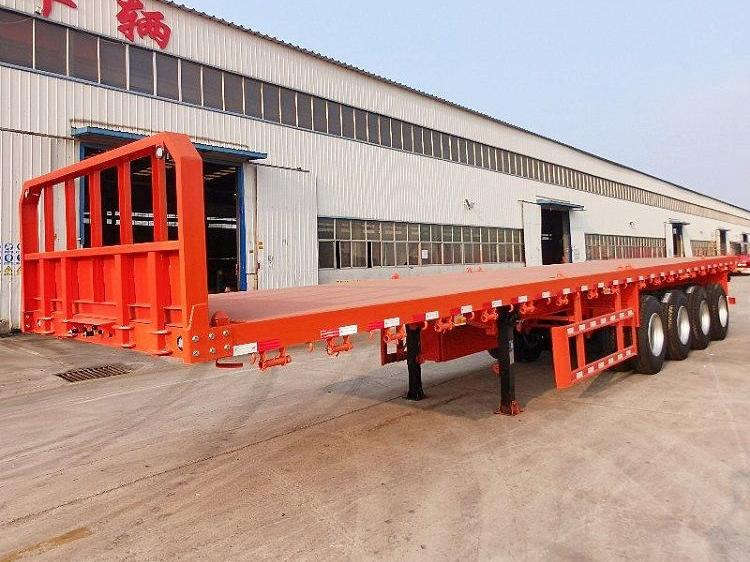
A flatbed trailer is often the best choice for heavy or odd-shaped cargo. In this guide,Genron will explain what a flatbed is and how to use it. I will also cover the main types and how to pick the right one.
Buying a flatbed is not just about price. It starts with your cargo, loading method, and route. You also need to know your legal payload. Once you know these inputs, the right trailer choice is usually clear.
What Is a Flatbed Semi-Trailer?
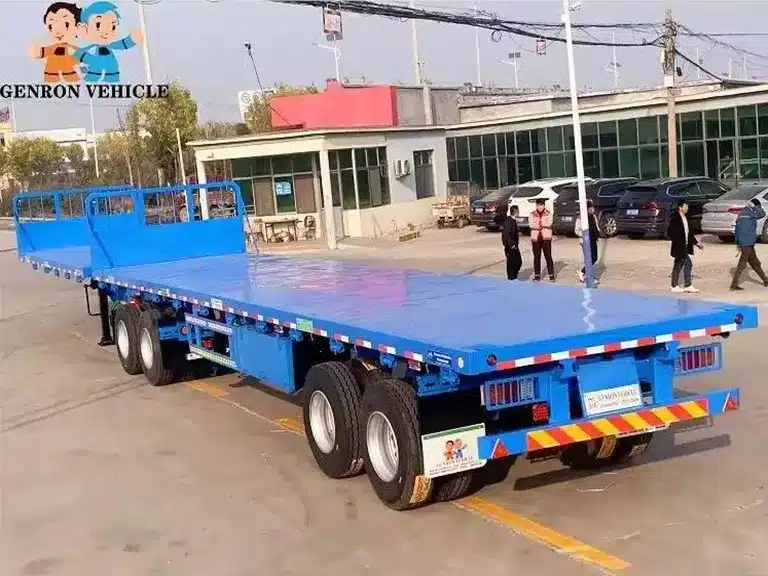
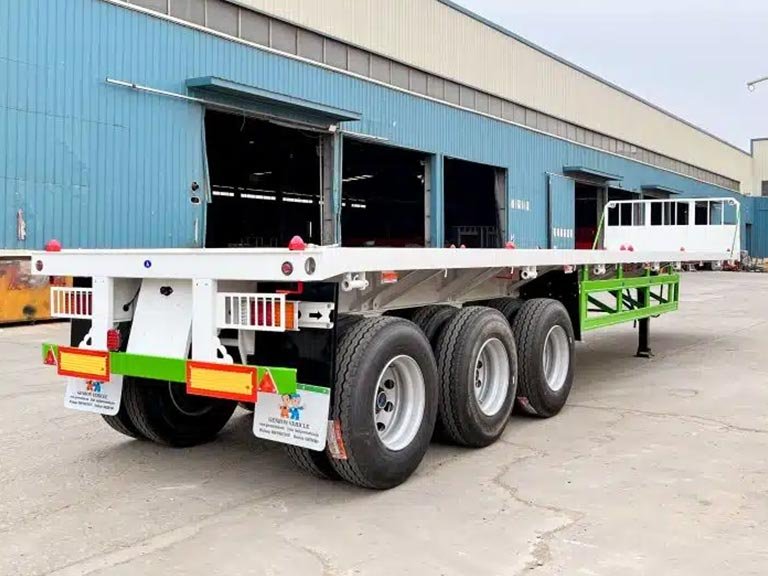
Flatbed semi-trailer has an open deck. It carries cargo that won’t fit in a van. The open top and sides work well for forklifts and cranes. It fits loads that are tall, wide, or long.
Flatbeds allow loading from any side. This is common in construction. You can load pallets and machines easily. You don’t have to worry about door size or walls.
However, flatbeds are not perfect for everything. They lack walls. You will need covers for weather or theft protection. This adds work to your daily routine.
What are flatbed semi-trailers used for?
Flatbeds move heavy or odd-shaped cargo. They handle loads that need cranes. Common loads include construction materials and steel coils. You can also haul pipes, generators, and large engines.
They are great for frequent stops. Without walls, you can reach the trailer from many angles. This saves time in the yard. It also lowers the risk of damage from tight spaces.
A single trailer handles many jobs. It works well if your cargo varies by project. You just need the deck and axles to match the load.
Further reading: What are the applications of flatbed trailers?
Main Types of Flatbed Semi-Trailers
Here are the most common types. Pick the right one based on deck height and load shape.
Standard Flatbed
This is the classic open deck. It fits building materials and packaged goods. It works for irregular equipment you can strap down.
It is simple and cheap. It is the best choice if your loads are not very tall. It is less ideal if you face height limits. It is also hard to load self-propelled machines without a crane.
Lowboy
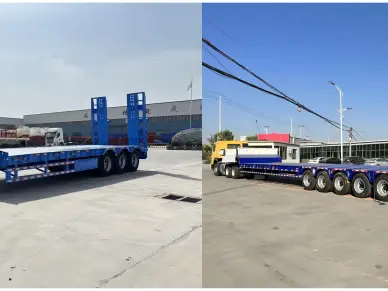
A lowboy has a lower deck height. It keeps tall loads under legal height limits. Use it for heavy equipment and tall machines.
Lowboys are strong options for equipment. But they are less convenient for pallets. The best value comes from hauling tall loads often.
Step Deck (Ladder Deck)
Step deck has two levels. It offers more height clearance than a standard flatbed. It is a good middle ground for tall loads. It avoids the extreme drop of other trailers.
These are popular for machinery. They are not the best choice for maximum height reduction. They also don’t work well if you need a full-length flat deck.
Extendable Flatbed
This trailer grows longer for long cargo. Use it for steel poles or long beams. It helps with freight that exceeds standard lengths.
This type costs more. Only buy it if you haul long loads often. If you rarely move long freight, it may not be worth the cost.
Double Drop
This trailer has a very low “well” section. It gives maximum height clearance. Use it for extra tall gear. It helps you manage tight route limits.
Double drops are very effective for specific jobs. They are less versatile for mixed freight. The well shape limits how you position loads.
Removable Gooseneck (RGN)
The front neck of an RGN detaches. You can drive equipment right onto the deck. This is ideal for tracked equipment and vehicles.
Choose this for speed and independence. It is overkill for simple pallets. It is only worth it if you need the drive-on feature.
Interlink / Super Link
These configurations connect multiple units. You can carry more freight per trip. They work well where laws allow longer combinations.
This setup improves efficiency. However, it is not a universal solution. You must check legality and route limits first.
Type | Best for | Main advantage | Typical limitation |
|---|---|---|---|
Standard Flatbed | General freight, materials | Simple, versatile | Height limits for tall cargo |
Lowboy | Tall/heavy equipment | Lower deck height | Harder for mixed freight |
Step Deck | Mid-tall loads | Extra clearance | Not the lowest option |
Extendable Flatbed | Long materials | Adjustable length | Added cost/complexity |
Double Drop | Extra-tall equipment | Maximum clearance | Lower versatility |
RGN | Drive-on machinery | Fast loading | Not needed for pallets |
Interlink/Super Link | High-volume routes | Fewer trips | Legal/route constraints |
How to Choose the Right Flatbed
Start with your cargo and route. Do not start with the trailer catalog. Know your dimensions, weight, and limits. This narrows your choices quickly.
Ask these four questions:
- What do you haul? Pallets use standard flatbeds. Tall gear needs a step deck or lowboy.
- How do you load? Drive-on machines need an RGN.
- What are the route rules? Height and turning radius matter. Some rules ban certain types.
- Is the weight concentrated? This affects your axle choice. You need to stay legal and stable.
Once you pick the type, choose the axles and deck layout. This makes the trailer custom to your needs.
What to Check Before You Buy?
Trailers may look the same on paper. But they act differently on the road. Check these points to save money later.
- Payload Logic: Trailer “capacity” is not legal payload. Your usable payload depends on your truck and local laws. Always check the full combination.
- Deck Length: Match the length to your regular freight. Do not buy for a “once-a-year” load. Too long hurts turning. Too short forces extra trips.
- Tie-Down Layout: You must secure the cargo well. Look for good anchor points. Ensure the deck handles chains and straps without damage.
- Suspension and Axles: Rough roads need good suspension. This saves tires and protects cargo. Plan your axles based on your region.
- Materials: Steel and aluminum both work. Pick the one that fits your climate and budget. Consider repair habits and total cost over time.
Custom Flatbed Trailer Builds
Custom builds should solve problems. At Genron, we verify your inputs first. We look at safety and durability.
We focus on your cargo, weight, and routes. Then we match the trailer type. We refine the axles and securement to fit your work.
We can also plan for future growth. We avoid buying “too specialized” too early. We also prevent under-spec trailers that need work later.
Let GENRON build the perfect flatbed trailer for you!
GENRON has a complete line of semi-trailers, and we can design and customize the perfect flat bed trailers for your needs. Our team will match your specific needs with the most appropriate flatbed trailer solution to increase your company’s productivity, ensure transportation safety, and optimize operational processes.
When purchasing a flatbed trailer from GENRON, we will take into account several of the above trailer buying factors. And we will choose the most suitable type of trailer for you within your budget.
FAQ
Choose a step deck for height issues. If your loads hit height limits, the drop deck gives you extra room.
Use an RGN for drive-on loading. It is best for self-propelled machines. If you use cranes, a standard flatbed is more efficient.
Only if you haul long freight often. If long loads are rare, rent a trailer instead. It is cheaper than owning one.
A slight bow (camber) is intentional. It is part of the design. The trailer flattens under load to keep proper shape.
Yes, if you use it. They handle many cargo types. They are easy to maintain. They also keep good resale value.