Fuel tanker trailer size determines your per-trip delivery volume, route eligibility, and regulatory compliance in your target market. This guide covers the three standard capacity tiers available from fuel tanker trailer manufacturers, maps each tier to real operational scenarios, and flags how regional axle load limits constrain your usable capacity.
This article applies to fuel tanker semi-trailers — trailer units towed by a separate prime mover — not rigid tanker trucks, maritime vessels, or food-grade liquid transport units. Buyers searching “fuel tanker size” frequently require a semi-trailer specification, and establishing this distinction early prevents mis-specification at the quotation stage.
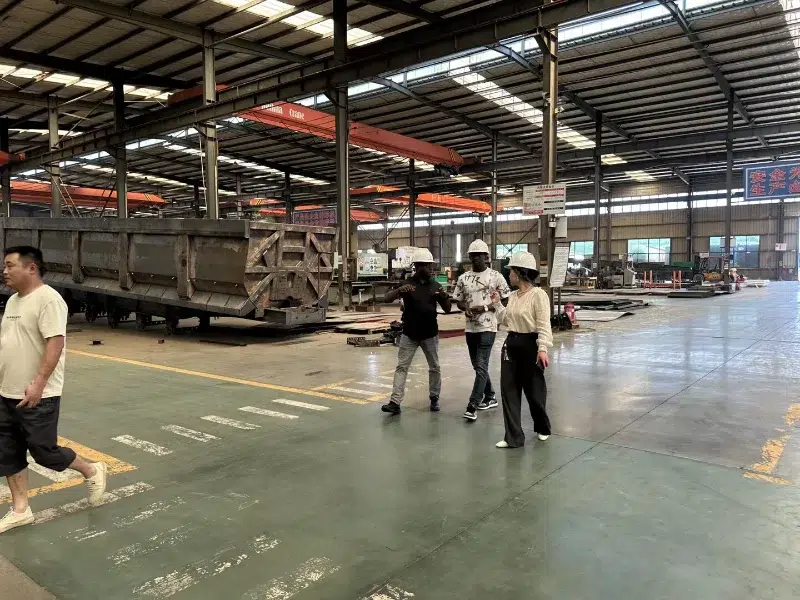
At Genron International Trade, we configure and export fuel tanker trailers to buyers across Africa, Southeast Asia, and the Middle East. Our recommendations below draw on that direct production and export experience across markets on multiple continents.
Fuel Tanker Size vs. Fuel Tanker Trailer
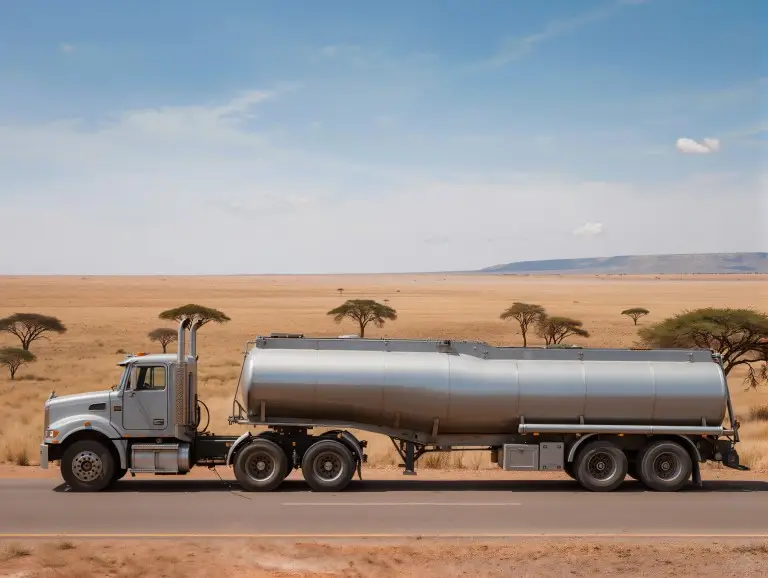
The term “fuel tanker size” in procurement searches can refer to two structurally different products, and confusing them leads to mis-specified quotation requests. A rigid tanker truck integrates the tank body and chassis into one vehicle; a fuel tanker trailer is a separate tank unit towed by a prime mover. These two product types differ in axle count flexibility, tank volume ceiling, regulatory classification, and total cost of ownership.
Based on our export inquiries, buyers who arrive without this distinction established frequently request specifications — such as a single-unit GVW or a fixed overall length — that apply to rigid trucks rather than to semi-trailer dimensions and specifications of a towed unit, which then requires a complete restart of the configuration process.
The three capacity tiers covered in this article all refer to semi-trailer units. If your target market’s transport authority classifies and licenses the tractor and trailer separately, this distinction also affects permit applications and route authorization at the operational level — a factor worth confirming with your local authority before finalizing any specification.
The three capacity tiers below all refer to trailer units configured to this specification.
Fuel Tanker Trailer Dimensions and Weight by Capacity Tier
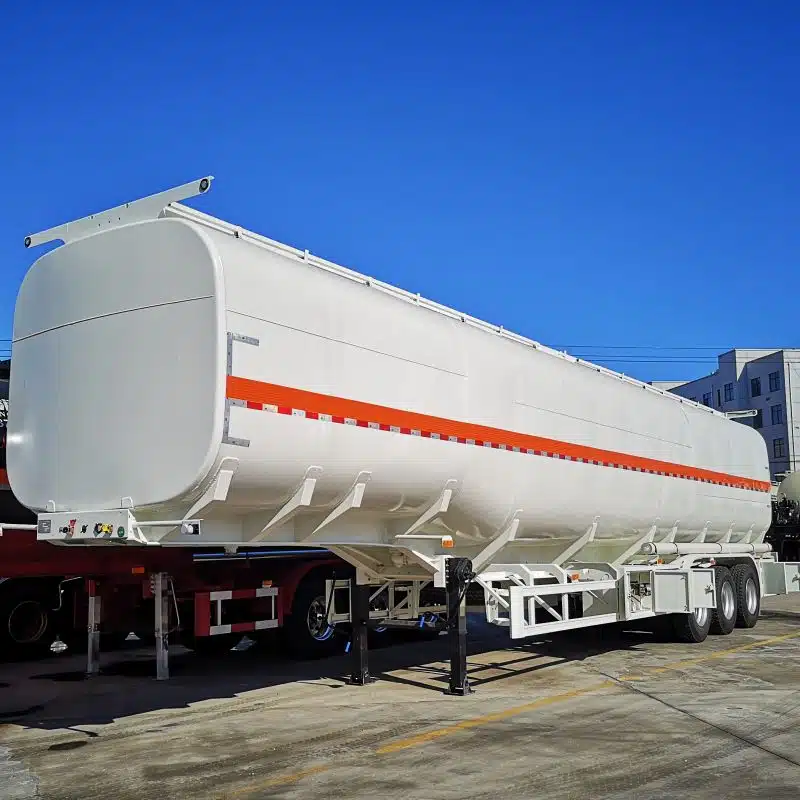
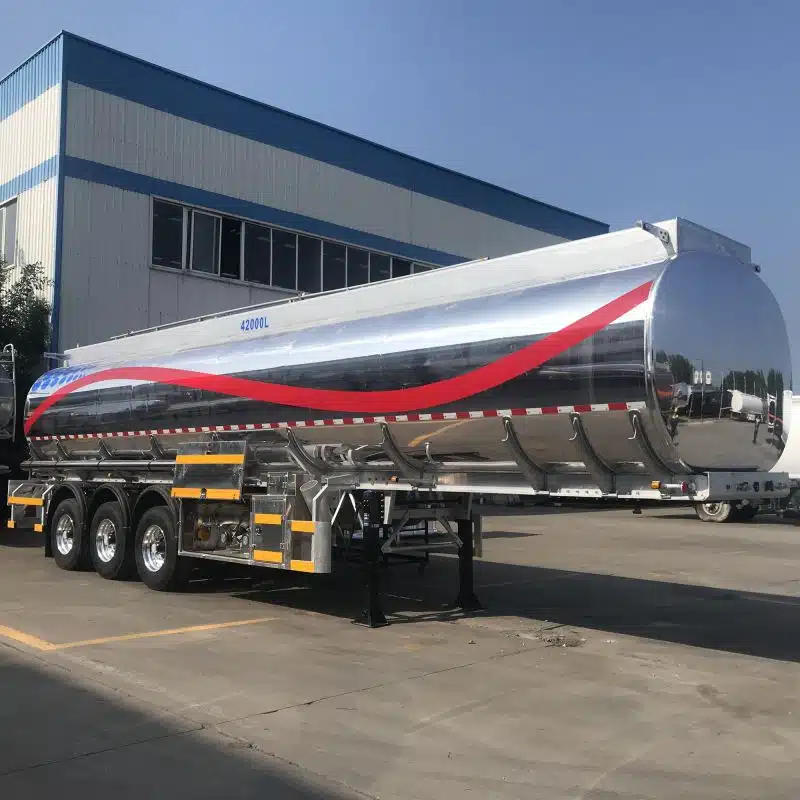
Fuel tanker trailer capacity tiers vary by tank volume, overall length, and gross vehicle weight, with each tier suited to a different throughput scale and route type.
| Tier | Volume (Liters) | Volume (Gallons) | Tank Length (approx.) | Tank Diameter (approx.) | Typical GVW (approx.) |
|---|---|---|---|---|---|
| Small | 20,000–28,000 L | 5,300–7,400 gal | 7–9 m / 23–30 ft | 2.0–2.2 m / 6.6–7.2 ft | 25,000–32,000 kg / 55,000–70,500 lb |
| Mid | 28,000–38,000 L | 7,400–10,000 gal | 10–12 m / 33–39 ft | 2.2–2.4 m / 7.2–7.9 ft | 35,000–45,000 kg / 77,000–99,200 lb |
| Large | 40,000–60,000 L | 10,600–15,900 gal | 12–14 m / 39–46 ft | 2.4–2.6 m / 7.9–8.5 ft | 50,000–65,000 kg / 110,000–143,000 lb |
All figures are approximate reference ranges based on industry reference data; final specifications must be verified against manufacturer datasheets and applicable local regulations. Gallon conversions use 1 L ≈ 0.264 gal, rounded for readability. Tank length and diameter values are design reference estimates; final dimensions vary by manufacturer process and wall thickness specification and must not be used as procurement specifications. GVW values are reference ranges; applicable limits vary by regional regulation and must be verified with your local transport authority before finalizing any specification.
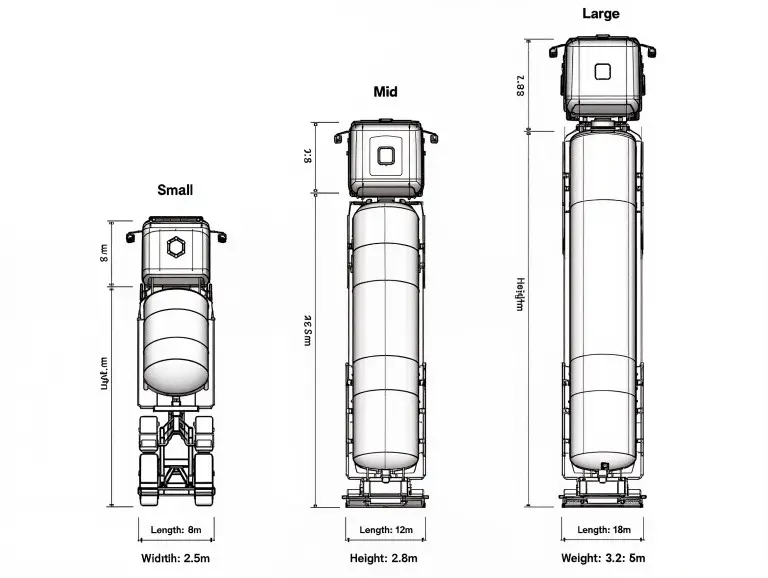
Small-Tier Fuel Tanker Trailers (≈20,000–28,000 L)
Small-tier trailers carry approximately 20,000 to 28,000 liters, or roughly 5,300 to 7,400 gallons, depending on compartment layout and wall thickness. Tank length typically falls between 7 and 9 meters. These units run on two-axle or light three-axle configurations. They suit markets with lower axle load ceilings or routes with restricted road widths and turning radii — with the 30,000-liter tanker trailer configuration representing a commonly requested point just above this tier for buyers whose routes can accommodate an additional axle.
28,000–38,000 L: Mid-Tier Configuration and Route Fit
Regional depot resupply between terminals and secondary distribution hubs is where mid-tier trailers — approximately 28,000 to 38,000 liters, or roughly 7,400 to 10,000 gallons — earn their footprint. Overall tank length generally ranges from 10 to 12 meters. These units typically run on three-axle bogies and represent the most common export configuration we produce for regional depot resupply and secondary distribution routes.
40,000–60,000 L: Large-Tier Configuration for High-Volume Routes
Large-tier trailers carry approximately 40,000 to 60,000 liters, or roughly 10,600 to 15,900 gallons, depending on axle count and tank wall specification. Tank length commonly reaches 12 to 14 meters. These units require four-axle or tri-axle spread configurations to distribute weight within legal limits. They operate best on highways and paved depot access roads with high axle load ceilings.
Which tier fits your operation depends less on tank size alone and more on the route conditions and regulatory environment your trailers will actually face.
Matching Fuel Tanker Trailer Size to Your Operational Scenario
Fuel tanker trailer size selection depends on delivery volume per trip, road surface quality, and infrastructure access conditions in your operating region.
Urban and Last-Mile Distribution Routes
Urban last-mile routes in cities across West Africa, Southeast Asia, and the Gulf region often impose vehicle length restrictions and low-clearance infrastructure. Small-tier trailers — 20,000 to 28,000 liters — navigate these constraints with fewer access failures. Shorter tank length reduces turning radius requirements. Lower gross weight can reduce road surface stress on secondary urban roads, a relevant factor where pavement load ratings are limited.
Regional Depot and Bulk Resupply Operations
Regional depot resupply between a primary terminal and secondary distribution hubs fits mid-tier capacity. Routes at this level typically use A-class or national highways with standardized axle load enforcement. Mid-tier trailers at 28,000 to 38,000 liters deliver meaningful volume per trip without triggering overload penalties on routes where compliant axle configuration is confirmed — the full context on tanker trailer capacity range explains how compartment count and shell specification determine final usable volume. Large-tier configurations on these routes would typically require special permits.
Remote Site and Long-Haul Fueling (Mining, Construction, Off-Grid)
Remote mining and construction site fueling in East Africa, the Sahel, or Southeast Asian interior regions demands maximum volume per trip, making large-tier trailers at 40,000 to 60,000 liters the practical choice for reducing trip frequency. The caveat is real: ground clearance, suspension specification, and axle spread all need to match the site access road’s load-bearing capacity before that preference becomes viable.
How Axle Load Limits in Your Target Market Cap Your Usable Capacity
Axle load regulations in your target market directly cap the maximum operable tank capacity, regardless of what a trailer is physically capable of carrying. A large-tier tank specified at 50,000 liters becomes commercially unusable if local single-axle limits require the load to be distributed across more axles than the trailer carries — axle configuration options are adjustable at the manufacturing stage to address exactly this constraint.
Key reference points across common export regions include the following, subject to change and requiring local verification:
| Region | Typical Single-Axle Limit | Typical Tandem-Axle Limit | Practical Impact on Tanker Sizing |
|---|---|---|---|
| East Africa (Kenya, Tanzania, Uganda) | ≈8,000–10,000 kg | ≈16,000–20,000 kg | Mid-tier often preferred; large-tier may need 4-axle config |
| Southeast Asia (Indonesia, Philippines, Vietnam) | ≈8,000–10,000 kg | ≈14,000–18,000 kg | Large-tier frequently constrained; mid-tier with spread axles preferred |
| Gulf Cooperation Council (UAE, Saudi Arabia, Qatar) | ≈10,000–13,000 kg | ≈18,000–24,000 kg | Large-tier operable on major highways with correct axle spread |
The axle load figures above are typical reference ranges for initial planning purposes only, based on industry reference data, and do not constitute compliance advice. Axle load thresholds and overweight penalties vary by country and change without notice. Verify current regulations with your local transport authority or a licensed in-country import agent before finalizing any trailer specification.
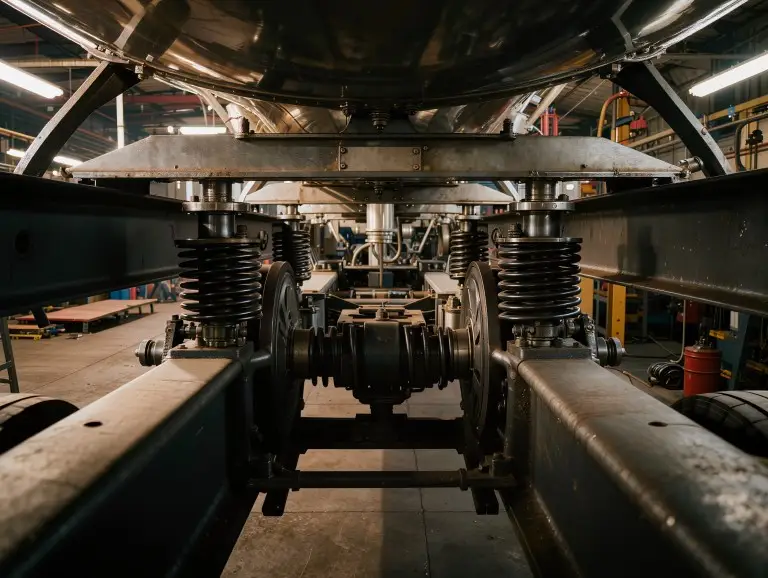
Axle count, axle spread, and bogie configuration are all adjustable at the manufacturing stage, and we configure these to match the axle load structure of the buyer’s target market before production begins.
The questions below address the points buyers most commonly raise at the configuration stage.
Steel vs. Aluminum Tank Shell: How Material Choice Affects Usable Capacity
After selecting a capacity tier, the tank shell material is the next specification decision — and it directly affects the payload you can move within your target market’s GVW limits.
Steel is heavier than aluminum. A carbon steel tank shell of comparable size will add more tare weight to the trailer, which reduces the remaining payload margin before the GVW ceiling is reached. For buyers operating in markets where GVW enforcement is strict and per-liter fuel transport cost is a primary concern, aluminum shells can recover meaningful payload capacity within the same axle configuration.
The trade-off runs the other way on cost and repairability. Steel tanks are less expensive to manufacture, easier to weld and repair in-country, and better suited to markets where aluminum fabrication expertise or spare parts are less accessible. For buyers in markets where the local repair infrastructure favors steel, the payload difference may not offset the operational advantages of a steel build.
The practical sequence: confirm your target market’s GVW and axle limits first, choose the capacity tier that fits those constraints, then select the tank shell material based on cost structure and local maintenance realities.
Conclusion
Verify your target market’s axle load limits first, then size the tank — that single sequence prevents the most common late-stage specification revision we encounter across buyers in Africa, Southeast Asia, and the Middle East. Small-tier trailers suit restricted urban routes, mid-tier units cover most regional resupply operations, and large-tier configurations serve remote high-volume site fueling where infrastructure permits. Material selection follows tier selection: steel for cost and repairability, aluminum where GVW margins are tight.
If you are at the evaluation stage, we are glad to walk through your specific route and market requirements to align a configuration before you issue a purchase order.
FAQ
Yes — multi-compartment layouts with two to five isolated sections are standard for buyers who need to transport different fuel grades, such as diesel and gasoline, in a single trip. Each compartment operates independently with its own valve and discharge point. Final compartment sizing and count are determined at the manufacturing stage based on the buyer’s product mix and volume split requirements.
Not always without adjustment. A configuration built to one country’s axle load limits may be overloaded or under-utilized in a neighboring market with different thresholds. The structural elements that vary — axle count, axle spread, bogie configuration — are fixed at the manufacturing stage and cannot be easily retrofitted in-field. Buyers planning cross-border fleet deployment should supply the axle load requirements for all target markets at the quotation stage so that the configuration is built to the most restrictive common denominator, or separate specifications are quoted for each market.
The immediate risk is financial: most enforcement regimes in East Africa, Southeast Asia, and the Gulf apply per-trip fines calibrated to the overload margin, and repeated violations can result in permit suspension. Beyond penalties, chronic overloading accelerates stress on kingpin, main beam, and suspension components, shortening service life in ways that are not covered under standard manufacturer warranties. The more consequential risk in some markets is confiscation at a weigh station, which halts the entire delivery trip. Matching axle configuration to the local limit before production eliminates all of these exposures.
Three inputs determine the configuration: your target market’s axle load limits, primary route surface conditions and access constraints, and required volume per trip. With those inputs, axle count, axle spread, compartment layout, and main beam specification can all be adjusted during production to align the trailer with both your throughput requirements and your market’s regulatory limits. At Genron International Trade, our configuration process for export orders across Africa, Southeast Asia, and the Middle East begins with these parameters so that the axle configuration is matched to the buyer’s target-market weight regulations before manufacturing begins, rather than adjusted after delivery.