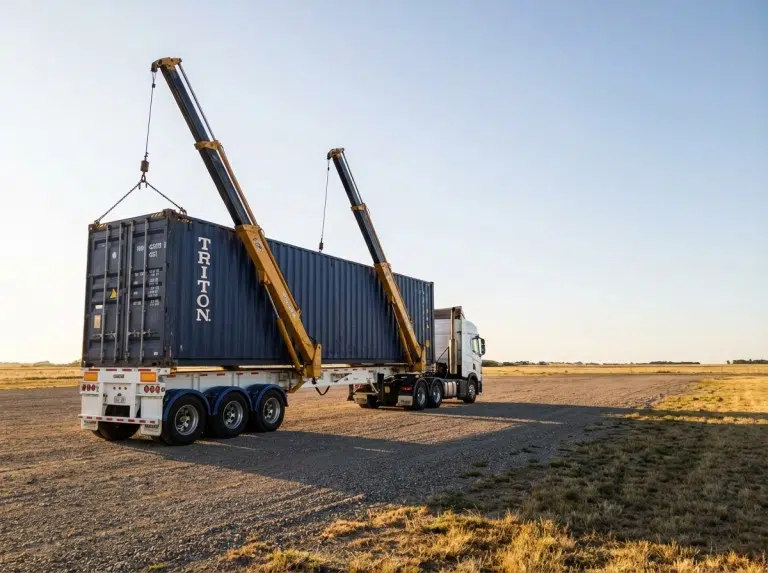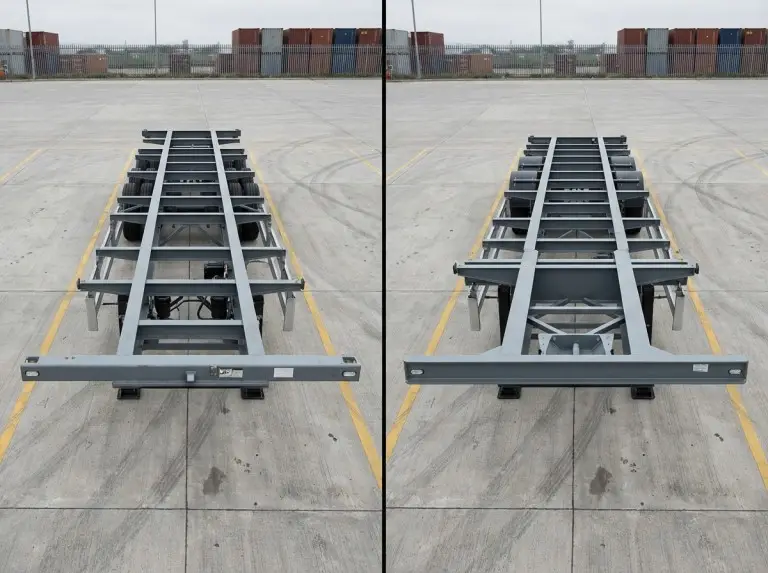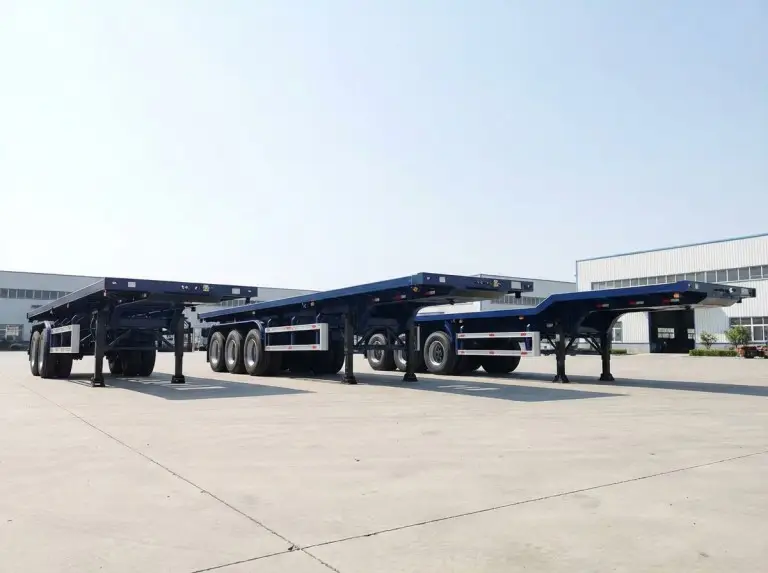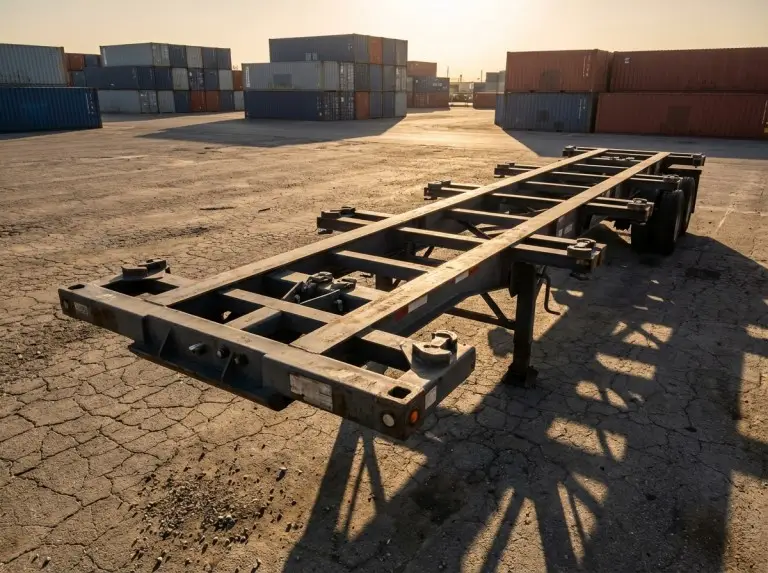
A skeleton semi-trailer’s maintenance needs depend on load cycle frequency, coupling frequency, road conditions, and operating environment. The open-frame design has fewer parts than an enclosed trailer. That does not make it low-maintenance.
Scope: This guide covers standard skeleton semi-trailers in road-based container transport. It does not apply to terminal trailers, port operations, tipping chassis, or trailers under mandatory third-party inspection laws. If you need a starting point on skeletal semi-trailer basics, that reference covers equipment structure and container compatibility before getting into maintenance scope.
Why Open-Frame Design Does Not Mean Low Maintenance
Removing the floor deck and side panels does not reduce structural load. It concentrates it. Every container cycle pushes force through the main longerons, cross-members, and twist lock pockets. Without a deck to spread that load, welds and connection points take repeated stress. A standard walk-around will not catch this.
The most common mistake is assuming fewer parts means less maintenance. That leads operators to skip twist lock lubrication, miss weld-zone checks, or ignore the break-in bolt re-torque. Failure then builds slowly — weld toe cracking, twist lock seizure, kingpin wear. By the time these are visible without targeted inspection, the repair costs far more than the prevention would have.
We see this pattern often. Trailers entering port-to-depot service without the initial fastener re-torque develop suspension bush wear and sub-frame loosening within the first operating months. Skipping the break-in protocol causes it. It is fully preventable.
Seven Core Subsystems That Require Periodic Inspection
A skeleton trailer maintenance program must cover seven subsystems. Each has its own failure pattern. Intervals depend on operating conditions, not a single fixed schedule.
- Frame and structural welds — Check main longerons, cross-members, gooseneck zones, and weld areas around twist lock pockets. Look for weld toe cracking, corrosion pitting, and deformation at container corner fitting areas. Base frequency on mileage and road surface type.
- Twist lock assemblies — Inspect cam wear, locking pin condition, housing debris, and full-rotation engagement at all active corner positions. See the dedicated section below.
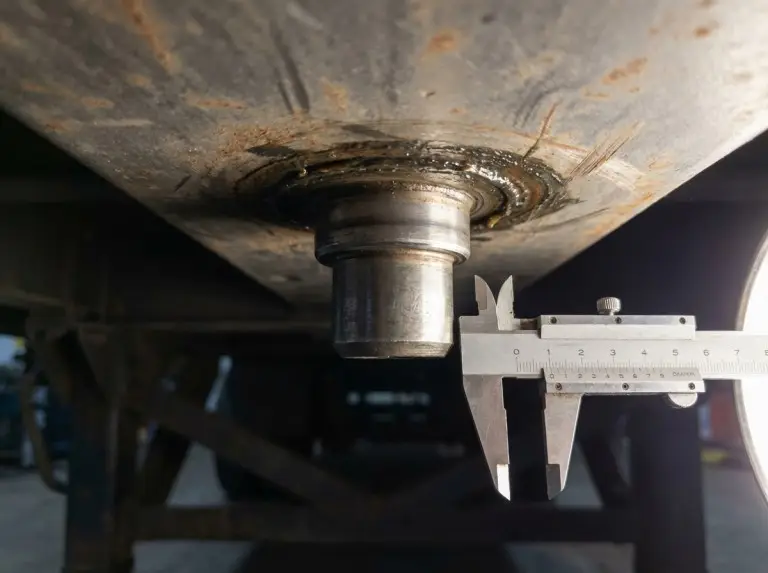
- Kingpin and upper coupler — This is the main structural link between trailer and tractor. Check kingpin wear against OEM tolerance, inspect the upper coupler plate for cracks, and verify mounting fastener torque. FMCSA pre-trip guidance lists coupling devices as a required check. Do not treat the kingpin as an afterthought.
- Suspension system — For leaf spring setups: check spring leaves for cracks and verify U-bolt torque. For air suspension: inspect air bags, leveling valve linkage, and spring hanger pins. Use the specific suspension assembly manual for torque values. Generic values are not reliable.
- Brake system — Inspect air lines, gladhand coupler seals, brake chambers, slack adjusters, and drum or disc condition. Gladhand seals wear with every decoupling cycle. High daily coupling frequency causes seals to fail gradually — intermittent air leaks appear before consistent faults do.
- Tires and wheels — Check inflation against the tire manufacturer’s load-inflation table, inspect tread depth and rim condition, and verify wheel nut torque. Both under- and over-inflation affect axle load distribution. Check pressure before every trip.
- Electrical and ABS system — Inspect connector terminals at the coupling face, test all lights, check ABS wiring harness routing, and verify sensor connections. High decoupling frequency corrodes and deforms connector pins over time. This produces faults that are hard to trace without connector-level inspection.
How Operating Conditions Determine Service Intervals
Do not treat OEM interval values as fixed rules. They assume a specific duty class, road type, and load profile. If your operation differs, adjust the intervals.
Five variables drive wear rate: payload as a percentage of rated capacity, road surface quality, daily coupling frequency, environmental exposure, and trailer age plus maintenance history. Each acts independently. Use their combined effect to set your schedule.
As a starting point — always verified against your OEM manual and suspension supplier documentation — most operators structure maintenance around: a pre-departure check before each trip; initial fastener re-torque within the first 300–1,000 km per OEM spec; lubrication at manufacturer-defined intervals, with higher frequency in harsh conditions; and a full multi-system inspection at the intervals in the trailer and suspension documentation. In coastal ports with daily decoupling, connectors and brake air lines typically need attention sooner than base intervals suggest.
Twist Lock and Container Interface: The Skeleton-Specific Priority
Twist lock maintenance is the most skeleton-specific task on this list. It is also the most under-resourced for what it protects. Container retention depends on each lock reaching full engagement at the latch detent. A lock that closes visually without hitting the detent gives no reliable retention under road shock or hard braking.
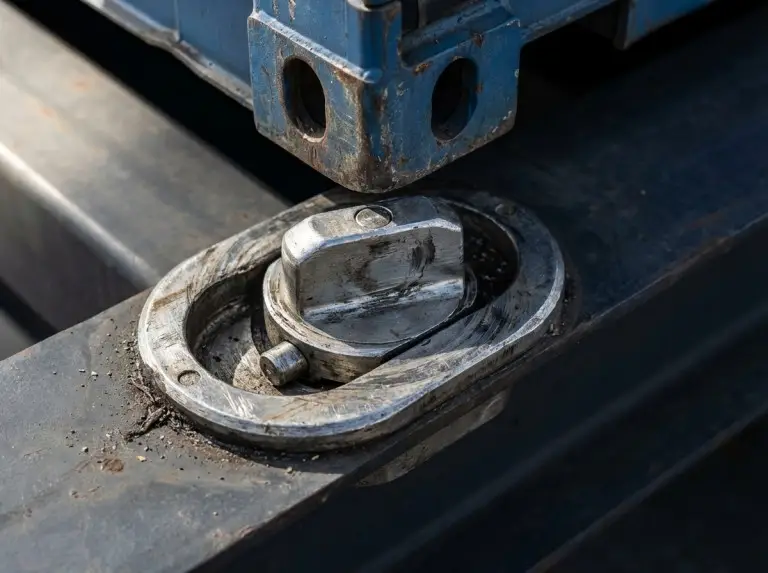
Twist locks engage with corner fittings built to ISO 1161. That standard defines the dimensional and functional requirements for Series 1 container corner castings. Wear assessment must reference both the lock manufacturer’s tolerance spec and the ISO 1161 interface geometry. Cam profiles that work correctly when new can produce partial engagement as wear builds at contact surfaces.
Each inspection must cover: cam pivot lubrication, cam profile and pin wear, housing debris removal, and physical confirmation that each lock reaches the locked detent before loading. Replace a twist lock when any of these appear: non-full cam rotation, detent failure under manual force, visible housing deformation, or latch retention failure. Verify these triggers against the lock manufacturer’s service documentation.
Assuming the visual handle position confirms full engagement — without a physical check — results in a retained but unsecured container. This is preventable before every load cycle.
Frame, Weld, and Corrosion: Three Levels of Inspection
Frame and weld inspection runs at three levels. Knowing when to move up is the key decision.
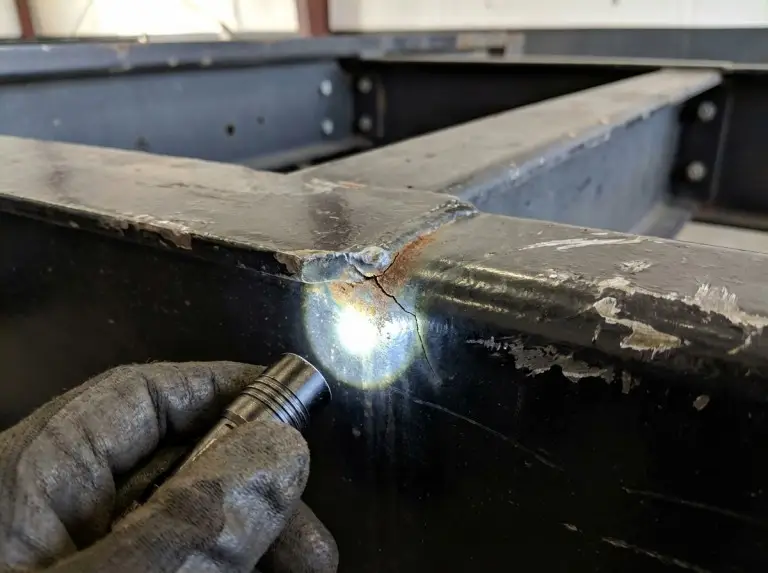
- Level 1 —Visual inspection is the baseline at each service interval. Check primary fatigue zones: weld toes at cross-member-to-longeron junctions, the gooseneck transition, and weld areas around twist lock pockets. The gooseneck transition is a high-stress location on both frame types — stress distribution at this zone differs between a gooseneck vs straight frame chassis, and inspection should account for the geometry your unit uses
- Level 2 — Detailed inspection is triggered by: new audible creaking under load, visible deformation at container corner fitting areas, surface rust at a structural weld toe, extended near-capacity operation on rough roads, or high mileage with limited inspection history. Clean the zone and examine closely. Use magnetic particle or dye-penetrant methods when crack indication appears.
- Level 3 — Withdrawal and repair assessment applies when crack indication, deformation, or significant corrosion loss is confirmed. Follow the trailer OEM’s structural repair specification or the applicable welding procedure standard. Returning a trailer to service after structural repair without manufacturer authorization is a safety and compliance risk.
Corrosion control depends on the original surface treatment and the touch-up protocol used when coating is damaged. Follow the trailer OEM spec or the relevant ISO 12944 corrosivity category for your environment. C2 (dry inland) and C4–C5 (coastal, industrial) classes have very different protection requirements.
Compliance Requirements and Maintenance Documentation
Skeleton semi-trailers on public roads must meet the maintenance and inspection rules of every jurisdiction they operate in. These set a minimum floor. OEM service intervals may go further.
In the United States, 49 CFR Part 396 requires systematic inspection, repair, and maintenance of commercial vehicles. Under 396.17, a periodic inspection is required at least every 12 months. Records must be kept on or with the vehicle. Under 396.11, drivers must report defects that affect safe operation. Records of driver reports, repairs, and sign-off must be kept for each unit. FMCSA pre-trip guidance requires checks of coupling devices, brakes, lights, tires, and wheels before each trip.
In the European Union, Directive 2014/45/EU sets the roadworthiness testing framework. Member states set their own inspection schedules and defect criteria, so requirements vary by country.
Regardless of jurisdiction, records should include: inspection date, trailer ID, systems checked, defects found, actions taken, parts replaced, and technician ID. Good records reveal recurring fault patterns and support compliance audits.
Maintenance Mistakes That Shorten Skeleton Trailer Service Life
Three mistakes appear most often in skeleton trailer operations. Each comes from treating the trailer as passive equipment rather than a system with predictable wear.
Skipping the break-in fastener re-torque is the most common early error. New hardware settles under initial load cycles. Fasteners not re-torqued within the OEM-specified mileage keep loosening under vibration. Suspension integrity and sub-frame connections both suffer. Fixing this after loosening has progressed takes far more disassembly than the original re-torque.
Inconsistent lubrication is the second mistake. It appears most in multi-driver operations where no one is assigned to a specific trailer. Grease points dry out across axle components, suspension pivots, and twist lock mechanisms at the same time. A documented lubrication log assigned to one operator per trailer reduces this significantly.
Deferring rust treatment at a structural weld is the third. In trailers under continuous load cycling, surface rust at a load-bearing weld progresses to pitting and base metal loss if not treated by the next service interval. Early treatment costs a fraction of structural repair or service withdrawal.
Conclusion
Skeleton trailer maintenance depends on three things: the structural specification the trailer entered service with, a consistent inspection program matched to actual conditions, and the ability to catch wear early. A program covering all seven subsystems — welds, twist locks, kingpin, suspension, brakes, tires, and electrical — at OEM-based intervals adjusted for operating severity will outperform one built on calendar defaults.
At Genron, every skeleton semi-trailer delivery includes documentation that supports the maintenance program the unit needs: weld zone locations, twist lock housing specs, kingpin tolerances, coating specifications, and fastener torque tables. In mixed-route operations, we recommend setting inspection frequency to the most demanding route. Frame fatigue accumulates from every load cycle. A program built on average conditions will fall short when severe-route cycles build up.
If you are building a maintenance protocol for new Genron skeleton trailers, reviewing your current inspection scope, or planning fleet expansion, browse our skeletal trailers for sale or share your route data, load cycle frequency, container size mix, and operating environment with our team.We will confirm which subsystems and intervals matter most for your application and provide the documentation to back it up.
FAQ
The open frame removes panels and floor decking, which narrows some inspection scope. But the members carrying the full container load — welds, twist locks, kingpin, longerons — need the same attention as any equivalent semi-trailer under similar conditions.
Replace when any of these appear: non-full cam rotation to the locked position, detent failure under manual force, visible housing deformation, or latch retention failure. Reference the lock manufacturer’s tolerance spec and the ISO 1161 corner fitting interface geometry for wear assessment.
Shorten them when road surface quality drops, daily coupling frequency rises, payload consistently approaches rated capacity, or the environment becomes more humid or corrosive. Use the OEM manual’s duty class guidance to calibrate.
Requirements vary by jurisdiction. Under 49 CFR Part 396 in the US, records must include the annual periodic inspection report, driver defect reports, and repair sign-off. EU operators follow their member state’s implementation of Directive 2014/45/EU. All records should capture trailer ID, inspection date, systems checked, defects found, and actions taken.
Any confirmed crack at a primary load-bearing weld — cross-member junctions, gooseneck transition, or twist lock pocket welds — requires assessment against the trailer OEM’s structural repair specification before the unit returns to service. Monitoring without repair assessment is not appropriate for fatigue-critical weld zones.