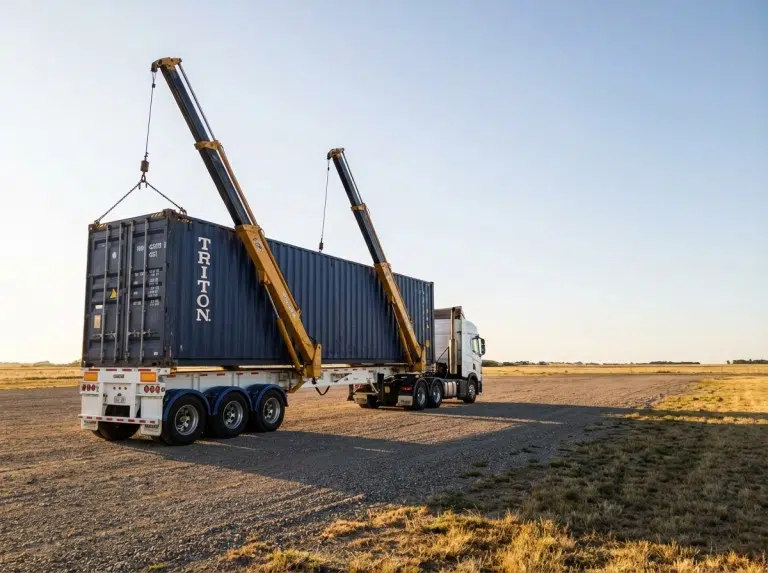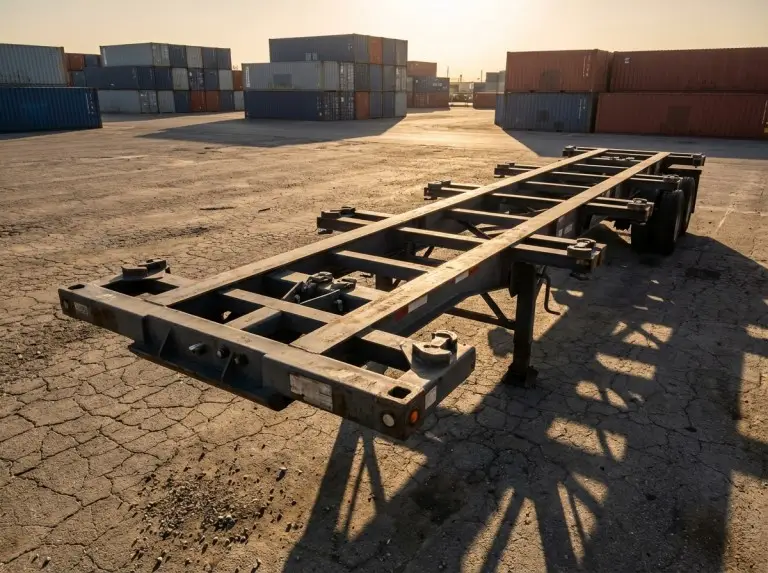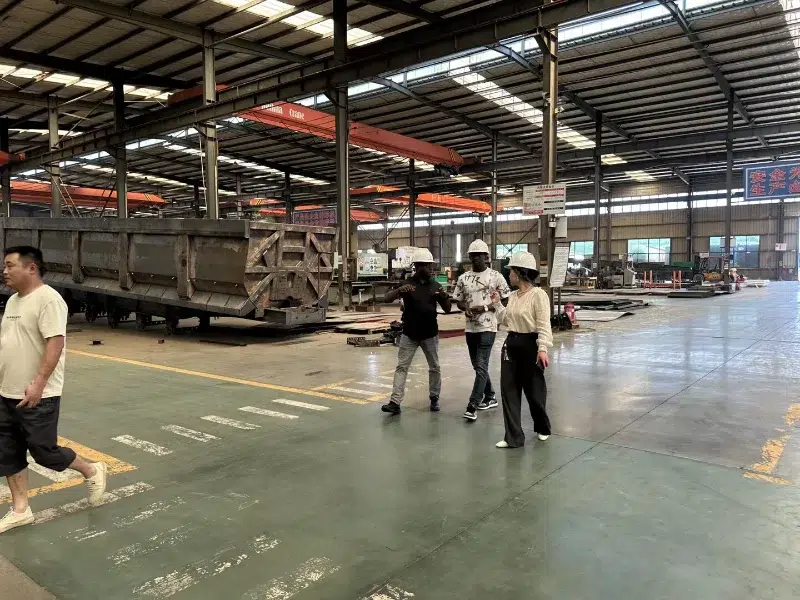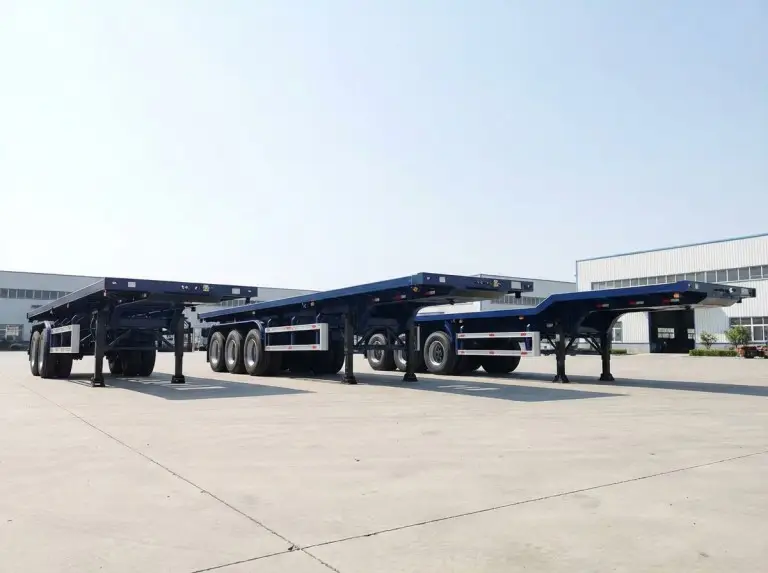
As of early 2026, a new container chassis trailer (skeletal semi trailer) from a China-based manufacturer typically costs between $5,000 and $13,000 FOB China for standard export-market models. A basic 2-axle 20ft chassis sits at the low end. A fully spec’d 3-axle 40ft gooseneck with branded axles and air suspension sits at the high end. The actual price depends on container size, axle count and brand, steel grade, suspension type, brake system, and surface treatment. At Genron, we quote each skeleton trailer based on the buyer’s exact configuration, destination, and order volume.
This article covers what drives the cost of new skeleton semi trailers for export markets. If you are new to this trailer type, start with what a skeleton trailer is and how it works. It does not cover North American domestic intermodal chassis pricing, used chassis values, or leasing rates. All prices are illustrative FOB China ranges for standard export-spec configurations. Actual quotes vary with order date, steel market conditions, and component selection.
Trailer Size and Container Type
Size is the first cost driver. A 20ft skeleton trailer uses less steel, fewer twist locks, and often only 2 axles. A 40ft model needs a longer frame, more cross members, and usually 3 axles — see our 40ft skeleton trailer dimensions guide for exact specs. A 45ft or extendable model adds more material and complexity.
A standard fixed-length 40ft chassis that carries 1×40ft or 2×20ft ISO containers is the most common export-market order and the most competitively priced. Gooseneck versions of the same 40ft chassis cost more because the stepped-down front section adds fabrication steps and slightly more steel. Extendable (telescopic) models cost more again — buyers should only pay for extendability if their container mix actually requires length adjustment.
Container compatibility should match ISO 668 (container sizes and corner fitting locations) and ISO 1161 (corner fitting dimensions and strength). These standards determine twist lock placement and which box sizes the chassis can legally carry.
Axle Count and Brand
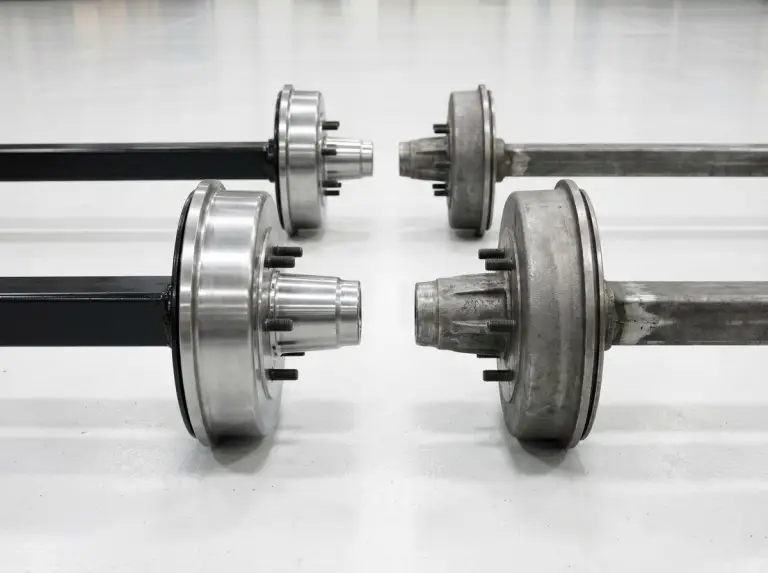
Axles are one of the biggest cost swings in a chassis quote. Two-axle setups cost less and suit lighter loads. Three axles are standard for loaded 40ft work and make up most export-market orders. Four axles cost more and serve markets with strict per-axle weight limits or very heavy container loads.
Axle brand matters because it affects both purchase price and long-term maintenance cost. Established brands (such as BPW, FUWA, SAF, or York — listed as third-party references, not Genron proprietary) cost more upfront but typically offer wider spare parts networks and more consistent quality in markets with established dealer support. Unbranded axles save on purchase price but can create parts-sourcing problems downstream — especially in markets where no local dealer stocks that brand.
When a buyer asks us to reduce cost, we explain exactly where brand savings help and where they create problems later. The cheapest axle on the spec sheet is not always the cheapest axle over five years of service.
Steel Grade and Frame Design
The frame accounts for most of the raw material cost. The two main variables are steel grade and beam section.
High-strength low-alloy steel — such as Q355B per GB/T 1591-2018 or purchaser-approved equivalent — costs more per tonne than ordinary carbon steel. But it allows thinner, lighter beam sections for the same load capacity. Lighter tare weight can mean more legal payload per trip, though the actual payback depends on route weight limits, annual mileage, and cargo density — it is not a universal conclusion.
Ordinary carbon steel is cheaper at purchase but heavier, which means less payload headroom under the same gross weight limit. For buyers running short routes with light containers, the cheaper steel may make more financial sense. For buyers running long corridors with heavy loads near the weight cap, the cost of higher-grade steel often pays back through extra payload per trip.
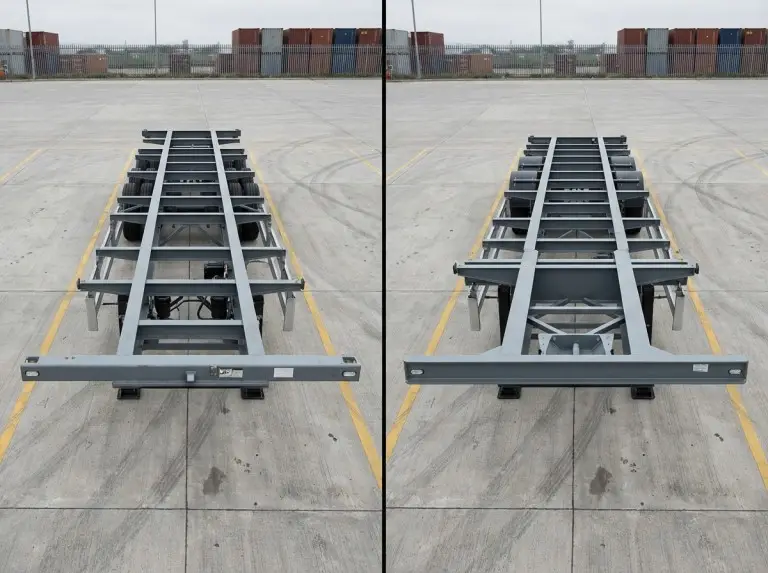
Frame design also moves the price. Straight frames are simpler and cheaper. Bolted rear sections add slightly to build cost but can cut international shipping cost by letting two trailers nest inside one 40ft container for delivery.
Suspension and Brakes
Leaf spring suspension is the cheaper option — rugged, simple to maintain, and suited to rough roads. Air suspension costs more to buy and maintain but offers a smoother ride, adjustable height, and better cargo protection. Most export-market skeleton trailer orders use leaf spring. Air suspension shows up on orders for paved-highway markets with sensitive cargo.
Brake configuration affects cost through both component choice and regulatory requirements. Drum brakes are the baseline. Disc brakes cost more but offer shorter stopping distances. ABS adds further cost. Whether ABS is required depends on the trailer’s weight category and the destination market’s regulatory framework — in UNECE-aligned markets, UN Regulation No. 13 sets requirements by trailer category (O3/O4), not simply by market name. We match the brake spec to destination rules so buyers do not overpay or under-comply.
Electrical connector standards should also be confirmed against the destination market. The cost difference between connector types is small, but a mismatch between trailer and tractor creates delivery-day problems that are cheap to prevent and expensive to fix.
Surface Treatment and Coating
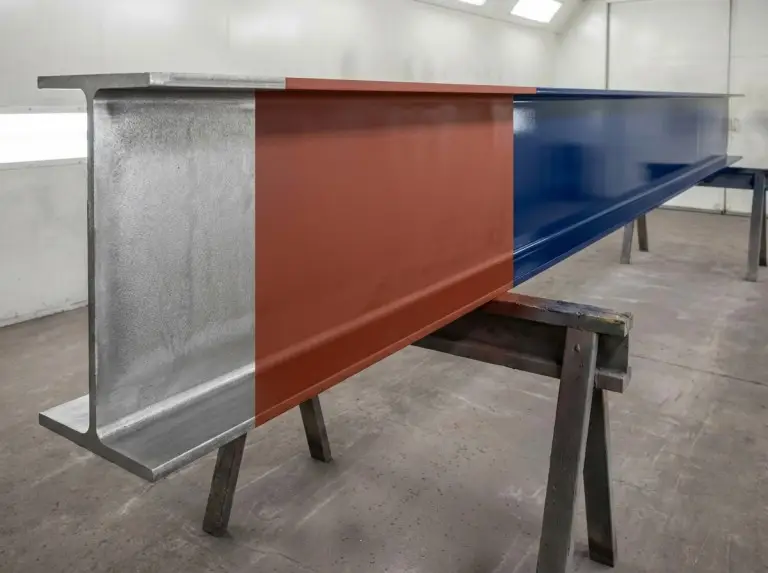
Coating is easy to overlook in a price comparison but directly affects long-term cost. A basic single-coat system is cheaper upfront. A properly specified system — with a defined surface preparation grade, primer, and topcoat applied to a stated film thickness — costs more but prevents the rust-and-respray cycle that typically hits within 2–3 years on trailers in coastal or tropical service.
In our experience, buyers who choose the cheapest paint for port or humid environments end up spending more on maintenance than the coating upgrade would have cost at build time. When comparing quotes, ask each supplier to state the full coating specification. If that detail is missing from a quote, the coating line item is not comparable.
How to Compare Quotes Fairly
Two quotes for a “3-axle 40ft skeleton trailer” can differ by $2,000 or more and both be honest — because they spec different components. To compare on equal terms, check every offer for: axle brand and rating, steel grade, suspension type, brake system and ABS inclusion, coating specification, twist lock count and type, landing gear brand, kingpin size, electrical standard, and what is included versus excluded in the price.
Also confirm the trade term — EXW, FOB, or CIF per Incoterms® 2020 — because this defines where the seller’s cost responsibility ends and the buyer’s begins. A $7,000 FOB quote and a $9,000 CIF quote may cover very different scopes, or they may land at the same total cost once you add shipping to the FOB number.
We format our quotes line by line so every component is visible and directly comparable. For a broader look at selecting the right container chassis, see our configuration guide.
Conclusion
Container chassis cost comes down to configuration choices — size, axles, steel, suspension, brakes, and coating. The headline price only means something when every spec line behind it is visible and the trade term is clear.
At Genron, we break every quote into component-level detail so buyers see exactly where their money goes. In our experience, the costliest mistake is not overpaying upfront — it is buying a cheaply spec’d trailer that needs axle swaps or a full respray within three years, wiping out the original saving. Share your container sizes, axle preference, destination market, and any certification requirements. We return a line-by-line quote you can compare against any offer. Browse our container skeleton trailer range for baseline specs, or reach out to Genron to start.
FAQ
As of early 2026, a basic 2-axle 20ft chassis FOB China starts around $5,000–$8,000 depending on axle brand, steel grade, and component selection. Prices rise with branded axles, upgraded suspension, or enhanced coating.
A standard 3-axle 40ft chassis FOB China usually falls in the $7,000–$13,000 range. Gooseneck, extendable, and air-suspension versions sit at the higher end. Exact price depends on axle brand, steel grade, brake system, and destination requirements.
Because the headline price often covers different specs. One supplier may quote unbranded axles and single-coat paint. Another may quote BPW axles, full corrosion protection, and ABS. The price gap reflects real component differences, not just margin.
Yes. Larger orders spread fixed costs (engineering review, tooling, inspection) across more units. Shipping cost per trailer also drops when units are nested for container freight. We provide volume pricing and confirm per-unit cost for any order size.
Common exclusions are international shipping freight, import duties and taxes, port handling, and inland delivery at destination. Always confirm whether the quote is EXW, FOB, or CIF per Incoterms® 2020 — this defines the cost split between seller and buyer.