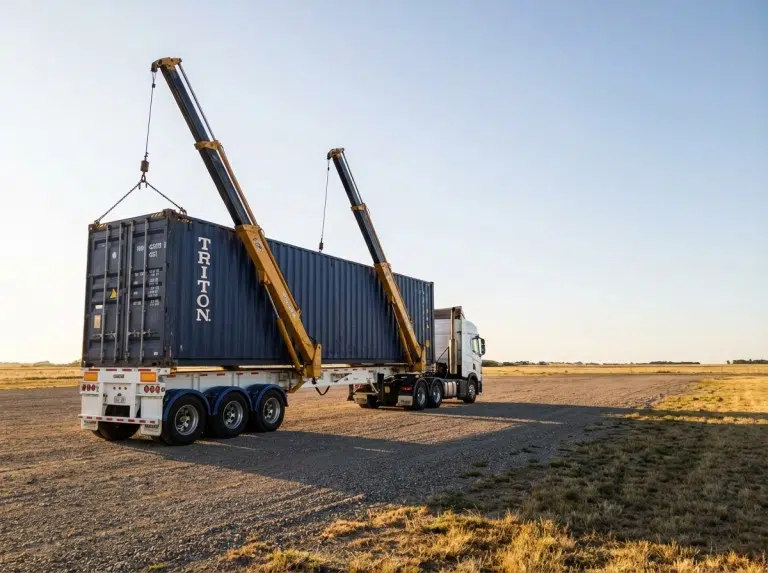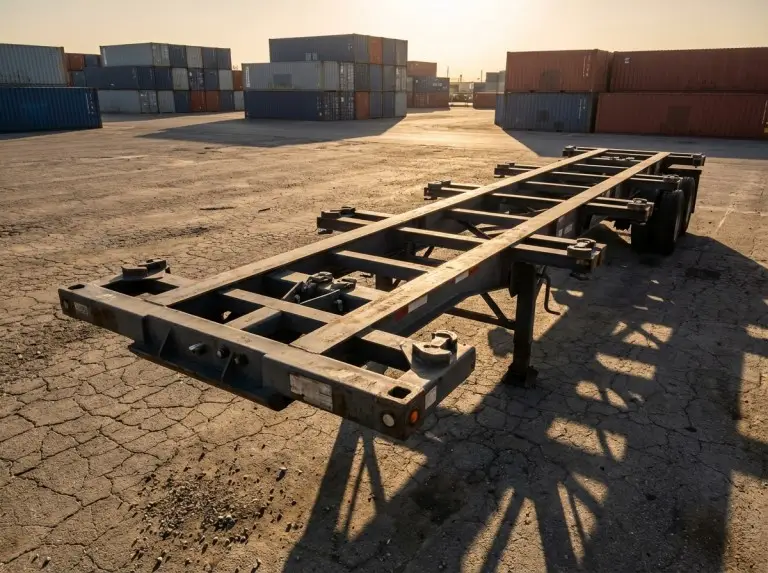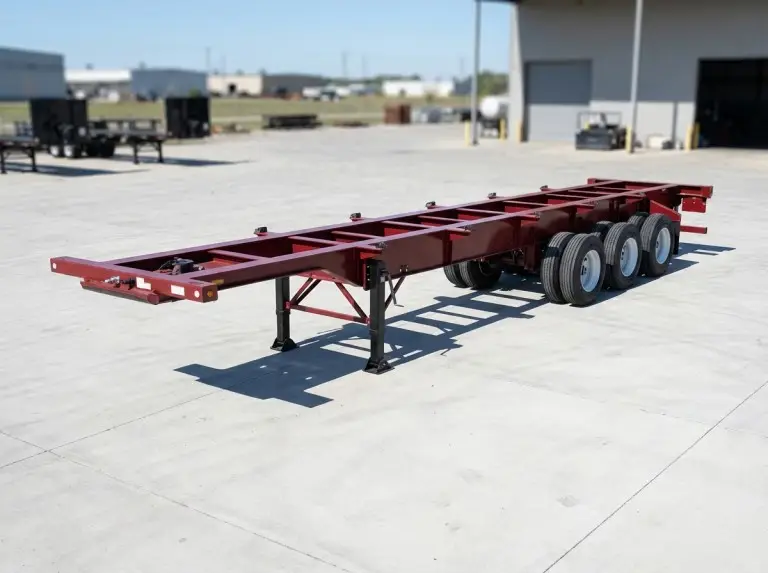
A standard 3-axle 40ft skeleton trailer measures roughly 12,200 mm to 12,500 mm long, 2,480 mm to 2,500 mm wide, and 1,470 mm to 1,560 mm high in unloaded state. These are illustrative ranges from common export-market models, not fixed global values. Actual dimensions change with frame design (straight vs. gooseneck), axle count, kingpin position, and the destination country’s road rules. At Genron, we build 40ft skeleton trailers for ISO 668 series 1 containers and adjust dimensions to match each buyer’s tractor fleet, route limits, and container profile.
This article covers the key dimensions, what drives each one, and how to check the spec before ordering. It focuses on skeleton semi trailers for international container transport. It does not cover North American 53-foot domestic intermodal chassis, which follow different sizing and regulatory standards. If you are still deciding between a skeletal trailer and a flatbed for container work, start there before comparing dimensions.
Overall Length, Width, and Height
Overall length falls between about 12,200 mm and 12,500 mm. The trailer must fit a standard 40-foot ISO container (12,192 mm external length per ISO 668), plus front and rear allowances for the kingpin area, rear cross member, and bumper. Some designs run shorter or longer depending on frame layout and whether the rear section is bolted or welded.
Width sits at 2,480 mm to 2,500 mm. This is set by the container’s external width (2,438 mm per ISO 668) plus frame rail and mudguard overhang on each side. The total must stay within the legal vehicle width limit, which is jurisdiction-specific.
Height (unloaded, ground to top of frame rail) ranges from about 1,470 mm to 1,560 mm. This matters because it sets combined vehicle height once the container sits on top. A standard 40ft container is 2,591 mm tall. A high-cube is 2,896 mm. Total vehicle height — fifth wheel height plus trailer frame height plus container height — must stay under the route’s legal limit, which varies by country and sometimes by road class.
ISO 668 fixes the container dimensions. The trailer dimensions must fit the container while staying within the road rules of the operating country.
Kingpin Position and Fifth Wheel Height
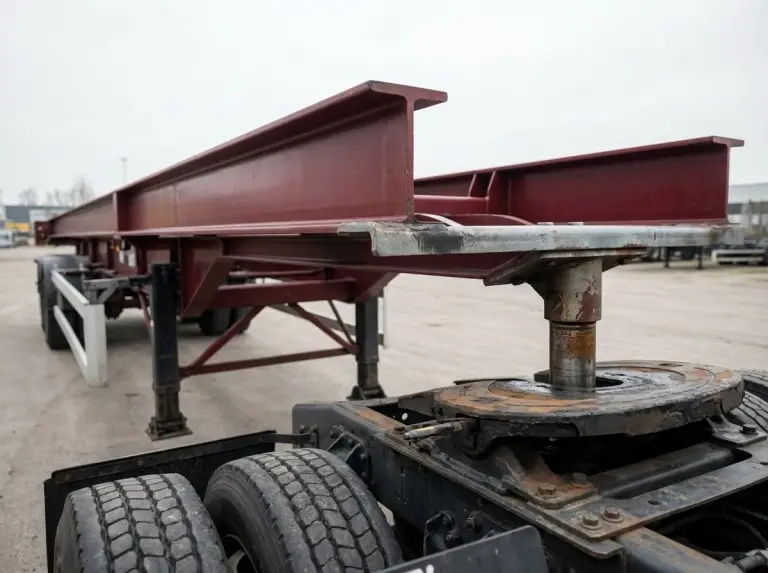
Kingpin position is the distance from the front face of the front bolster to the center of the kingpin. On most 40ft skeleton trailers, this falls between 950 mm and 1,200 mm. The exact setting depends on the tractor’s fifth wheel location and the target weight split between tractor drive axle and trailer axle group.
Moving the kingpin forward shifts more weight onto the trailer axles. Moving it back shifts more onto the tractor. Getting this wrong leads to overloaded trailer axles or an underloaded tractor drive axle — both cause handling problems and possible weight violations.
Fifth wheel height — ground to the top surface of the trailer’s upper coupler plate, measured unloaded — typically runs 1,240 mm to 1,300 mm. This must match the tractor’s fifth wheel height to keep the trailer level when coupled. A mismatch tilts the trailer, shifts load toward one end, and stresses the coupling and frame.
Kingpin sizing follows UN Regulation No. 55. Standard sizes are 2-inch (50 mm) and 3.5-inch (90 mm), with the choice depending on gross combination mass and regional coupling rules.
Axle Spacing and Configuration
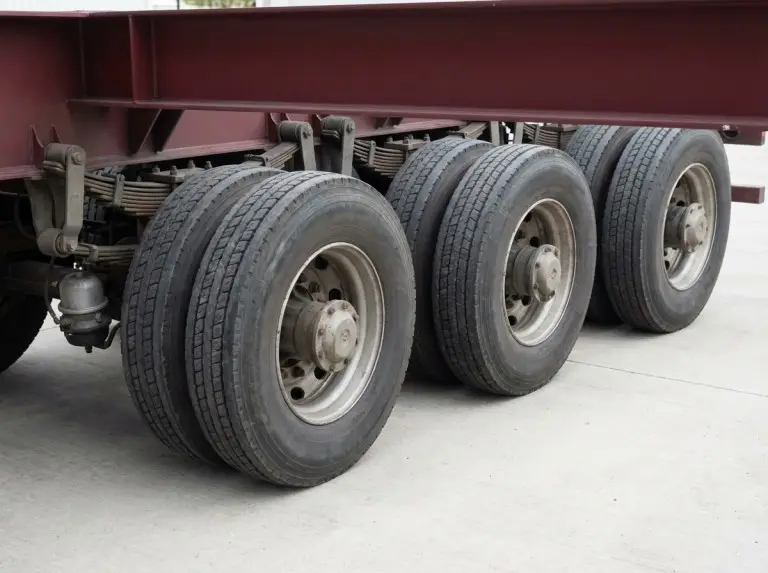
Axle spacing affects weight distribution, turning radius, and legal compliance. On a 3-axle 40ft skeleton trailer, center-to-center spacing between adjacent axles is commonly around 1,310 mm, with the lead axle set roughly 6,800 mm to 7,500 mm behind the kingpin center. These numbers vary by design and market.
The kingpin-to-first-axle distance sets how the load splits between tractor and trailer axle groups. Many countries use a bridge formula that links axle spacing to the maximum allowed weight on that axle group. If the spacing is too tight, the legal axle group weight drops — even if the hardware can handle more.
Two-axle 40ft skeleton trailers are typically lighter and shorter in the rear section, used for lighter loads or empty runs. Three axles are the standard for loaded 40-foot work in most export markets. Four-axle trailers add rear length and tare weight but allow higher gross loads in markets with strict per-axle limits.
Tare Weight and Payload
Tare weight for a 3-axle 40ft skeleton trailer in export markets falls between about 5,500 kg and 6,500 kg. Actual tare depends on steel grade, axle brand, suspension type, landing gear model, twist lock count, and frame construction. Tare as stated includes all standard fitted parts: landing gear, twist locks, spare tire carrier, mudguards, lighting, and brake system.
Payload has two separate meanings. Structural payload is the maximum the frame and axles can physically carry — a design value from the manufacturer, commonly 30,000 kg to 40,000 kg on export-market spec sheets. Legal payload is what the route’s weight laws actually allow, which is always equal to or less than the structural rating. A trailer rated for 40,000 kg may only legally carry 28,000 kg if the route’s gross weight limit is low. Understanding how to select the right container chassis helps avoid this mismatch before ordering.
Main Beam and Twist Lock Layout
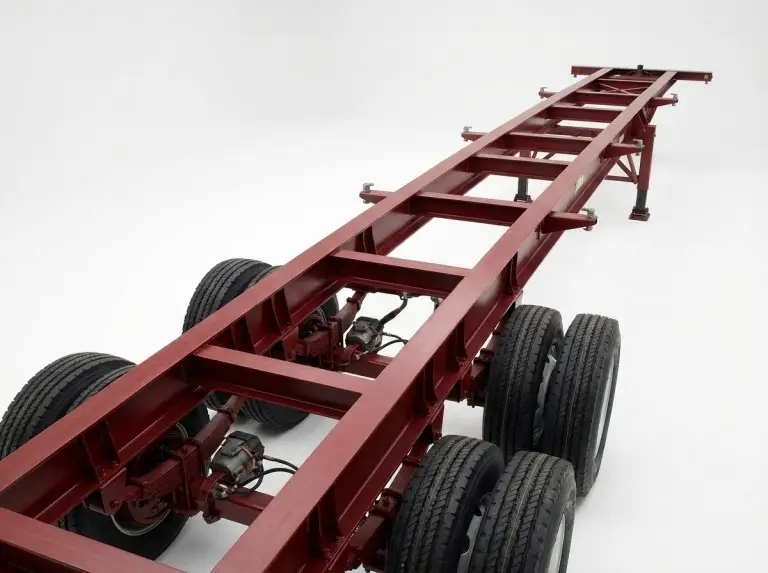
The two longitudinal I-beams have a section height of 450 mm to 500 mm on standard 40ft models, fabricated from high-strength low-alloy steel. Beam height is set per the design load case — target payload, axle spacing, and kingpin load.
Cross members join the main beams and carry container loads sideways. Their spacing aligns with twist lock positions, which match the corner fitting locations in ISO 668 for 20-foot and 40-foot containers. A trailer set up for both 1×40ft and 2×20ft loads has twist locks at both the 20-foot and 40-foot corner fitting intervals. Retractable locks in the middle fold down for a single 40-foot box.
Total twist lock count ranges from 4 to 12. Four (one per corner of a 40ft container) is the minimum. Twelve covers all positions for 20-foot and 40-foot patterns. ISO 1161 defines the corner fitting size and strength. ISO 3874 governs the securing arrangement on transport equipment.
How Gooseneck Design Changes Dimensions
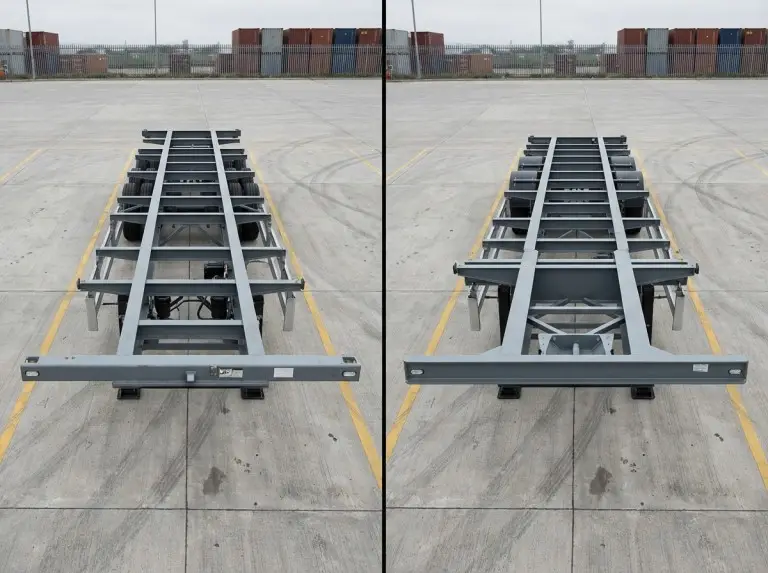
A gooseneck skeleton trailer has a stepped-down front section that lowers the deck by roughly 200 mm to 300 mm compared to a straight frame. The purpose is to reduce total vehicle height when hauling high-cube containers.
The gooseneck contour and coupling interface are covered in ISO 1726-1, which addresses tractor–trailer interchangeability — including provisions for containers with external heights up to 2.9 m. The recessed front lets the container sit lower, helping the combined vehicle stay under height caps on routes with low bridges.
The trade-off is a slightly heavier and more complex frame. We offer both straight-frame and gooseneck and recommend the gooseneck when routes have height limits or the container mix includes high-cube units.

Dimension Reference Table
Illustrative ranges for a 3-axle 40ft skeleton trailer in export markets. Not universal specs. Values depend on steel grade, axle brand, suspension, frame design, and destination market rules.
| Parameter | Illustrative Range |
|---|---|
| Overall length | 12,200–12,500 mm |
| Overall width | 2,480–2,500 mm |
| Height, unloaded | 1,470–1,560 mm |
| Kingpin position (front bolster to kingpin center) | 950–1,200 mm |
| Fifth wheel height (ground to upper coupler plate) | 1,240–1,300 mm |
| Axle spacing (center-to-center) | ~1,310 mm (common) |
| Tare weight (3-axle, standard components) | 5,500–6,500 kg |
| Structural payload rating | 30,000–40,000 kg (varies) |
| Twist locks | 4–12 units |
| Main beam height | 450–500 mm |
| Container fit | 1×40ft or 2×20ft ISO |
Measured unloaded, standard tires at rated pressure, suspension at normal ride height, landing gear retracted.
Conclusion
The dimensions of a 40ft skeleton trailer are not one fixed set of numbers. They shift with frame design, axle count, kingpin position, steel grade, and the road rules of the operating market. The ranges in this article reflect common export-market 3-axle configurations for ISO 668 series 1 containers.
At Genron, we treat every dimension as a variable confirmed against the buyer’s actual setup. In our experience, the most frequent sizing issue is not overall length or width. It is the kingpin-to-axle distance and fifth wheel height that cause the most trouble when unmatched to the tractor fleet and route weight rules. A mismatch leads to poor load split, axle overloads, or coupling stress that only appears after the trailer is in service. We catch these during drawing review before steel is cut.
To get exact dimensions, share your tractor specs, container types, route weight limits, and any height or length restrictions. View our skeleton trailer product range for baseline specs, or reach out to Genron to start the review.
FAQ
No. A 40-foot ISO container is 12,192 mm long (per ISO 668). The trailer adds length for the kingpin area and rear structure, bringing total length to roughly 12,200–12,500 mm.
Axle count changes tare weight, rear overhang, and axle group layout. Two axles are lighter and shorter at the rear. Four axles add rear length and weight. Three axles are the most common for loaded 40-foot work.
Fifth wheel height plus frame height plus container height. A standard container is 2,591 mm tall; a high-cube is 2,896 mm. Gooseneck trailers lower the front to help high-cube loads fit under height limits.
Yes. We adjust length, kingpin position, axle spacing, and frame height based on the buyer’s tractor spec, container mix, and route rules. Custom specs are locked during drawing review before production.
Structural payload is what the frame and axles can physically carry. Legal payload is what the route allows after subtracting tractor, trailer, and empty container weight from the gross limit. Legal is always equal to or less than structural.