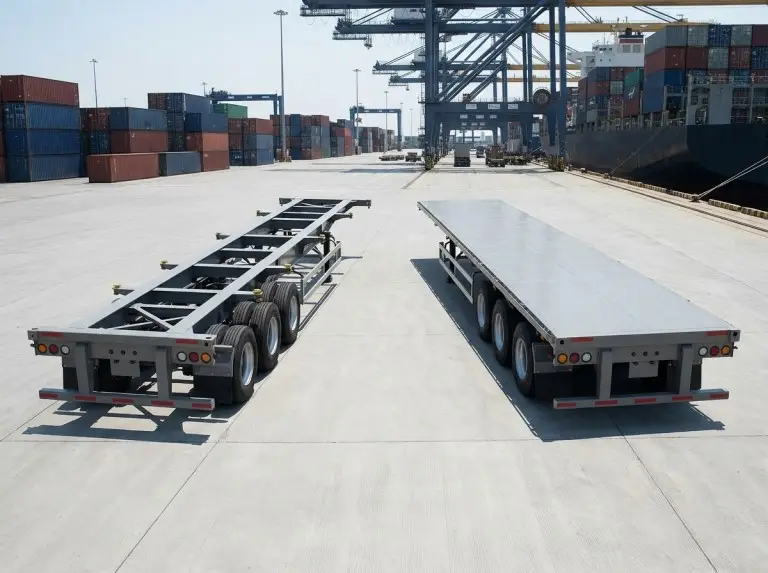
Choosing between a skeleton trailer and a flatbed trailer depends on cargo mix, route weight limits, loading method, and how often the fleet hauls non-container freight. Both can carry shipping containers. But they are built for different jobs.
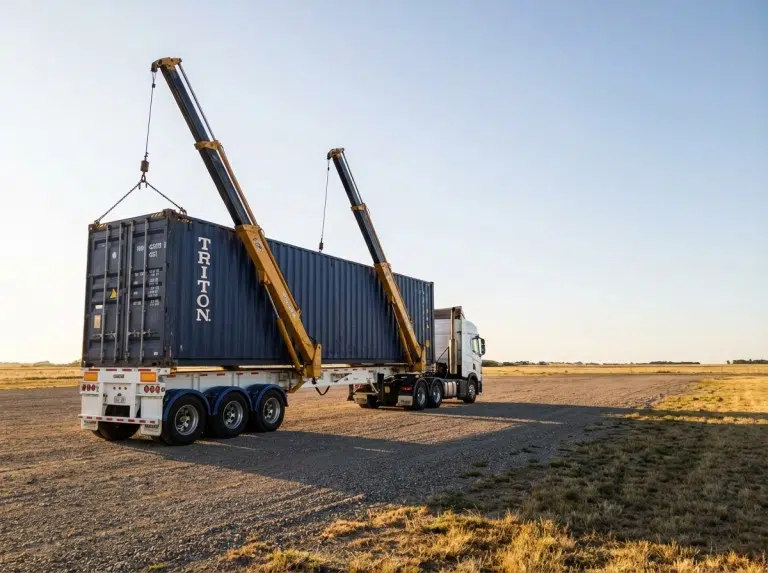
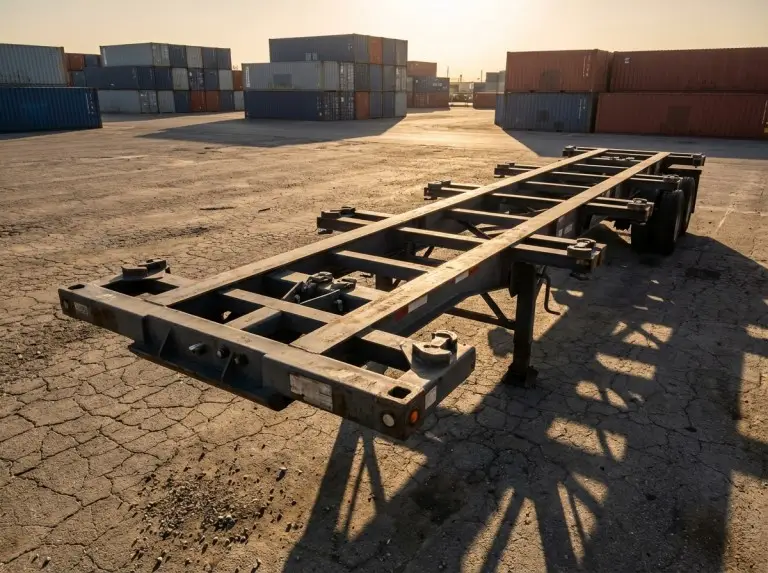
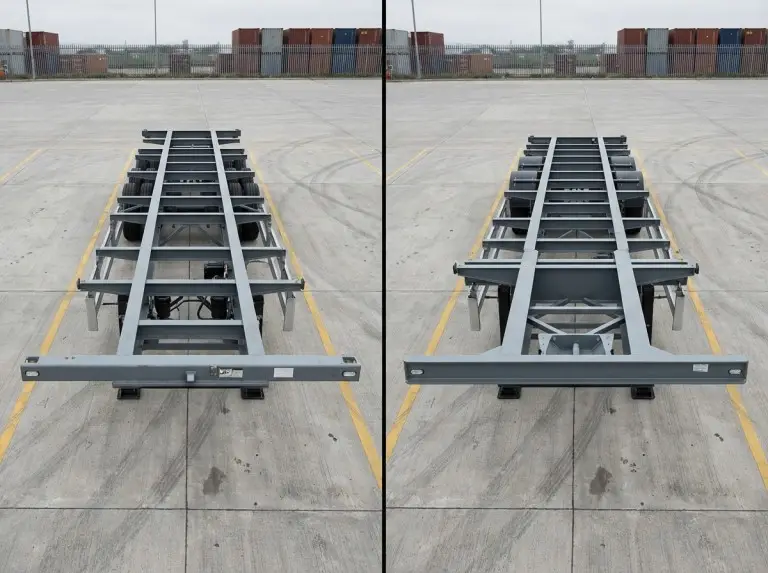
A skeleton trailer (also called a skeletal semi trailer or container chassis) is an open steel frame with twist locks. It carries only ISO series 1 containers. A flatbed trailer has a full solid deck. It can carry containers, loose cargo, machines, and building materials on one platform. At Genron, we build skeleton semi trailers for dedicated container work. We also help buyers decide which type fits their real transport profile.
This article compares both types for container transport in export and international markets. It does not cover North American domestic intermodal chassis (53-foot setups under FMCSA, AAR, and DOT rules). Those follow a different equipment and regulatory system. All container references below mean ISO 668 series 1 sizes (20-foot, 40-foot, and 45-foot) unless noted otherwise.
Skeleton vs Flatbed: Structural Differences?
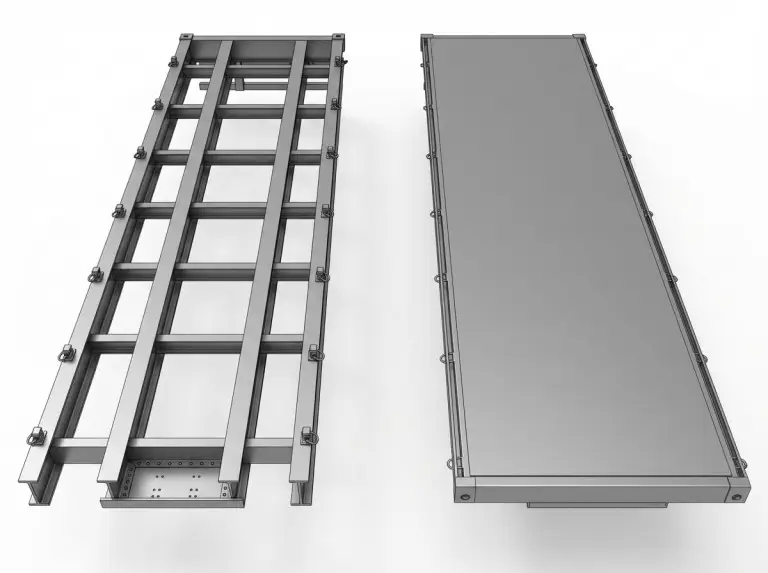
A skeletal semi trailer uses an open I-beam frame with no deck. Containers mount straight onto the frame through twist locks. These locks engage the container’s corner fittings. ISO 1161 defines the size, function, and strength of these fittings. ISO 668 sets the container sizes and corner fitting spots that decide where twist locks must go. The frame is lighter because it has no floor panels, sidewalls, or deck plating.
A flatbed trailer has a solid steel or composite deck running the full length. Containers sit on this deck. They must be held at all four lower corner fittings using container locks and lashing chains, with separate front and rear restraint. The same deck also supports steel coils, timber, pipe bundles, and machinery — cargo a skeleton frame cannot carry.
The gap between these two types goes beyond weight. It also affects securing method, loading speed, and what cargo the trailer can legally haul.
How Tare Weight Affects Payload per Trip
Skeleton trailers move more net payload per container trip because they weigh less. This matters most where gross vehicle weight limits are strictly enforced.
Tare weight varies by market, steel grade, axle brand, and frame setup. A standard 3-axle skeleton trailer for export markets may weigh roughly 5,500 kg to 7,000 kg. A 3-axle flatbed with a full steel deck often falls between 7,500 kg and 9,500 kg. These are rough ranges, not fixed values. Actual weight depends on material spec (high-strength steel vs. carbon steel vs. aluminum-steel mix), axle count, suspension type, and frame features like gooseneck or telescopic sections. We confirm exact tare weight for each order during design review.
Here is how this gap plays out. Say a route allows 36 tonnes gross and the tractor weighs 9 tonnes. A skeleton trailer at 6,000 kg leaves 21,000 kg for the container and cargo. A flatbed at 8,500 kg leaves 18,500 kg. That is a 2,500 kg difference per trip. This example uses 36 tonnes for illustration only — actual limits vary by country, road class, and axle group rules. But the principle holds everywhere: lower tare weight means more cargo per trip under any weight cap.
Over hundreds of trips per year, this gap turns into real revenue loss or extra fuel on added runs. The advantage fades when the fleet also hauls cargo that only a flatbed can carry.
Loading Speed and Cargo Securing
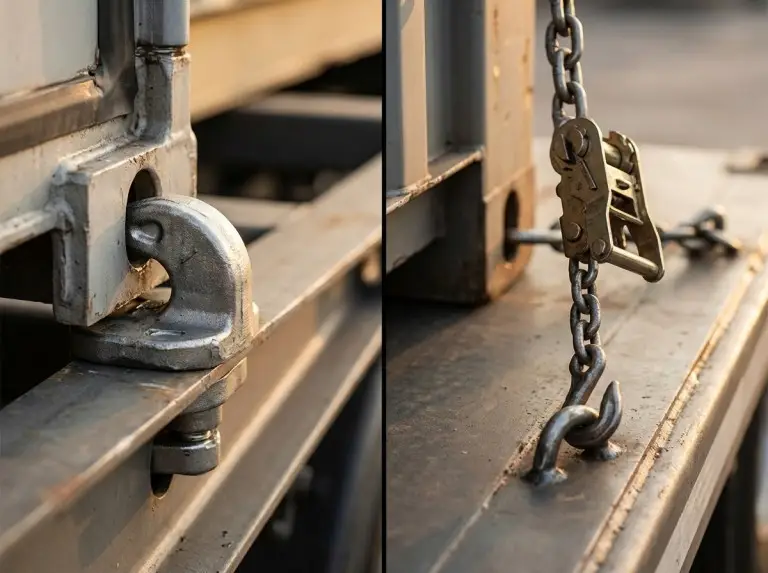
Skeleton trailers load faster for container work. Twist locks grip the container’s corner castings in a fixed pattern. The crane or reach stacker drops the box, and four to twelve twist locks hold it. No chains. No straps. No edge guards. Loading a 40-foot container onto a skeleton trailer at a good terminal takes minutes.
Flatbed trailers need more steps for the same box. The container sits on the deck. It must be held at all lower corner fittings with locks and chains, using separate front and rear ties. This takes more time and more hands per cycle. On port shuttle runs with constant loading and unloading, the time gap adds up across every shift.
We see this clearly in terminal work. Fleets running port drayage with skeleton trailers finish more round trips per shift. Twist lock action is simply faster than chain-based securing. On long-haul routes with one load and one unload per trip, the gap shrinks and may not drive the choice.
Flatbeds win when the cargo is not a standard container. Machines, steel beams, or bundled goods need the deck for support and tie-down anchor points. A skeleton frame has no deck and no tie-down spots for these loads. Hauling loose cargo on a skeleton trailer is not just slow — it is unsafe.
Fuel and Maintenance Costs
Skeleton trailers burn less fuel on container-only routes. Less weight means less rolling resistance at highway speeds. The per-trip gap is small, but it grows over a full year on busy routes. Fleets running 500 km or more per container trip see the clearest savings.
Exact fuel savings depend on too many factors to quote one number — engine, grade, speed, wind, load, and tires all play in. What we can say from building trailers and hearing from customers is that the direction holds: lighter trailer, less fuel, all else equal.
Maintenance also splits. Skeleton trailers have fewer parts exposed to wear. No deck boards to swap. No floor welds to crack. No lashing rings to check. The open frame is easy to inspect by eye. Key checks for skeleton trailers focus on twist lock function, axle and suspension health, brake system, and frame weld quality — all subject to the trailer’s periodic inspection rules in the country of use.
Flatbed upkeep costs more because the deck takes direct abuse from cargo. Steel coils, concrete blocks, and heavy gear wear the surface over time. Deck repairs add cost that skeleton trailers skip entirely. But flatbed owners spread that cost across a wider range of paying cargo types.
When a Skeleton Trailer Fits Best
A skeleton trailer works best when the fleet runs dedicated container loads with high trip counts and tight weight rules. The strongest cases are port drayage and terminal shuttles where loading speed counts, long container corridors where fuel savings add up, intermodal transfers where fast box handling cuts wait time, and markets with strict per-axle limits where every kilo of tare weight eats into payload.
From our work building and shipping skeleton trailers, the buyers who gain the most run containers as the large bulk of their work. Volume is steady. Routes are set. When container supply drops or the fleet must grab non-container work, an idle skeleton trailer earns nothing.
We also see trouble when buyers pick a generic spec without checking route weight limits. A trailer rated for 40 tonnes means nothing if the route caps gross at 32 tonnes. We verify these numbers during every order review.
When a Flatbed Trailer Fits Better
A flatbed suits fleets that handle mixed cargo and need a trailer that works beyond containers. The main wins are cargo range (containers, steel, timber, machines, and project cargo on one deck), revenue on non-container days, and the ability to handle oversized loads that need a flat surface and many tie-down points.
Flatbeds also fit smaller fleets that cannot own both types. One flatbed handles containers and general freight, even if it does neither as well as the purpose-built tool. For operators in markets with shifting cargo mix, flatbed flexibility often beats skeleton per-trip savings.
The trade-off is simple. A flatbed costs more per container trip — heavier, slower to load, more fuel. But it earns across more cargo types. A skeleton trailer costs less per container trip but earns zero on non-container work.
How to Decide: Key Variables
No fixed rule picks one over the other. The choice depends on several factors that interact differently in every fleet.
Start with container share of total loads. Fleets where containers make up the large majority of revenue lean toward skeleton trailers. Fleets with an even split or mostly non-container work lean toward flatbeds. But this alone is not enough. It must be weighed against empty return rate and backhaul options, route weight limits and enforcement level, loading gear at origin and destination, yearly mileage and trip count, and the margin gap between container and non-container freight in that market.
We walk through these factors with every buyer before locking a trailer type. The goal is not to push a skeleton trailer on someone who needs a flatbed. It is to match the gear to the work so the trailer pays for itself as fast as it can.
| Variable | Skeleton Trailer | Flatbed Trailer |
|---|---|---|
| Cargo scope | ISO containers only | Containers + general cargo |
| Tare weight | Lower (varies by spec) | Higher (deck adds weight) |
| Loading speed | Fast (twist locks) | Slower (locks + chains) |
| Fuel per trip | Lower | Higher |
| Maintenance | Fewer wear parts | Deck wear adds cost |
| Fleet flexibility | Low | High |
Conclusion
The skeleton vs flatbed call comes down to cargo mix, route weight caps, loading setup, and idle time the fleet can absorb. For container-heavy work with steady volume, skeleton trailers win on payload, fuel, speed, and upkeep. For mixed fleets that need one trailer across many cargo types, flatbeds bring the range that skeleton trailers lack.
At Genron, we build skeleton semi trailers for buyers who confirm that container work is the core of their business. In our experience, the biggest issue is not build quality. It is spec mismatch. Buyers who picked a skeleton for a fleet with heavy non-container freight end up leasing flatbeds to cover the gap. Buyers who picked flatbeds for high-volume container work pay more per trip for the life of the trailer. We check the cargo mix, route limits, and loading setup with every customer before we confirm the order.
To start, share your container-to-general-cargo split, route weight limits, and loading gear details. We check these against our designs and confirm whether a skeleton trailer fits — or whether a flatbed or mixed fleet makes more sense. Reach out to Genron to begin that review.
Further Reading: What Is a Skeleton Semi-Trailer?
FAQ
Yes. The container must be held at all lower corner fittings with locks and chains, with separate front and rear ties. But flatbeds weigh more, so net payload under the same gross limit is lower than a skeleton trailer.
Not in standard form. It has no deck and no tie-down points for loose goods. Some modified versions handle specific loads like timber with bolt-on bunks. These are special builds, not standard chassis.
Skeleton trailers, on container routes, due to lower weight. The gap grows on longer trips. Actual savings depend on tractor, route, speed, and load — no single number fits all markets.
ISO 1161 sets corner fitting size and strength. ISO 668 sets container sizes and fitting spots. ISO 3874 covers container handling and securing on transport gear. Road-specific rules depend on the country of use.