Managing tractor-trailer width is easiest with a clear measurement method and good route planning. At GENRON, we see width as a real-world limit, not just a number on a spec sheet. This article covers semi-trailer width and the total outside width that interacts with lanes, gates, and docks.It also shows how tractor trailer sizes can shift with equipment and cargo, which is why measuring beats assumptions.That outside-width number is what matters most when your semi trailer truck is threading narrow lanes, gates, and docks.
A standard width is a helpful reference, but it doesn’t replace measuring a specific trailer with its equipment. Rules also change by road and location. The safest plan is to measure first and check local rules for your route. The goal is simple: prevent violations, site access problems, and side-swipes.
What Trailer Width Means?
Trailer width only becomes a useful number when everyone—dispatch, drivers, and compliance staff—uses the same measurement. In practice, two numbers matter: the trailer body width and the total outside width. Mixing up these numbers can make a route plan unreliable.
At GENRON, we suggest keeping both values in the asset’s record. The trailer body width is good for planning loads and checking dock fit. The outside width is the key number for compliance and routing on the road.
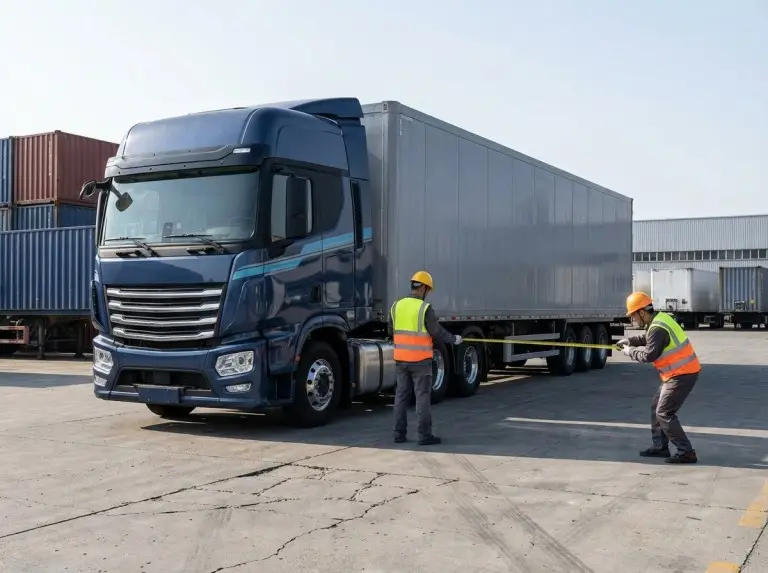
Trailer body width vs overall outside width
Trailer body width is the measurement of the trailer’s main structure, like its box or platform. This is often close to the maximum allowed width, but it’s not always the final number. Bolt-on parts or rub rails can stick out beyond the body.
Overall outside width is the widest point of the vehicle or its load. This is the measurement that enforcement officers and road designs will “see.” When a shipper asks if your trailer can fit, the outside width is what you need to know.
What to include in the measurement
Width measurement should include all components unless a rule says otherwise. Federal rules define what is excluded, such as certain mirrors and other non-cargo items. But these exclusions are specific, so you should always verify them for your situation.
Safety devices are often treated differently from the cargo-carrying structure. On the U.S. National Network, for instance, certain safety devices needed for safe operation are not part of the width calculation. If a part holds or supports cargo, it’s safest to assume it counts toward the width. When a route is tight, fleets should confirm the exact rules for the areas they will pass through.
A quick and repeatable field measurement method
To measure width reliably, start on a level surface with the trailer in its normal operating setup. Use a tape measure, laser, or yardstick to find the widest left-to-right points and note where you measured. Using the same method every time is more important than the tool you choose.
We also recommend measuring twice. Measure once without cargo, and then again with cargo if it could make the trailer wider. With open-deck trailers, things like dunnage, securement gear, and load overhang can become the widest points. If the cargo changes, so does the risk.
Legal Width Limits and Common Permit Situations
Most daily U.S. highway operations work with a 102-inch maximum width on the National Network. However, permits and local rules can still apply depending on the route and load. Federal rules prevent states from setting a width limit on the National Network that is higher or lower than 102 inches, with few exceptions. This is why “102 inches” is the baseline for much of U.S. freight planning.
That baseline still requires discipline. The vehicle, its equipment, and its cargo must stay within the legal limits. If a shipment might exceed this width, you should have a permit strategy before dispatch.
Typical on-road maximum width
The standard 102-inch width helps support smooth interstate freight. A consistent limit reduces issues at state lines and makes trailer design simpler. The Federal Highway Administration provides guidance on how these limits apply to the National Network and its access routes.
California’s public guidance also uses the 102-inch total outside width and notes that safety devices are not included. Many states have similar rules, but fleets should still check the regulations for the specific roads they use.
Common scenarios for overwidth permits
Overwidth permits are usually needed for loads or equipment that go beyond the 102-inch maximum. This can include heavy equipment on lowboys, wide industrial parts, and certain building materials. Open-deck trailers are more likely to need permits because the cargo itself can be wider than the trailer deck.
Permits are about more than just a number. The process often looks at the route’s layout, traffic impact, time-of-day restrictions, and escort needs. If cargo is close to the limit, the dispatch plan should include a careful measurement and a clear path for getting a permit.
A practical note on jurisdiction differences
Not all roads are part of the National Network. City rules, work-zone detours, and private property can have tighter limits than state law. Rules also differ for international operations. Readers outside the U.S. should treat 102 inches as a U.S. reference and check their local requirements.
When in doubt, use the more conservative width number and confirm route restrictions early. A phone call costs less than a rejected delivery.
How Width Affects Routes, Turns, and Site Access?
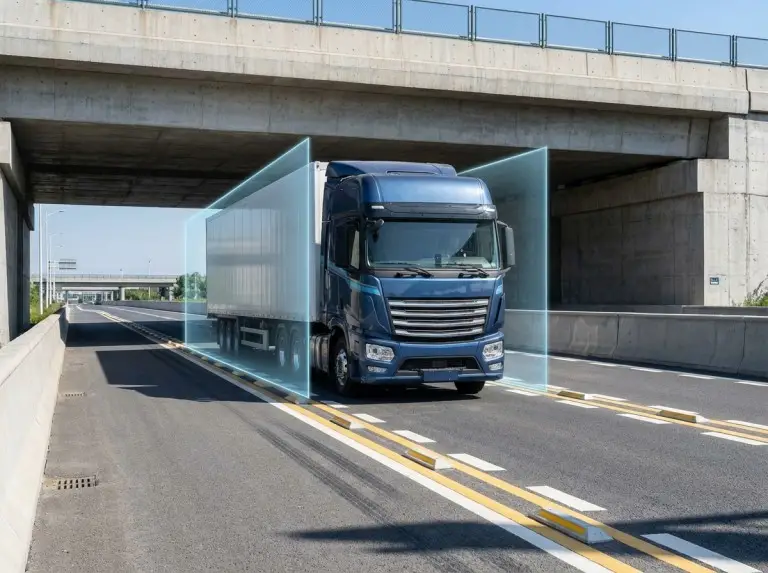
Trailer width causes the most problems at fixed obstacles, not on the open highway. Even when width is compliant, a semi truck tall setup can still be limited by low bridges, canopies, and warehouse clearances.City turns, gates, toll lanes, and docks are common friction points. Width planning should start with the delivery site and work backward.
At GENRON, we suggest creating route profiles for frequent lanes. The profile should list the few places where width is critical, like a narrow bridge or a tight yard entrance.
Urban corners and lane positioning
City turns are tough for wide vehicles because the trailer’s rear wheels cut the corner differently. A legal-width trailer can still hit curbs, signs, or parked cars if the turn is tight. In dense areas, choosing the right lane and timing your turn becomes a way to manage width. Dispatch can help by flagging risky turns and suggesting better approaches.
Fixed constraints: gates, docks, and work sites
Facilities often set the real-world width limit. Gate lanes can be narrow, and the space between posts may be tight. Toll plazas can also create channels that offer little room for error. Work sites add another challenge, as temporary barriers and materials can narrow the path. A fleet that only plans for the highway can fail in the last 200 feet.
Cargo placement choices
How you place cargo can create width problems even on a standard trailer. Pallets pushed to one side can increase the risk of contact in tight spaces. On an open deck, tie-down hardware can become the widest point. Width control improves with a “widest point check” during loading. This check confirms the outside width and ensures nothing can shift outward in transit.
Pre-Trip Width Compliance for Dispatch and Drivers
A short, simple pre-trip width checklist prevents most width violations and site access problems. It should be used for every trip, especially for new routes and open-deck cargo. At GENRON, we see the best results when dispatch and drivers use the same checklist.
If any item fails, the trip should pause until the issue is fixed.
- Confirm the measurement: Record if the number is the trailer body width or the total outside width.
- Measure the widest points: Find the true widest points, not just the most obvious ones.
- Verify excluded devices: Be cautious with width exclusions and check local rules when close to the limit.
- Re-check after loading: Measure again if cargo or tie-downs could make the trailer wider.
- Screen the route for fixed constraints: Note any gates, narrow bridges, or tight site access points.
- Decide permit needs before departure: If the width exceeds limits, confirm permit rules before the trip starts.
- Document the numbers: Keep the measurement and reference points in the trip file.
Common Mistakes That Create Overwidth Violations
Most overwidth issues result from measurement and planning errors, not deliberate rule-breaking. These mistakes happen because “102 inches” becomes a habit, and habits can replace careful measurement. The fix is to treat width as specific to each trip, especially when the setup or cargo changes.
These are the mistakes we see most often:
- Measuring the wrong reference point: Measuring the body while ignoring the true widest part can understate the width.
- Forgetting bolt-on parts: Rub rails or other add-ons can become the widest point without anyone noticing.
- Assuming “standard width” is enough: A design standard does not guarantee the actual operating width.
- Skipping the post-load check: Open-deck loads often get wider after you add tie-downs.
- Planning only for the highway: The final gate and yard are often where width problems occur.
When a fleet fixes these mistakes, width incidents drop quickly. The change comes from consistency, not complex solutions. A simple habit of measuring and documenting pays off.
Conclusion
Width compliance depends on the measured outside width of the tractor-trailer in its real-world setup. The common 102-inch standard is a helpful baseline for U.S. freight. However, measurement, cargo, and last-mile challenges ultimately determine success.
At GENRON, we see width planning as a team effort involving equipment, loading, dispatch, and site access. A consistent measurement process, a careful approach to included parts, and a simple pre-trip checklist prevent most width problems. With these habits, fleets can spend less time fixing problems and more time delivering as planned.
FAQ
The common maximum width for U.S. highways on the National Network is 102 inches (8 ft 6 in). This number is the standard because federal rules limit states from setting a different width on that network. You may still need to check rules for other roads or specific loads.
The 102-inch limit generally applies to the total outside width of the vehicle or its load, not just the trailer body. For example, California guidance uses total outside width and notes that certain safety devices are excluded. Fleets should be clear about whether their records show body width or outside width.
Aero devices and other parts can affect the measured width unless a rule specifically excludes them. Federal regulations list certain excluded components. If a part isn’t on the exclusion list, it is generally included. If your trailer is near the limit, it’s safest to assume the device counts toward the width until you can verify it.
An overwidth permit may be needed when a vehicle or its load is wider than the limit for a specific road. On the National Network, anything over 102 inches often requires a permit. Permit needs can also depend on the route, time restrictions, and local rules.
A fleet’s width record should state how it was measured, the widest points, and whether the number is for the body or the total outside width. Federal rules exclude certain safety devices, so your records should note if you are relying on an exclusion. If cargo can change the width, the trip file should also include the post-load measurement.