Semi-truck height matters. A few inches can turn a route routine or risky. At GENRON, we see overall height as a key design input. Our trailers must fit real-world clearances and customer tractor setups. This article covers typical height ranges. It explains variables that affect them. It also shares a practical way to measure height before starting a route.
What We Mean by “Semi-Truck Height”
Semi-truck height means the vertical distance from the ground to the highest point of the tractor-trailer combo in its current state. In practice, this highest point is often the trailer roof on a box trailer. It could be the top of a container on a chassis. Or it might be the top of cargo on an open deck. Change tractors, tire sizes, suspension settings, or cargo position. You can alter the true operating height. This happens even if the trailer model stays the same.
People often quote a single number like 13 ft 6 in. They usually mean a common target for many highway-legal box trailers in parts of the U.S. market. That number works as a reference. But it should not replace measurement and local checks. Height rules and posted clearances differ by route, region, and facility. Your safest number comes from what you measure on the day you move.
Typical Height Setups by Trailer Configuration
Most standard semi-truck height results are predictable across common tractor trailer sizes. Tie the trailer type to the highest point that defines total height. Box trailers tend to be roof-limited. Container moves are stack-limited. Open decks are load-limited. We apply this thinking when we help customers pick deck height, suspension options, and coupling targets for their tractors.
The table below shows a practical way to think about what usually sets the height. It avoids assuming one universal legal limit.
| Common setup | What usually sets the total height | Typical height tendency | What to verify before running |
|---|---|---|---|
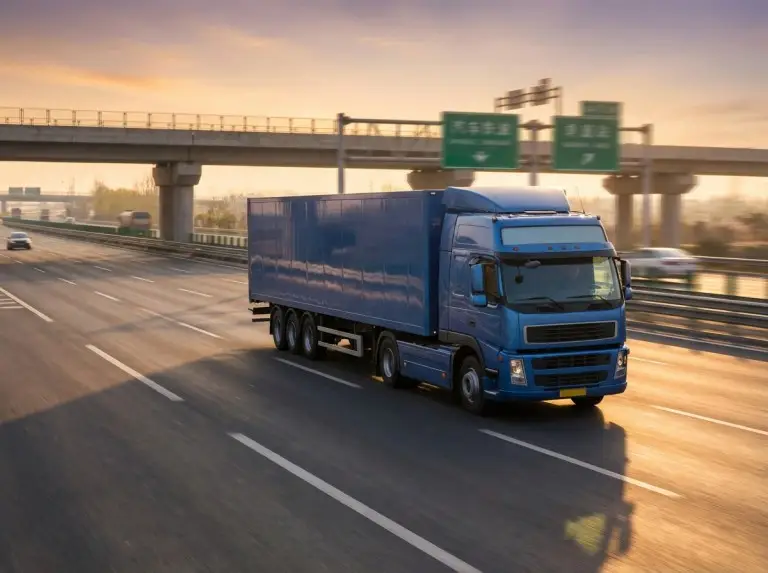
| Dry van / reefer (standard box) | Trailer roof and running gear | Often built near common highway targets in the market | Actual measured height with your tractor, tire spec, and suspension at ride height |
| Container on chassis | Container height + chassis deck height | Varies strongly by container type and chassis geometry | Container type, chassis deck height, tire size, and load securement that adds height |
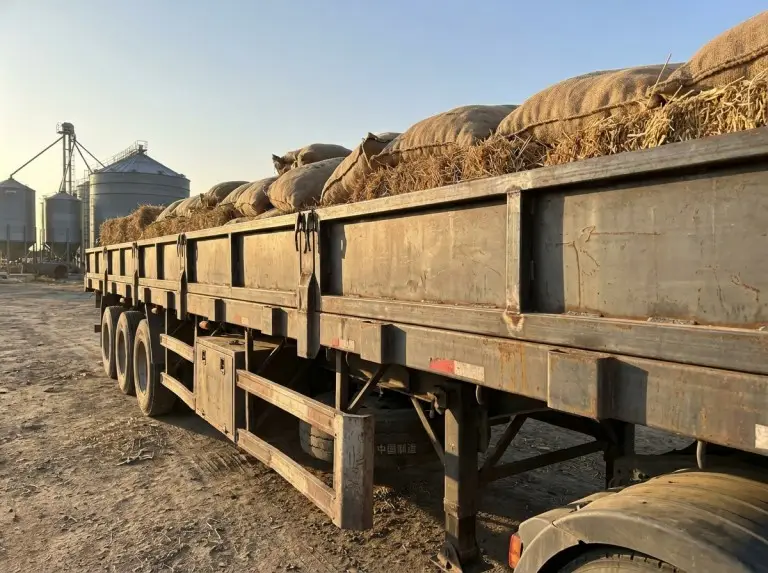
| Flatbed with cargo | Cargo is the height driver | Can swing widely from low to very tall | Cargo dimensions, blocking/dunnage, tie-down method, and how the load settles |
| Step deck (drop deck) | Cargo on the lower deck | Helps reduce total height vs flatbed | Which deck the load sits on, ramp/neck geometry, and load position |
| Lowboy / lowbed | Cargo on the lowest deck section | Designed to manage tall equipment | Loaded ride height, axle group setup, and how the machine sits after chained down |
This view also helps avoid a common mistake. The trailer alone may sit low. But the combo can end up tall once you add cargo, dunnage, and the tractor’s coupling height. For open-deck moves, small details matter. A thick timber mat or tall cradle can shift the outcome. This counts under tight canopies and older structures.
Key Factors That Change Semi-Truck Height
The total height you plan for comes from a stack of small factors. Several are easy to miss. Trailer type drives it obviously. But the tractor-trailer interface and running gear can add or subtract inches. When we review a customer’s build request, we focus on factors that change height. These do not alter the headline trailer model.
Tires contribute quietly. Diameter changes with spec and wear. Fresh tires sit taller than worn ones. Different profiles can alter ride height. This happens even if the rim size looks similar. If you run close to a clearance limit, tire choice becomes part of your height plan. It is not just a maintenance detail.
Suspension settings can change the number you drive by. Air-ride systems sit differently based on load, leveling valves, and ride height. A driver might dump suspension air to clear a tight spot. That works as a situational tool. But it is not a planning assumption. The truck returns to ride height once it moves and levels.
Tractor coupling height matters. It controls how the trailer sits front-to-rear. A higher fifth-wheel setting can lift the trailer nose. The highest point may become the front roofline or top edge of the front wall. We ask customers about tractor specs and target fifth-wheel height. This happens when a build must fit under strict facility clearances.
Cargo position and securement add height on open decks. They can add surprising height inside a box. Dunnage thickness, skids, cradles, and how equipment settles after chaining down can raise or tilt the top point. If your plan uses a narrow margin, assume real-world variation. Protect yourself with measurement and margin.
Measuring Semi-Truck Height Correctly
The best way to manage height is to measure the actual operating height after loading. Do this on level ground with suspension at normal ride height. Measure when your route decision gets expensive to reverse. This is usually after the load is secured and before you leave the yard. If your move has multiple stops or a tractor swap, measure again after the change.
Start by setting the combo in a consistent running condition. Park on level pavement. Ensure tire pressures stay in normal range. Let the air suspension settle to standard ride height. If you measure while the suspension still levels, you might record a wrong number. It won’t match the height you run at speed.
Next, find the true highest point. Measure vertically from the ground to that point. On box trailers, it is usually the roofline. But it can be a roof-mounted device, container corner fitting, or top rail on specialized bodies. On open decks, it is the top of the cargo. Include any packaging or protective cover that adds height.
Finally, record the result in a simple format your team can use. Write down the measured height, trailer ID, tractor used, date, and load description. Same trailer does not always mean same height. If the move is close to a facility limit, measure at both front and rear of the trailer. Coupling angle and load distribution can change the profile.
Clearance Planning Checklist
Clearance planning gets straightforward. Turn a measured height into a conservative plan. The goal is not to fit under a theoretical maximum. It is to reduce uncertainty. Posted signs, uneven pavement, or facility structures create risk. We advise planning with a margin. Real roads bounce. Loads settle. Entrances rarely match clean drawings.
Use the checklist below as a decision tool. Apply it before sending a truck near tight clearances.
| Check item | What you are trying to prevent | Practical rule to apply |
|---|---|---|
| Use the measured loaded height (not brochure height) | Planning from a number that is no longer true | Measure after securement and use that number for routing |
| Plan a margin under tight canopies and older routes | Exact-fit decisions that fail with small variations | Avoid routes or entrances that leave no buffer |
| Confirm facility clearances at gates, canopies, docks | Getting trapped where turning around is difficult | Verify the lowest point on-site, not just the main door |
| Watch for surface changes near bridges and ramps | Reduced clearance due to pavement build-up or dips | Treat posted clearances as informational, not a guarantee |
| Re-check after tractor swaps or suspension repairs | A new coupling height changes the trailer nose | Re-measure when the tractor or ride height changes |
| Avoid car GPS for height-critical moves | Routing onto low-clearance streets | Use routing tools that accept vehicle height inputs |
If the route includes older industrial areas, local streets, or fuel stops with low canopies, assume the risk shifts. It moves from highway structures to facility structures. A route safe on paper can fail at the last mile. Signage is inconsistent. Turning options are limited. The simplest fix is to confirm tight points before the truck arrives.
Conclusion
Semi-truck height works best as a measurable operating number. It is not a fixed spec on a brochure. Most standard highway combos fit common infrastructure targets. But real height changes with setup, coupling, tires, suspension, and load position. At GENRON, we focus on these variables during semi trailer trailer customization. The safest move starts with a known height. It ends with a route plan that allows for real-world variation.
FAQ
A common reference for many road-going box trailers in parts of the U.S. market is around 13 ft 6 in. But your actual height depends on your tractor setup and trailer build. Many fleets operate close to regional norms. Equipment fits typical infrastructure. You should still measure your specific combo. Follow posted clearances and local rules.
No. Overall height comes from the highest point on the entire combo. This is often the trailer roof or top of a container or load. Some tractors with tall sleepers can be high. But they are not always the limiting point. The only safe answer is to find the highest point on your actual setup. Then measure it.
Cargo and its position change height the most. This applies especially on flatbeds, step decks, and lowboys. Coupling height, tire profile, and suspension ride height can also shift the number. This matters when clearance is tight. If you run near a limit, treat all these as part of your height control plan.
Measure from the ground to the highest point of the loaded and secured combo. Include dunnage, cradles, and any protective cover. Irregular loads can create a tall corner. It is easy to miss if you only check the centerline. If the load sits unevenly, measure the highest corner. Plan from that worst-case point.
Posted clearances help. But treat them as guidance rather than a promise. Road surfaces change over time. A small mismatch matters when your height is close to the sign value. The safer approach is to avoid tight clearances. Confirm critical points when possible. Plan with margin.
Lowering suspension can help in specific low-speed situations. But it should not be your main safety plan. The truck returns toward normal ride height as it moves and levels. Changes in road surface can still create contact risk. If height is close, adjust the load. Choose a lower-deck option. Or change the route.