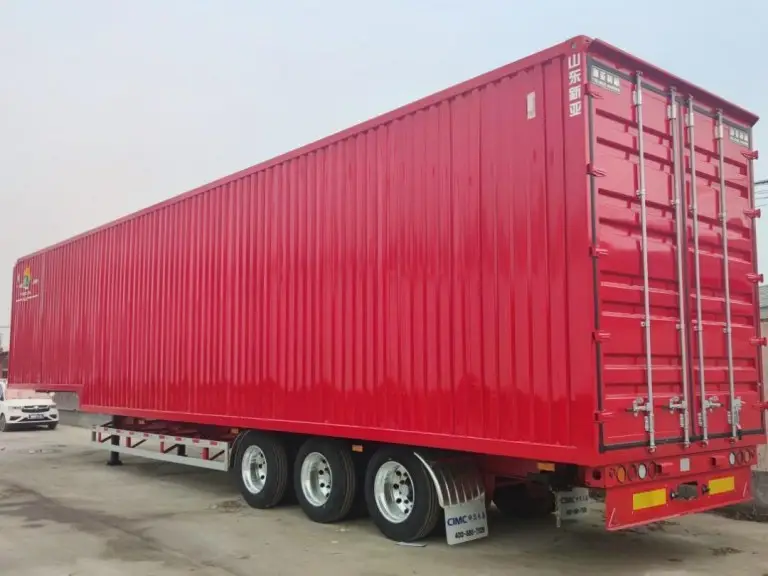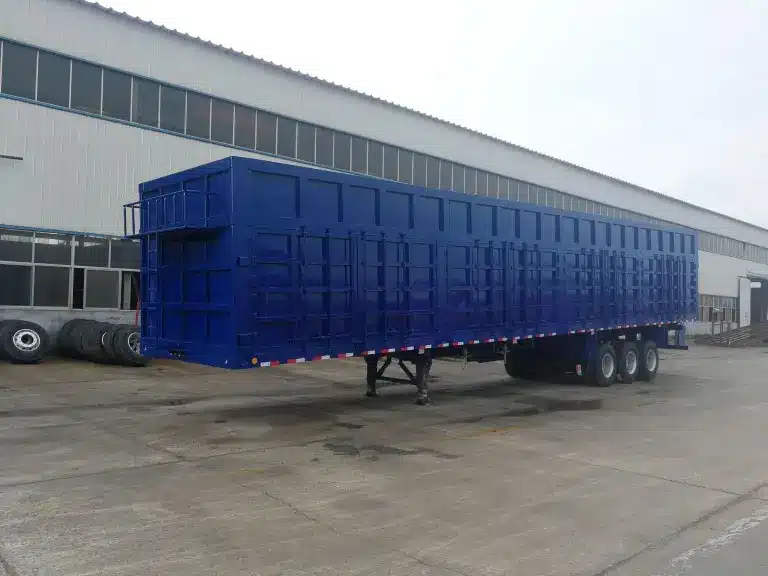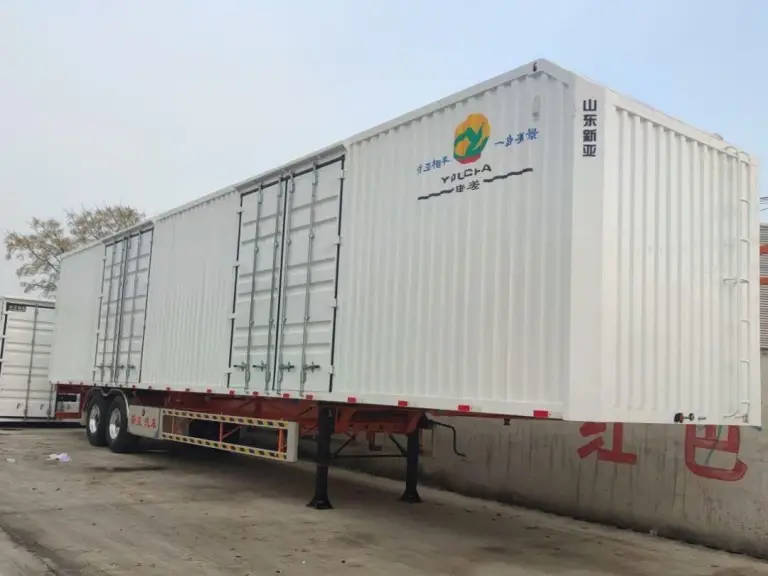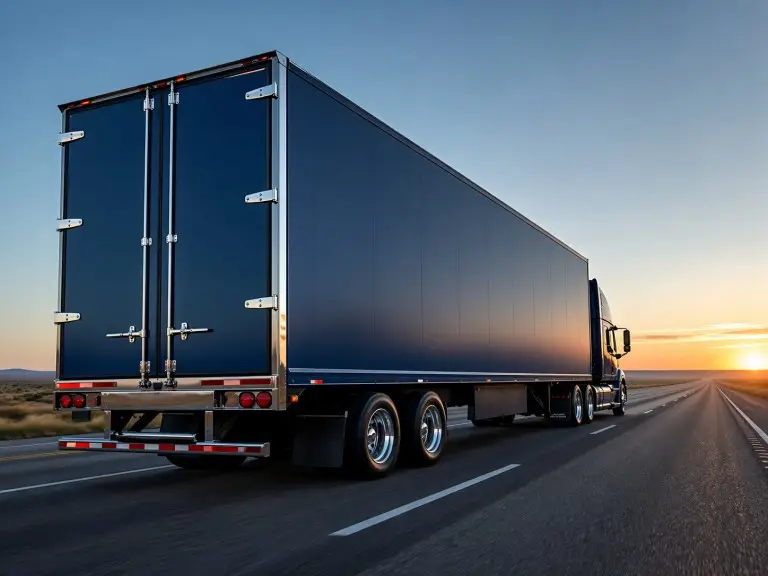
Um semirreboque baú — também chamado de furgão seco ou semirreboque fechado — é um semirreboque de carga totalmente fechado, com paredes rígidas, teto fixo e portas traseiras com fechadura. Ele transporta cargas não perecíveis, protegendo-as das intempéries, detritos da estrada e furtos. Essa combinação o torna o tipo de semirreboque mais utilizado no transporte rodoviário de cargas comerciais, principalmente em cadeias de suprimentos do varejo, distribuição de comércio eletrônico e movimentação geral de cargas secas.
Saber o que diferencia um reboque fechado de outros tipos de reboque — e para que tipo de carga ele é adequado — é o primeiro passo antes de selecionar ou especificar um.
Estrutura do reboque fechado e o que o compartimento oferece
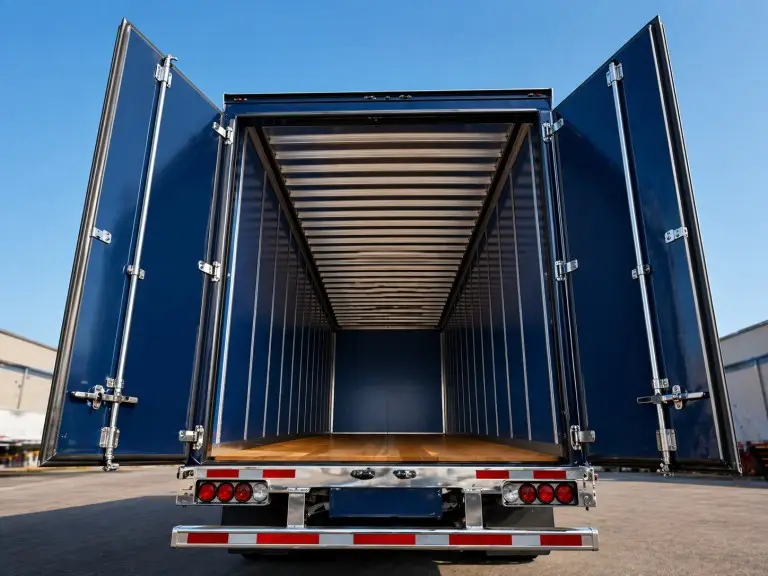
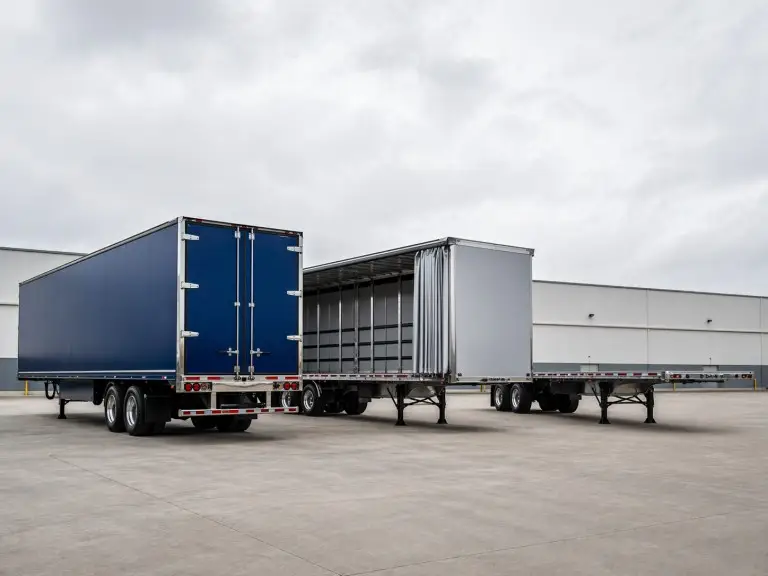
A característica principal de um reboque fechado é seu compartimento de carga totalmente fechado. Quatro paredes rígidas, um teto fixo e portas traseiras articuladas com fechadura formam uma unidade retangular selada. Essa estrutura o diferencia de um semirreboque com cortina lateral, que utiliza cortinas laterais retráteis de PVC, e de uma plataforma plana, que não possui laterais nem teto.
A estrutura rígida mantém o ambiente da carga constante durante toda a viagem, protegendo-a da chuva, poeira da estrada e exposição aos raios UV. Para mercadorias em embalagens de papelão ou papel, isso é fundamental. A entrada de umidade durante o transporte causa danos invisíveis no carregamento, mas visíveis na entrega. As portas traseiras com trava também oferecem um nível de segurança para a carga que as alternativas de plataforma aberta e cortina não conseguem igualar, razão pela qual os semirreboques fechados são a escolha padrão para mercadorias de alto valor em rotas com risco de roubo.
A maioria dos semirreboques fechados são carregados pela traseira em uma doca, através de portas de abrir ou de enrolar. Algumas configurações incluem uma porta de acesso lateral em uma ou ambas as paredes longitudinais, o que permite rotas com múltiplas paradas ou instalações sem alinhamento com a doca. O tipo de porta e a compatibilidade com a doca devem ser confirmados em relação à instalação de carregamento antes da encomenda do semirreboque.
Um equívoco que leva à escolha errada do trailer.
Uma suposição comum é que qualquer semirreboque totalmente fechado seja considerado um semirreboque baú — incluindo semirreboques refrigerados (reefer). No transporte comercial de cargas, o termo se refere especificamente a um semirreboque fechado sem controle de temperatura e sem isolamento térmico. Os semirreboques refrigerados compartilham a mesma estrutura rígida, mas adicionam uma unidade de refrigeração e painéis de parede isolados. Isso os torna uma categoria de produto separada, com especificações diferentes e custos operacionais mais elevados.
Quando as equipes de compras selecionam um semirreboque para cargas que exigem controle de temperatura — como produtos frescos, produtos farmacêuticos ou certos produtos químicos — sem verificar sua capacidade térmica, o resultado é a perda de carga e o potencial descumprimento das normas regulatórias na entrega. Observamos isso com frequência em solicitações de cotação (RFQs) em estágio inicial, onde a descrição da carga e o tipo de semirreboque ainda não foram conciliados. Confirmar a faixa de temperatura aceitável da carga é a variável mais importante antes de escolher entre um semirreboque e um contêiner. carreta fechada versus van refrigerada.
O erro também ocorre no sentido inverso. Especificar um contêiner refrigerado para cargas genuinamente secas e não perecíveis adiciona custos desnecessários em preço unitário, manutenção e combustível. Nenhuma das duas suposições deve ser feita sem verificação direta.
Principais variantes de semirreboques fechados e seus usos típicos
Os semirreboques fechados estão disponíveis em diversas configurações. A variante adequada depende dos requisitos de altura da carga, do método de carregamento e das regulamentações do mercado em que opera.
Reboque baú padrão para carga seca
O furgão seco padrão é a configuração mais comum. Possui teto fixo e paredes rígidas, carregamento pela traseira em uma doca e está disponível nos comprimentos internos que a maioria dos mercados exige — 13,6 m para operações na Europa, 48 pés ou 53 pés para a América do Norte. Essa variante é adequada para bens de consumo paletizados, eletrônicos embalados, roupas em cabides, móveis e materiais de construção secos. Nós fabricamos o Semirreboque fechado de 40 toneladas Nessa configuração, como opção de exportação padrão.
Reboque baú High-Cube
Um semirreboque baú high-cube possui altura interna superior à altura livre padrão. Isso permite um nível extra de paletes ou cargas mais altas, mantendo-se dentro das dimensões permitidas para o semirreboque na estrada. As especificações do high-cube devem ser verificadas em relação à altura livre das pontes e aos limites de altura das vias na rota pretendida, uma vez que os máximos permitidos variam conforme o país e o trecho.
Reboque baú com porta lateral
Algumas carretas fechadas incluem um ou mais painéis de acesso lateral junto às portas traseiras. Isso facilita rotas com múltiplas paradas ou locais onde o alinhamento com a doca não é possível. O posicionamento da porta lateral afeta a estrutura e a posição das vigas de carga internas. Essa especificação deve ser feita na fase de fabricação, e não posteriormente, após a produção.
Categorias de carga adequadas para reboque fechado
Um semirreboque fechado é adequado para cargas não perecíveis, não perigosas segundo a classificação padrão de frete e compatíveis com as dimensões internas do semirreboque. Categorias comuns incluem bens de consumo embalados, alimentos secos, roupas e têxteis, móveis, eletrônicos em embalagens protetoras e materiais de construção ensacados ou paletizados.
Carretas fechadas não são adequadas para mercadorias sensíveis à temperatura sem controle térmico, como pós a granel, como cimento e cinzas volantes — que exigem reboques pneumáticos para carga a granel seca — ou para cargas que excedam os limites dimensionais ou de peso do reboque. Esses limites dependem da configuração dos eixos e das normas de peso bruto total do veículo do mercado em que o veículo opera. Para obter uma descrição detalhada de volume de carga de semirreboques fechados e limites de paletes, consulte nosso guia de capacidade.
Materiais perigosos classificados segundo o ADR — ou regulamentações nacionais equivalentes — possuem requisitos específicos para ventilação, piso, sinalização e documentação. Uma configuração padrão de carreta fechada não atende a esses requisitos sem especificações adicionais.
Reboque fechado versus reboque com cortinas laterais e plataforma: seleção por carga e operação
A escolha entre um semirreboque fechado, um semirreboque com cortinas laterais e um semirreboque plataforma se resume a três fatores: requisitos de proteção da carga, método de carregamento e segurança da rota.
Uma carreta com cortina lateral permite o carregamento lateral por empilhadeira em ambos os lados. Isso agiliza o carregamento e o descarregamento em instalações sem acesso fixo a docas. No entanto, a cortina retrátil oferece menos proteção rígida do que as paredes de uma carreta fechada e não proporciona a mesma segurança que uma porta traseira trancada. Para cargas de alto valor ou rotas com risco de roubo, a carreta fechada geralmente é a escolha mais adequada.
Um reboque de plataforma aberta Não oferece nenhuma proteção contra intempéries. É adequado para cargas superdimensionadas ou com formato irregular — aço estrutural, máquinas pesadas, grandes materiais de construção — que não cabem dentro de uma carroceria fechada. Usar uma carroceria plana para cargas que cabem em uma carreta fechada resulta em exposição desnecessária às intempéries e geralmente exige embalagens de proteção extras para compensar.
| Tipo de reboque | Proteção contra intempéries | Carga primária | Segurança de carga | Carga Típica |
|---|---|---|---|---|
| Reboque fechado | Enclausuramento rígido completo | Doca traseira | Portas com fechadura | Produtos secos, produtos de consumo, vestuário |
| Cortinas laterais | Somente cortina lateral | empilhadeira lateral | Abaixo da caixa | Frete geral, peças de fabricação |
| Plataforma | Nenhum | Todos os lados e a parte superior | Correias de amarração | Materiais de construção, máquinas pesadas |
A seleção final do reboque deve ser verificada em relação ao perfil da carga, ao layout das instalações de carregamento e aos requisitos de segurança da rota. Alinhamos o tipo de reboque a essas variáveis na fase de escopo do projeto, e não posteriormente.
Conclusão
A adequação de um semirreboque fechado depende de três fatores: se a carga é seca e não perecível, se a área de carga permite acesso à doca traseira e se os requisitos regulamentares e de segurança da rota são compatíveis com uma configuração fechada padrão. Tratar esses fatores isoladamente — em vez de verificá-los em conjunto antes da especificação — é onde a maioria dos erros de seleção começa.
Na Genron, confirmamos o tipo de reboque, as dimensões internas e os requisitos de conformidade do mercado durante a fase de revisão do desenho, antes do início da produção. Quando a classificação da carga ou a compatibilidade com as instalações não foram definidas previamente, geralmente constatamos que a identificação dessas variáveis no início do processo evita alterações no escopo durante a produção. Essas alterações acrescentam tempo e custos que poderiam ser evitados.
Se você estiver avaliando as especificações de um semirreboque baú, compartilhar a descrição da sua carga, detalhes do local de carregamento e o mercado-alvo desde o início nos permite confirmar a configuração ideal antes da emissão do pedido. Entre em contato com nossa equipe para iniciar a análise.
FAQ
Os dois termos se referem ao mesmo tipo de reboque. Ambos descrevem um semirreboque totalmente fechado, não refrigerado, com paredes rígidas e portas traseiras. "Dry van" é o termo padrão na América do Norte. "Box trailer" é usado de forma mais ampla nos mercados europeus e internacionais. Para uma comparação técnica completa, consulte nosso guia sobre semirreboque fechado vs. furgão seco.
Um reboque baú padrão não consegue manter a temperatura adequada, portanto, não é apropriado para produtos perecíveis que exigem refrigeração. Um reboque frigorífico é necessário para cargas com temperatura controlada. A faixa de temperatura aceitável deve ser verificada de acordo com as especificações da carga antes da seleção do tipo de reboque.
As configurações europeias geralmente têm 13,6 m de comprimento interno. As configurações norte-americanas normalmente têm 48 pés ou 53 pés. A altura e a largura internas variam de acordo com o padrão e a especificação high-cube. As dimensões devem ser confirmadas em relação à compatibilidade com docas e aos limites de altura das vias na rota pretendida.
A quantidade de paletes depende do comprimento interno, da área ocupada pelo palete (EUR, ISO ou personalizada) e se o empilhamento duplo é permitido pelo peso e pelas características estruturais da carga. Calcule isso para a configuração de carregamento específica, em vez de confiar em uma estimativa geral.