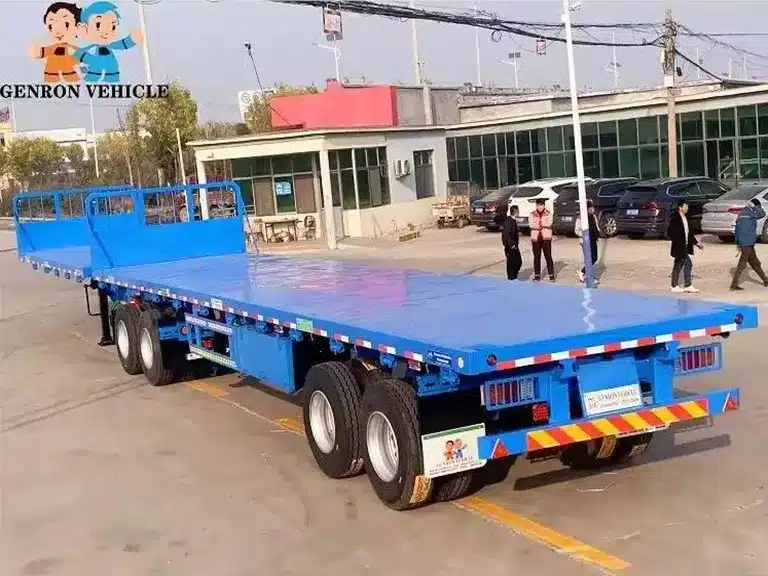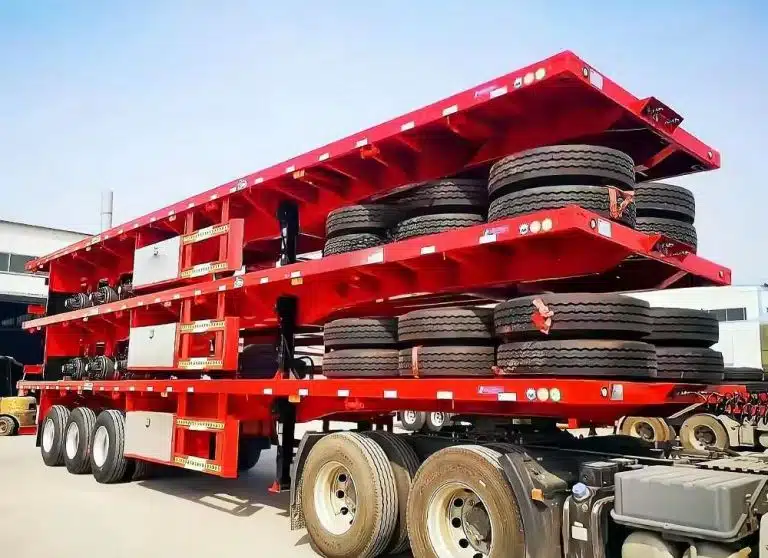
Escolher um carreta plataforma para caminhão Tudo começa com três perguntas: que tipo de carga você vai transportar, quais rotas o reboque vai percorrer e por quanto tempo você pretende ficar com ele? As respostas determinam o material, o número de eixos, a suspensão e a fixação — e uma combinação inadequada resulta em desperdício de carga ou na redução da vida útil do reboque.
Este guia abrange semirreboques plataforma para uso comercial e de exportação. Não abrange carrocerias de picapes, reboques utilitários ou caminhões rígidos.
Uma carreta plataforma de alumínio de 14,6 metros (48 pés) transportando bobinas em rodovias pavimentadas enfrenta cargas diferentes de uma carreta plataforma de aço de 12 metros (40 pés) em estradas de terra em minas. Mesmo peso de carga, desempenho diferente. Material, eixos, suspensão e amarração interagem. A combinação ideal depende da sua carga, rota e regulamentações locais.
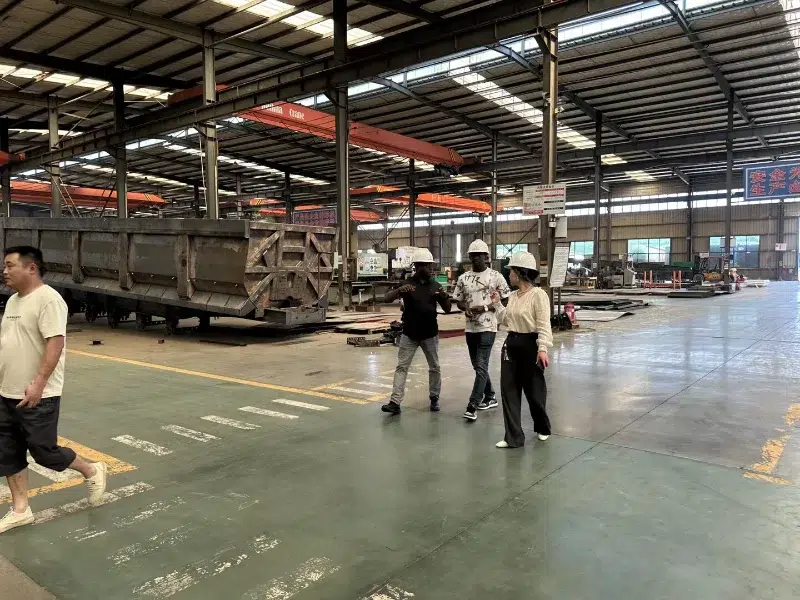
Na Genron, fornecemos caminhões plataforma para compradores em mais de 30 países. Nosso CEO inspecionou as condições operacionais em campo na África, Ásia e Oriente Médio. A estrutura abaixo foi elaborada com base no que observamos funcionar — e falhar — na prática.
Por que o material da carroceria molda todas as outras especificações de caminhões plataforma?
O material da carroceria define a direção para todas as outras especificações da carroceria plana — o limite de carga útil, o ciclo de manutenção e o valor de revenda decorrem dessa escolha.
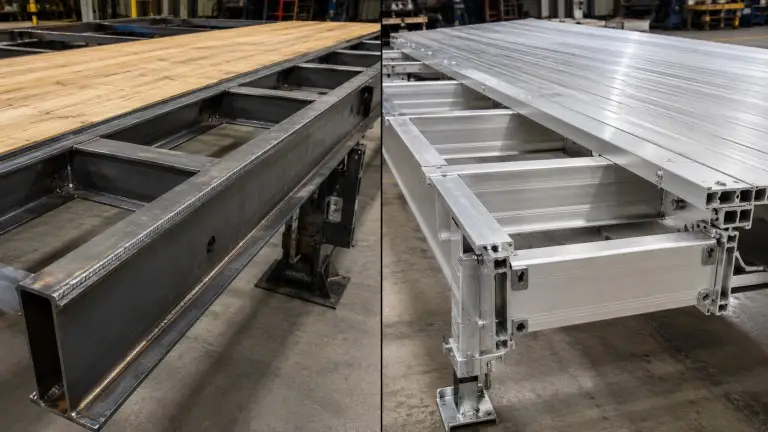
As carretas semirreboque de aço utilizam vigas, longarinas e suportes de aço. Elas suportam bem cargas concentradas: máquinas, bobinas, materiais de construção densos. A desvantagem é o peso tara. Uma carreta totalmente de aço pode pesar de 15 a 25 toneladas a mais do que uma unidade de alumínio de comprimento e conjunto de eixos semelhantes. Essa diferença reduz diretamente a carga útil legal por viagem. O aço também requer tratamento anticorrosivo em climas costeiros ou úmidos — mas supera o alumínio em resistência ao carregamento por empilhadeira, desgaste da corrente e impactos repetidos.
As carrocerias planas de alumínio são mais leves. Permitem transportar mais carga útil dentro da mesma classificação de peso bruto. O alumínio resiste à corrosão superficial sem revestimentos, o que é uma vantagem em mercados com maresia ou alta umidade. Ele sofre maior deformação sob carga, por isso os fabricantes incorporam uma curvatura (flecha) que se achata à medida que o peso aumenta. O alumínio tem um custo inicial mais elevado, mas mantém melhor o valor de revenda em mercados que valorizam a capacidade de carga e a resistência à corrosão.
As carretas semirreboque plataforma combinada unem uma viga de aço com piso e trilhos de alumínio. Você obtém a resistência da viga onde é necessário e economia de peso em todo o resto. O preço e o peso tara ficam entre o aço e o alumínio — uma escolha prática para frotas de uso misto.
Qual é a melhor opção? Cargas pesadas e concentradas favorecem o aço. Rotas de longa distância, sensíveis ao peso, favorecem o alumínio. Ciclos de propriedade mais longos favorecem a vantagem de revenda do alumínio. Levamos em consideração essas variáveis antes de fornecer a cotação, pois o material influencia diretamente as escolhas de eixos, suspensão e piso posteriormente.
| Cenário Operacional | Direção recomendada | Por que |
|---|---|---|
| Bobinas de aço / máquinas pesadas em estradas irregulares | Aço + suspensão mecânica | Tolerância a cargas concentradas, resistência a impactos |
| Carga paletizada de longa distância em rodovias pavimentadas | Alumínio + suspensão a ar | Peso tara menor, carga útil legal maior. |
| Frota de carga mista, rotas variadas | Plataforma combinada | Equilíbrio entre resistência, peso e custo |
| Equipamentos altos (escavadeiras, geradores) | Cama baixa ou plataforma rebaixada | O convés inferior não exige autorização para altura. |
| Vigas longas, tubos, aço estrutural | Plataforma extensível | Flexibilidade de comprimento com margem de amarração |
Por que o GVWR (Peso Bruto Total do Veículo) não é igual à capacidade de carga útil?
A maioria dos compradores olha para o GVWR (Peso Bruto Total do Veículo) na ficha técnica e o trata como capacidade de carga do reboque plano. Não é. O GVWR (Peso Bruto Total do Veículo) é o peso bruto máximo do reboque — reboque mais carga mais equipamentos de amarração. A carga útil é menor, muitas vezes muito menor.
Para encontrar a carga útil real, considere o menor destes seis limites: capacidade nominal menos tara; capacidade dos eixos e pneus; capacidade da quinta roda e do eixo de tração do trator; peso bruto total combinado; peso máximo permitido do conjunto de eixos após a colocação da carga; e limites de rota ou permissão.
Exemplo: um reboque com peso bruto total (PBT) de 36.000 kg, tara de 7.500 kg e 300 kg de correntes e cintas de amarração oferece cerca de 28.200 kg de carga útil. Compradores que ignoram esse cálculo frequentemente enfrentam multas por excesso de peso ou desgaste prematuro dos eixos.
A posição da carga também importa. Um trator de esteiras concentra o peso em menos grupos de eixos do que paletes de madeira distribuídos uniformemente, com a mesma massa total. O espaçamento entre os eixos, a posição do pino mestre e a distribuição da carga afetam a conformidade legal — mesmo abaixo do GVWR (Peso Bruto Total do Veículo).
Realizamos esse cálculo para cada pedido de exportação. Quando um comprador nos envia uma meta de carga útil, verificamos se ela corresponde ao peso da tara, à capacidade dos eixos, às especificações do trator e às leis de peso do país de destino antes de recomendar a montagem.
Semirreboques de plataforma e outros tipos de semirreboques abertos
As carretas plataforma e outros tipos de semirreboques abertos se adaptam a diferentes perfis de carga. Carretas rebaixadas, plataformas escalonadas e rebaixadas duplas não são consideradas carretas plataforma padrão, mas os compradores as comparam lado a lado. 7 tipos comuns de reboques de plataforma Abrange tudo, desde decks padrão até configurações especializadas para transporte pesado.
Semirreboques de plataforma padrão
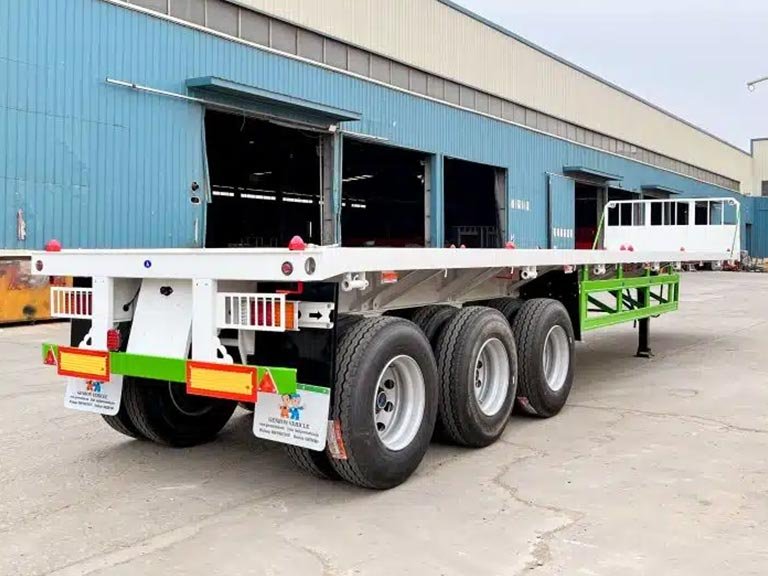
As carretas planas padrão possuem uma plataforma plana com cerca de 1,5 m de altura, aberta em três lados. São carregadas por guindaste ou empilhadeira e adequadas para materiais de construção, paletes e equipamentos em geral. dimensões do reboque plano O comprimento varia de 12 a 16 metros, dependendo do mercado e da configuração dos eixos. A carga útil varia de acordo com o número de eixos e a legislação local. Veículos para exportação podem atingir de 30 a 60 toneladas, mas a carga útil legal para circulação em rodovias depende dos limites de eixos, dos limites de peso bruto e das licenças necessárias.
Semirreboques extensíveis de plataforma plana
As plataformas extensíveis se estendem para transportar cargas extralongas — tubos, vigas, peças de turbinas. Recolha a extensão para cargas mais curtas. Verifique se o comprimento máximo é suficiente para a sua carga mais longa, com espaço para amarração em ambas as extremidades. A capacidade varia de 20 a 45 toneladas, dependendo do número de eixos e da regulamentação.
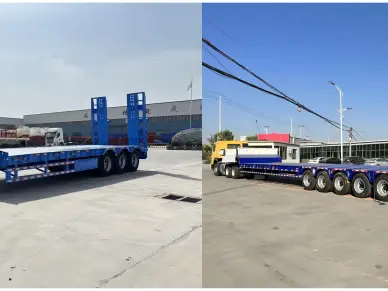
Reboques de plataforma baixa (Lowboy)
Reboques de plataforma baixa ficam a 0,5–0,6 m do solo. Equipamentos altos — escavadeiras, geradores, transformadores — cabem dentro dos limites de altura que um reboque de plataforma padrão excederia. A maioria inclui rampas hidráulicas ou pescoços de ganso removíveis para carregamento direto. Capacidade: de 25 a mais de 100 toneladas, dependendo do número de eixos e das licenças. As vantagens e desvantagens entre um Reboque plataforma baixa vs. semirreboque plataforma plana Depende da altura do convés, do método de carregamento e do perfil da carga.
Reboques Step Deck e Double Drop
As plataformas rebaixadas possuem uma plataforma frontal elevada e uma plataforma traseira mais baixa. As plataformas rebaixadas duplas adicionam um compartimento central ainda mais baixo. Ambas permitem o transporte de equipamentos moderadamente altos sem a complexidade de carregamento de uma plataforma baixa. A escolha entre uma plataforma rebaixada e uma plataforma rebaixada é complexa. reboque de plataforma vs reboque de plataforma plana Depende se a altura da sua carga excede a altura livre padrão do convés.
A escolha é feita com base em três medidas: altura da carga (define a altura livre do convés), peso da carga (define o número de eixos) e método de carregamento (cargas com guindaste são adequadas para plataformas planas; equipamentos autopropelidos são adequados para plataformas baixas com rampas).
Configuração dos eixos, suspensão e condições da rota
O número de eixos e o tipo de suspensão controlam como um semirreboque plataforma distribui o peso e absorve o impacto da estrada. A combinação ideal depende da carga útil, das condições da estrada e da disponibilidade de peças.
Carretas de dois eixos são mais leves e manobráveis, ideais para cargas moderadas em estradas pavimentadas. Três eixos são o padrão para cargas pesadas, atendendo aos limites por eixo na maioria dos mercados acima de 30 toneladas. Quatro eixos suportam cargas extremas ou normas rigorosas por eixo em mineração e construção pesada.
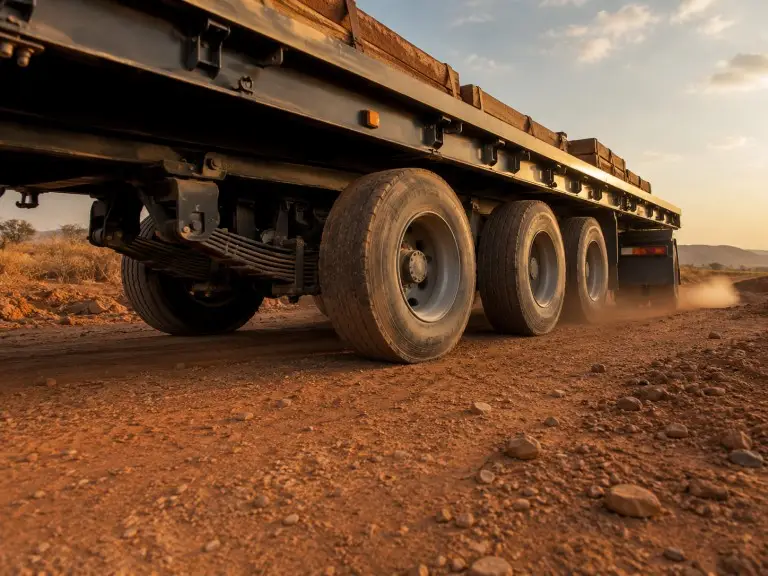
A suspensão mecânica com feixe de molas lida bem com terrenos acidentados e é barata de reparar, com peças comuns. A suspensão a ar suaviza a viagem e reduz a vibração, protegendo cargas frágeis em rodovias. As bolsas de ar também permitem elevar ou abaixar a plataforma para atracação. No entanto, os componentes da suspensão a ar são mais caros para substituir e podem ser difíceis de encontrar em mercados remotos.
Em rotas com superfícies mistas — rodovia mais o último trecho em estrada de terra — observamos consistentemente que a suspensão mecânica dura mais que a pneumática. Já substituímos bolsas de ar em carretas que trafegavam em estradas de mineração esburacadas, bolsas que teriam funcionado perfeitamente por anos em asfalto. Verifique a composição da sua rota antes de escolher, pois a troca da suspensão após a entrega é cara.
Fixação de carga, capacidades de amarração e configuração de ancoragem
A quantidade de pontos de ancoragem, o espaçamento e o limite de carga de trabalho (WLL) devem constar nas especificações do reboque — e não serem adicionados após a compra. Pontos de ancoragem fracos ou mal posicionados criam riscos de segurança que adaptações posteriores raramente resolvem.
Antes de encomendar, avalie: o número e o espaçamento dos pontos de amarração laterais, a carga de trabalho segura (WLL) nominal por ancoragem e o tipo de trilho (alumínio extrudado ou canal de aço — cada um combina com diferentes acessórios para correntes e cintas). Adicione encaixes para estacas se precisar de painéis laterais. fixação de carga em plataforma Começa por especificar o equipamento de ancoragem correto durante a construção do reboque.
Os requisitos de WLL (Carga Máxima de Carga) dependem do peso da carga e das normas locais de amarração. Os mercados que seguem as normas da FMCSA (Administração Federal de Segurança de Transportes Rodoviários) calculam o WLL agregado pelo método de amarração. Os compradores de exportação devem confirmar o equivalente local.
Uma antepara plana economiza espaço no convés para paletes carregados rente à carroceria. Uma antepara envolvente protege contra o deslocamento frontal da carga — útil para cargas irregulares. Para bobinas de aço ou transformadores, verifique a capacidade de carga concentrada, o espaçamento entre as travessas, o plano de estiva e o posicionamento da carga sobre vigas e eixos. O material por si só não atende às demandas de carga pontual.
Compatibilidade do veículo de reboque e configuração do pino mestre
A capacidade de carga da quinta roda do trator, o tamanho do pino mestre e a capacidade do eixo de tração devem ser compatíveis com o reboque. Uma incompatibilidade no ponto de engate cria riscos que o cálculo da carga útil por si só não detecta.
O tamanho do pino mestre (2 polegadas ou 3,5 polegadas) varia conforme a região. As regras de distância entre o pino mestre e o eixo traseiro (KPRA) também variam de acordo com o mercado — alguns regulamentam essa distância para a fórmula de ponte, outros para o raio de giro ou para permitir o acesso. Confirme a regra aplicável no país de destino antes de travar a posição do eixo. Cruzamos as especificações do reboque com a frota de caminhões do comprador e sinalizamos quaisquer discrepâncias antes de prosseguir com o pedido.
Custo total de propriedade além do preço de compra
O preço de compra é apenas o ponto de partida. O material, a suspensão e o clima determinam se um trailer mais barato realmente economiza dinheiro ao longo de 5 a 10 anos.
O aço tem um custo inicial menor, mas exige manutenção periódica contra corrosão — jateamento de areia e repintura — em um cronograma que depende do clima e da qualidade do revestimento. O alumínio custa mais, mas praticamente elimina a necessidade de manutenção contra corrosão e tende a ter um valor de revenda maior. Os reboques mistos ficam em uma posição intermediária. A suspensão mecânica utiliza peças baratas e comuns. A suspensão a ar exige inspeção regular das bolsas de ar e das válvulas, com componentes que podem ser escassos em alguns mercados.
Apresentamos opções de materiais e suspensão com uma estimativa de manutenção adequada ao clima e à rota do comprador. O reboque mais barato no papel nem sempre é o mais barato em termos de custo-benefício.
Dados a preparar antes de solicitar um orçamento para um semirreboque plataforma.
Tenha essas informações em mãos antes de solicitar um orçamento — isso agiliza a configuração e reduz erros de especificação:
- Tipo de carga, dimensões e peso máximo.
- Se a carga é concentrada ou distribuída.
- Método de carregamento: guindaste, empilhadeira, rampa ou entrada sem chave.
- Tipo de rota: pavimentada, não pavimentada, de mina, portuária
- Regras relativas ao país de destino e à carga por eixo
- Modelo do trator, capacidade de engate da quinta roda, tamanho do pino mestre
- Preferência de comprimento e altura do deck
- Método de amarração e necessidades de WLL
- Requisitos para lona, antepara, encaixe para estaca ou parede lateral
- Período de propriedade e prioridade de revenda
Conclusão
A escolha de um semirreboque plataforma se resume a três categorias: material e estrutura (peso, durabilidade, valor de revenda), eixo e suspensão (carga útil, rota, regulamentações) e fixação e acessórios (prepare-os desde o projeto, não os instale posteriormente).
Ao longo de mais de 20 anos fabricando e exportando reboques plataforma, observamos o mesmo padrão dispendioso: o comprador escolhe a opção mais barata sem verificar como os materiais, a suspensão e os eixos se comportam em suas rotas reais. O reboque passa na análise do catálogo, mas resulta em multas por excesso de peso ou desgaste prematuro em campo.
Envie-nos as especificações da sua carga, o perfil da rota, os detalhes do caminhão e a sua meta de aquisição. Configuraremos um semirreboque plataforma que atenda às suas necessidades de operação, e não apenas com base em especificações técnicas. Entre em contato com nossa equipe de exportação pelo WhatsApp ou e-mail.
FAQ
A carga útil é o menor valor entre: Peso Bruto Total do Veículo (PBTV) menos a tara, a capacidade de carga dos eixos e pneus, a capacidade de carga do trator, o peso bruto total legal, o peso máximo permitido por eixo e os limites de rota. Obtenha a tara certificada do fabricante — as estimativas do catálogo podem causar surpresas desagradáveis com relação à sobrecarga.
As carretas planas padrão têm uma plataforma uniforme de 1,5 m e permitem o carregamento por três lados. As carretas com degrau rebaixam a plataforma traseira para acomodar cargas mais altas. Se a sua carga mais alta ultrapassar os limites de altura de uma carreta plana padrão, essa opção oferece maior flexibilidade de carregamento.
O aço é adequado para cargas concentradas e manuseio brusco. O alumínio é ideal para operações de longa distância com restrições de peso. Reboques mistos oferecem um equilíbrio entre ambos. Nenhum material é a melhor opção em todas as situações.
Dois eixos suportam cargas moderadas em boas estradas. Três eixos são suficientes para a maioria dos trabalhos pesados. Quatro ou mais eixos são necessários para cargas extremamente pesadas ou para atender a normas rigorosas de carga por eixo. A quantidade de eixos deve ser compatível com a sua carga útil e com as regulamentações do país de destino.
A suspensão a ar reduz a vibração em vias pavimentadas. A suspensão mecânica lida melhor com terrenos acidentados e oferece reparos mais fáceis. Escolha com base no tipo de percurso que você utiliza e na disponibilidade de peças na sua região.
O transporte de bobinas de aço exige uma plataforma plana com alta capacidade de carga concentrada, espaçamento reduzido entre as travessas e um compartimento específico para as bobinas, como um poço ou suporte. Plataformas de aço ou estruturas combinadas reforçadas são as mais comuns. Verifique o posicionamento da estiva e das vigas antes de fazer o pedido.
As carretas plataforma padrão têm cerca de 1,5 m de altura e o carregamento é feito por guindaste ou empilhadeira. As carretas rebaixadas chegam a ter 0,5 a 0,6 m de altura para acomodar equipamentos altos. Escolha uma carreta rebaixada quando a altura da sua carga exceder a altura livre das carretas plataforma padrão.
A carga útil legal depende do GVWR (Peso Bruto Total do Veículo) e dos limites por eixo e grupo de eixos, que variam conforme o país. Um reboque dentro do GVWR ainda pode infringir os limites por eixo, dependendo da disposição da carga. Verifique a conformidade dos eixos para a jurisdição de operação antes de finalizar a montagem do seu reboque.
Antes de elaborar um orçamento, a Genron compara as especificações do reboque com a carga, a rota, o caminhão e as regulamentações. Calculamos a carga útil, configuramos os eixos e a suspensão de acordo com as condições de operação e apresentamos opções de materiais com projeções de manutenção e revenda para o mercado do comprador. Nosso CEO visitou operações de transporte de reboques em mais de 30 países — esse conhecimento prático molda cada pedido de exportação.